
Playa de Gulpiyuri
Flooded sinkhole with inland beach·Spain·Limestone (implied by sinkhole formation and sea tunnel carving)
Playa de Gulpiyuri is a unique inland beach formed within a flooded sinkhole, located near Llanes in Asturias, Spain. It is notable for its tidal nature, receiving water from the Cantabrian Sea through underground tunnels, which allows small waves to reach its sandy shore.
Key Facts
- ›Approximately 40 meters in length.
- ›Fully tidal, with water flowing from the Cantabrian Sea through tunnels.
- ›Features small waves due to the connection with the Bay of Biscay.
- ›Recognized as a popular tourist destination and natural monument.
- ›Part of Spain's Regional Network of Protected Natural Areas.
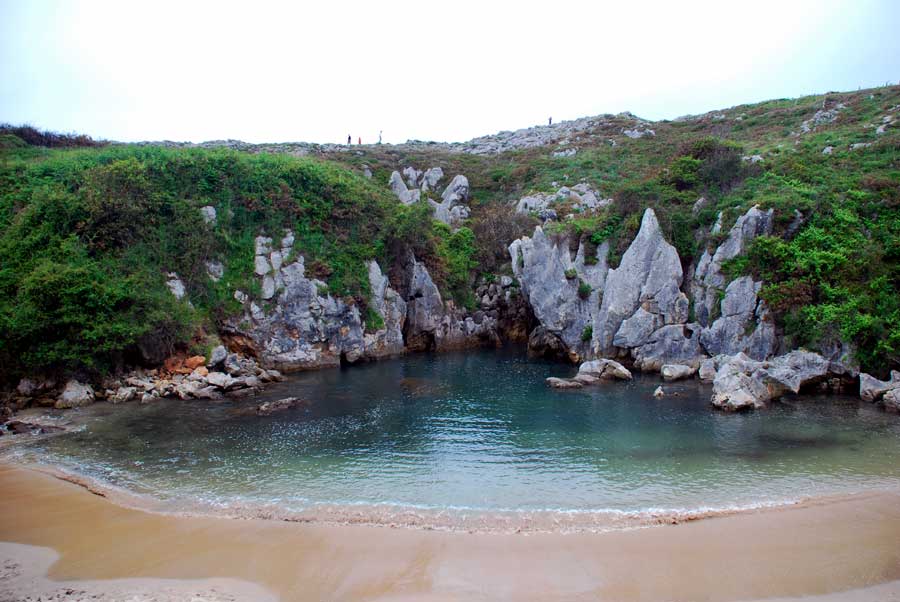
Inland Beach, Tidal Nature, Underground Water Channels, Small Waves
Saltwater
About Playa de Gulpiyuri
Playa de Gulpiyuri is a remarkable natural feature located near Llanes in Asturias, northern Spain. It is a sinkhole that has been flooded, creating an unusual inland beach approximately 100 meters from the Cantabrian Sea. The name 'Gulpiyuri' itself means 'water circle,' aptly describing this unique geological formation.
Formation and Tidal Nature
The sinkhole measures roughly 40 meters in length. Its most distinctive characteristic is its fully tidal nature. This phenomenon occurs due to a network of tunnels carved by the saltwater of the Cantabrian Sea. These underwater channels allow water from the Bay of Biscay to flow into the sinkhole, creating small waves that reach the sandy shore.
Significance and Tourism
Unlike many other secluded beaches, Playa de Gulpiyuri's tidal activity and the presence of waves make it a notable destination. The water, while clear, can be cool after its journey underground. Its unique appeal has led to it becoming a popular tourist destination. Furthermore, Playa de Gulpiyuri is recognized as a natural monument and is an integral part of Spain's Regional Network of Protected Natural Areas, underscoring its environmental importance.
Source: Wikipedia ↗
Frequently Asked Questions
What is Playa de Gulpiyuri?
Playa de Gulpiyuri is a small, inland beach situated within a flooded sinkhole. It is a unique natural phenomenon located near Llanes in Asturias, northern Spain.
How does Playa de Gulpiyuri get its water?
The sinkhole is connected to the Cantabrian Sea via a series of underground tunnels. Saltwater from the sea flows through these tunnels, filling the sinkhole and creating the beach.
Does Playa de Gulpiyuri have waves?
Yes, despite being an inland beach, Playa de Gulpiyuri is fully tidal and experiences small waves. The water from the Bay of Biscay, channeled through the tunnels, creates these gentle waves.
Is the water at Playa de Gulpiyuri warm?
The crystal clear water at Playa de Gulpiyuri can be a bit cold. This is because it spends time underground before reaching the beach, allowing it to cool.
What does the name 'Gulpiyuri' mean?
The name 'Gulpiyuri' translates to 'water circle' in the local language. This name likely refers to the circular shape of the sinkhole and its water-filled nature.
Is Playa de Gulpiyuri a protected area?
Yes, Playa de Gulpiyuri is a designated natural monument and is included in Spain's Regional Network of Protected Natural Areas, highlighting its ecological and scenic importance.
Related Sinkholes

Big Basin Prairie Preserve
The Big Basin Prairie Preserve in Kansas encompasses a significant sinkhole system, most notably the mile-wide Big Basin and the water-filled St. Jacob's Well. These geological features, formed by sinkhole activity, are historically notable as resting places for the Northern Cheyenne and landmarks for cattle drives. The preserve is a designated National Natural Landmark, managed to protect its unique landscape and wildlife.

Blue Hole (New Mexico)
The Blue Hole of Santa Rosa, New Mexico, is a natural artesian well and cenote renowned as a popular scuba diving destination and training site. Its clear, constant temperature waters originate from deep within the Ogallala Aquifer, feeding a complex underground cave system that has captivated explorers and divers for decades.

Blue Hole (Red Sea)
The Blue Hole is a renowned diving site located on the coast of the Gulf of Aqaba in Egypt's Red Sea. It is a deep marine sinkhole, famous for its challenging "Arch" tunnel and notorious for being the site of numerous diver fatalities, earning it the grim distinction of having the highest number of diver deaths globally. Despite its dangers, the Blue Hole remains a popular destination for experienced divers and freedivers due to its direct shore access to significant depths and abundant marine life.