
Pulo di Altamura
Pulo di Altamura is a significant doline, or sinkhole, located on the Murge plateau in Apulia, Italy. As the largest doline in the region, it plays a crucial role in the karst landscape, formed by the erosive action of rainwater on the fractured limestone. Its immense size and the unique microclimate within its walls support diverse flora and fauna, making it a site of scientific and ecological interest.
Key Facts
- ›The perimeter of Pulo DI Altamura measures approximately 1,800 meters (5,900 ft).
- ›Its larger diameter exceeds 500 meters (1,600 ft), with a minimum width of 450 meters (1,480 ft).
- ›The doline has a depth ranging from 70 to 75 meters (230 to 246 ft).
- ›It is the largest doline on the Murge plateau and is located about 6 kilometers (3.7 MI) north-west of Altamura.
- ›The name 'Pulo' is a local toponym specific to the Murge plateau for dolines, first attested in the 17th century.
- ›Carmelo Colamonico conducted the first thorough scientific study of Pulo DI Altamura in 1917, proposing a karst origin.
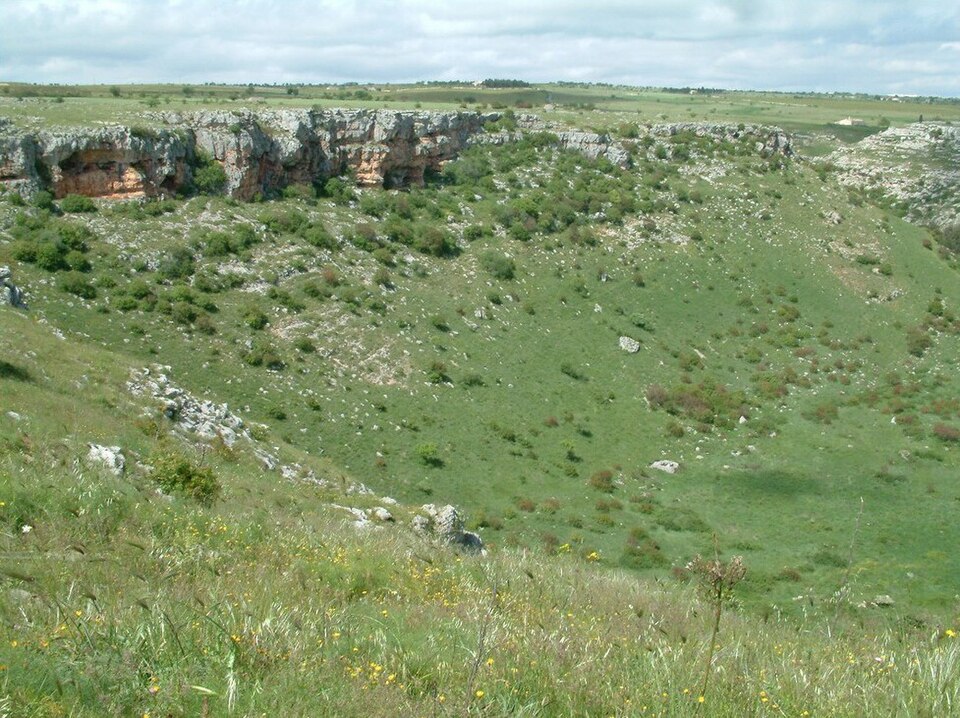
Pulo
- Largest Doline On the Murge Plateau
- Unique Microclimate Supporting Uncommon Flora and Fauna
- Caves Including Grotta Del Colombo, Grotta Dell'Imbroglio, and Grotta Dell'Orco
- Proximity To the Discovery Site of Altamura Man
Common Raven
About Pulo di Altamura
Pulo di Altamura is a prominent geological formation, classified as a doline or sinkhole, situated on the Murge plateau in the Apulia region of Italy. It holds the distinction of being the largest doline in this area, located about 6 kilometers (3.7 miles) northwest of the city of Altamura. The name 'Pulo' is a local term specifically used in the Murge plateau to denote such karst depressions, with its earliest known attestation dating back to the 17th century.
Dimensions and Geology
The doline is substantial in size, with a perimeter measured at approximately 1,800 meters (5,900 ft). Its larger diameter exceeds 500 meters (1,600 ft) and does not fall below 450 meters (1,480 ft). The depth of Pulo di Altamura ranges between 70 and 75 meters (230 to 246 ft). The formation of this immense sinkhole is attributed to karst processes, the result of rainwater acting mechanically and chemically on the heavily fractured limestone bedrock of the Murge plateau. A prominent theory suggests that the doline may have formed from the collapse of a pre-existing cave.
Scientific Study and Human Presence
While earlier scientists and geologists had noted the existence of a cavity near Altamura, the first comprehensive scientific study of Pulo di Altamura was conducted by Carmelo Colamonico in 1917. His work laid the foundation for understanding the doline's karst origin. The northern side of Pulo di Altamura is characterized by numerous crannies and natural caves. These features suggest potential past habitation by hominids and prehistoric man, especially given the proximity to the discovery site of Altamura Man. Historical accounts also mention the possibility of Saint William of Montevergine residing as a hermit in one of these caves.
Ecology and Unique Features
The distinctive shape of Pulo di Altamura's walls and the resulting microclimate within its confines create an ideal habitat for various plant and animal species that are typically uncommon on the Murge plateau. For instance, the common raven is known to nest on the steep, impervious walls of the doline, highlighting its unique ecological significance.
Source: Wikipedia ↗
Frequently Asked Questions
What is Pulo di Altamura?
Pulo di Altamura is a large doline, which is a type of sinkhole, situated on the Murge plateau in Apulia, Italy. It is characterized by its significant dimensions and is a prominent feature of the region's karst landscape.
Where is Pulo di Altamura located?
Pulo di Altamura is located on the Murge plateau in the Apulia region of Italy. It lies approximately 6 kilometers (3.7 miles) to the north-west of the city of Altamura.
What are the dimensions of Pulo di Altamura?
The doline has a perimeter of about 1,800 meters (5,900 ft). Its larger diameter is over 500 meters (1,600 ft), and it is never less than 450 meters (1,480 ft) wide. The depth of Pulo di Altamura is approximately 70–75 meters (230–246 ft).
How was Pulo di Altamura formed?
The formation of Pulo di Altamura is primarily explained by karst processes, specifically the erosive and chemical action of rainwater on the fractured limestone of the Murge plateau. It is also hypothesized that a pre-existing cave may have collapsed, contributing to its formation as a collapse doline.
What is the significance of the name 'Pulo'?
The toponym 'Pulo' is a local term used in the Murge plateau to denote a doline. It is also used for other similar geological features in the region, such as Pulicchio di Gravina and Pulo di Molfetta. The etymology of 'Pulo' itself is currently unknown.
Has Pulo di Altamura been scientifically studied?
Yes, Pulo di Altamura has been the subject of scientific research. Carmelo Colamonico conducted the first comprehensive scientific study in 1917, proposing a consistent theory about its origin. Earlier, figures like Giuseppe Maria Giovene and later scientists like T. Vespasiani and E. Flores also cited or studied the doline.
What is the geological context of Pulo di Altamura?
Pulo di Altamura is situated on the Murge plateau, an area characterized by heavily fractured limestone. This geological setting is crucial for the karst processes that have shaped the doline, as the fractured rock allows significant rainwater infiltration and dissolution.
Is there evidence of human presence near Pulo di Altamura?
The northern side of Pulo di Altamura features natural caves and crannies that may have been inhabited by prehistoric humans. The famous Altamura Man was discovered in an area close to the doline. Historical accounts also suggest Saint William of Montevergine may have lived as a hermit in one of its caves.
Related Sinkholes
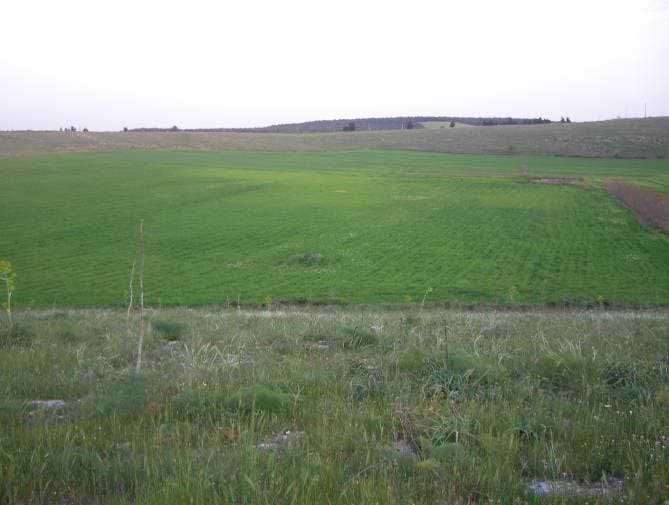
Gurio Lamanna
Gurio Lamanna is a large doline, often referred to as a "karst basin," located in the Murge plateau of southern Italy, near Gravina in Puglia and Altamura. Its significant size, shallow depth, and flat, fertile bottom distinguish it from typical dolines, making it a notable example of karst landforms in the region. Despite its size, it was largely unknown to scientists until the early 20th century.
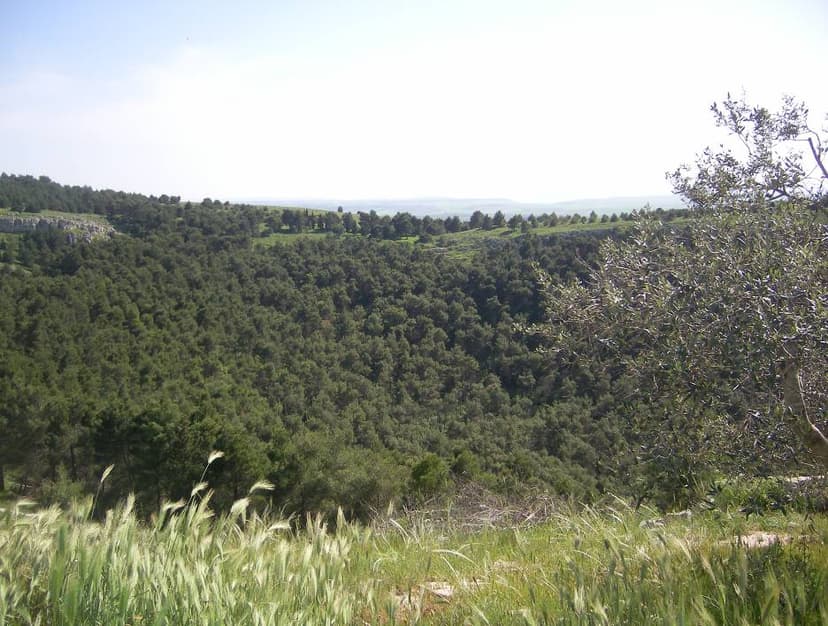
Pulicchio di Gravina
Pulicchio di Gravina is the second-largest doline on the Murge plateau in Apulia, southern Italy, distinguished by its regular, egg-like shape and significant depth. Its formation is primarily attributed to karst processes, specifically the erosive and chemical actions of rainwater on the region's fractured limestone, though debate exists regarding the exact balance between superficial erosion and potential subsurface collapse.

Pulo di Molfetta
Pulo di Molfetta is a significant doline situated on the Murge plateau in southern Italy. Its formation is attributed to the collapse of subterranean caves, a process common to other large dolines in the Apulia region, which share the local toponym 'pulo'.