
Anapidae
Web builder (orb webs).
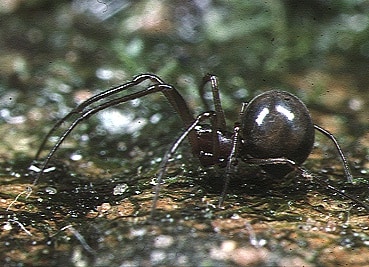
Anapidae is a diverse family of small spiders, with most species measuring less than two millimeters in length. These spiders are found worldwide, inhabiting leaf litter and moss in rainforest environments. A distinctive characteristic of many Anapidae species is their ability to build small orb webs, often less than three centimeters in diameter.
Key Facts
- ›Most Anapidae spiders are very small, typically under 2 millimeters in body length.
- ›They are found globally, with significant populations in South America, Africa, Asia, Australia, and New Zealand.
- ›Many species construct small orb webs, usually less than 3 centimeters in diameter.
- ›Anapidae spiders often inhabit leaf litter and moss on rainforest floors.
- ›They can possess zero, six, or eight eyes, with some species adapted to subterranean life by lacking eyes entirely.
- ›The family includes over 233 described extant species across 59 genera.
South America, Africa, Asia, Australia, New Zealand, North America, Europe
- Lack A Cribellum
- Can Have Zero, Six, Or Eight Eyes
- Rear Median Eyes Either Reduced Or Missing
- Carapace Sometimes Modified To Raise Eyes Higher Than Usual
- Generally Both Margins of Chelicerae Have Teeth, With Exceptions
- Legs Are Short and Spineless, Though Some Have Reduced Spination Or Few Long Spines
- Labium Has A Spur That Extends Between the Chelicerae
About Anapidae
Anapidae is a family of small spiders, encompassing a significant diversity with 233 described extant species distributed across 59 genera. This family includes former families previously recognized as Micropholcommatidae and Holarchaeidae, now integrated into its classification. The defining characteristic of most Anapidae spiders is their diminutive size, with individuals typically measuring less than two millimeters in length.
Habitat and Distribution
These spiders are found worldwide, with a notable presence in South America, Africa, Asia, Australia, and New Zealand. Their preferred habitat is the damp environment of leaf litter and moss found on the forest floor, particularly within rainforest ecosystems. While their distribution is global, fewer genera are found in North America and Europe, with specific species like Comaroma simoni and the Zangherella species being notable European inhabitants.
Physical Characteristics
Spiders of the Anapidae family are characterized by their small size and the absence of a cribellum. Their eye arrangement can vary significantly, with individuals possessing zero, six, or eight eyes; some species adapted to subterranean life have completely lost their eyes. The carapace may be modified in certain genera, causing the eyes to be positioned higher. Coloration typically ranges from shades of brown and yellow to pale cream, often indicating reduced pigmentation. Most species have teeth on both margins of their chelicerae, though exceptions exist. Their legs are generally short and lack spines, although some genera exhibit reduced spination or possess only a few long spines. A distinct feature is the spur on the labium, which extends between the chelicerae and is visible when the mouthparts are spread.
Behavior and Ecological Role
Many Anapidae species are known to construct small orb webs, typically measuring less than three centimeters in diameter. These webs serve as their primary means of capturing prey. Their diet consists mainly of small insects and other invertebrates that become ensnared in their delicate silk structures. While specific details about their venom are not widely documented for the entire family, like most spiders, they are venomous. However, their small size and habitat generally limit their interaction with humans, and they are not considered medically significant.
Source: Wikipedia ↗
Frequently Asked Questions
What is the typical size of an Anapidae spider?
Anapidae spiders are remarkably small. The vast majority of species measure less than two millimeters in body length, making them difficult to spot in their natural habitat.
Where are Anapidae spiders found?
Anapidae spiders have a worldwide distribution. They are particularly prevalent in regions such as South America, Africa, Asia, Australia, and New Zealand. Few genera are found in North America or Europe.
What kind of habitat do Anapidae spiders prefer?
These spiders generally prefer moist environments and are commonly found living in leaf litter and moss on the floors of rain forests. This provides them with shelter and access to prey.
Do Anapidae spiders build webs?
Yes, many species within the Anapidae family build webs. These are typically small orb webs, with a diameter often less than 3 centimeters, which they use to capture their prey.
How many eyes do Anapidae spiders have?
The number of eyes in Anapidae spiders can vary. They can possess zero, six, or eight eyes. Some species adapted to living underground, like Epigastrina typhlops, have no eyes at all.
What are the colors of Anapidae spiders?
The coloration of Anapidae spiders can range from reddish brown and yellowish brown to pale, pigment-reduced creams. This variation can depend on the specific species and its environment.
Related Spider species

Agelenidae
The Agelenidae, commonly known as funnel weavers, are a large family of spiders found globally. They are distinguished by their fast running speeds and the construction of flat sheet webs with a funnel-shaped retreat. While most species are solitary, some African species exhibit parasocial behavior, living in communal webs.
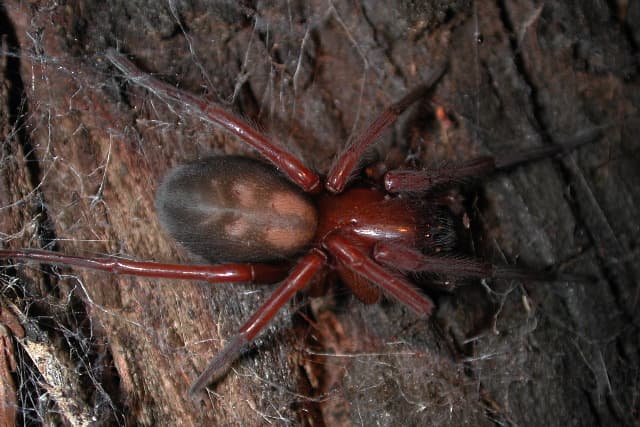
Amaurobiidae
Amaurobiidae is a family of spiders characterized by their three-clawed feet and the presence of either a cribellum or its absence. These spiders are typically found in crevices, hollows, or under stones, where they construct retreats and are often captured in pitfall traps. While widespread, they can be challenging to distinguish from closely related spider families.

Ancylometidae
Ancylometidae is a genus of Central and South American semiaquatic spiders, notable for their ability to walk on water and dive for extended periods. They are among the largest araneomorph spiders, with a distinctive appearance and a diet that includes insects, small lizards, and fish.