
Sicariidae
Ambush predator and active hunter, with some species known for self-burying behavior to ambush prey.
Sicariidae is a family of six-eyed venomous spiders, encompassing approximately 180 species across three genera. They are distinguished by their unique sphingomyelinase D venom, which can cause necrotic lesions, and members like the brown recluse and six-eyed sand spider are well-known. These spiders are found in warmer regions worldwide and deserts of southern Africa and the Americas, often exhibiting self-burying behaviors.
Key Facts
- ›All Sicariidae spiders possess six eyes arranged in three pairs (dyads).
- ›Their venom contains sphingomyelinase D, a substance capable of destroying tissue.
- ›Bites from some species can cause severe dermonecrotic lesions that are slow to heal.
- ›Members of the family include the well-known brown recluse (Loxosceles) and sand spiders (Hexophthalma and Sicarius).
- ›Some species are known for their ability to burrow themselves and survive long periods without food or water.
- ›Certain species, like some sand spiders, can live for up to fifteen years, significantly longer than most Loxosceles species.

Six-Eyed Venomous Spiders, Recluse Spiders, Violin Spiders, Sand Spiders, Assassin Spiders
Worldwide, Southern Africa, South America, Central America
Six Eyes Arranged In Three Pairs, Sphingomyelinase D In Venom, Violin Marking On Cephalothorax, Self-Burying Behavior
- Self-Burying Behavior
- Ability To Go Long Periods Without Food Or Water
About Sicariidae
Sicariidae is a family of venomous spiders characterized by their distinctive six eyes, arranged in three pairs, and their potent venom containing sphingomyelinase D. This enzyme is a powerful tissue-destroying agent, making bites from many species capable of causing severe necrotic lesions that are difficult to heal. The family comprises three genera and approximately 180 species, including the well-known brown recluse spider (Loxosceles) and the six-eyed sand spiders (Hexophthalma and Sicarius).
Distribution and Habitat
Sicariidae spiders are found in warmer regions across the globe. The recluse spiders, genus Loxosceles, are distributed nearly worldwide in such climates. In contrast, the sand spiders, genera Hexophthalma and Sicarius, inhabit the deserts of southern Africa and South to Central America, respectively. These desert-dwelling species are noted for their remarkable ability to bury themselves and endure extended periods without food or water.
Physical Characteristics and Venom
Recluse spiders are typically brownish and possess a characteristic darker brown marking on their cephalothorax that resembles a violin. Sand spiders, however, look more like crab spiders and lack this distinct marking. A significant feature across all genera is the presence of six eyes. The venom of Sicariidae spiders is notable for its high hemolytic and dermonecrotic activity. While bites from some Neotropical Sicarius species may not exhibit severe symptoms, others, like Sicarius ornatus and Sicarius thomisoides, contain active sphingomyelinase D and can cause serious damage. The necrotic lesions can be up to 1 inch in diameter, potentially requiring skin grafts, and infection of open wounds can lead to more severe complications. Systemic effects are rare but can occur if the venom enters the bloodstream.
Lifespan and Behavior
Certain members of the Sicariidae family boast exceptionally long lifespans. Some sand spiders have been documented to live for up to fifteen years, a duration comparable to many larger arachnids. Most Loxosceles species, however, have a more modest lifespan, typically ranging from one and a half to two years. A distinctive behavior observed in the sand spider genera is their capacity for self-burial, a strategy that likely aids in ambushing prey and surviving harsh desert conditions.
Source: Wikipedia ↗
Frequently Asked Questions
What are the main characteristics of Sicariidae spiders?
Sicariidae spiders are characterized by their six eyes, arranged in three pairs, and their venom which contains sphingomyelinase D. This venom is known for its potent tissue-destroying capabilities, leading to necrotic bites in some species. They are found in various warm climates and deserts globally.
What kind of venom do Sicariidae spiders have?
The venom of Sicariidae spiders typically contains sphingomyelinase D or a similar tissue-destroying enzyme, which is unique among spiders. This component can cause significant localized tissue damage, leading to necrotic lesions, and in rare cases, systemic effects.
Are Sicariidae spider bites dangerous to humans?
Yes, bites from many Sicariidae species can be dangerous. The venom is often dermonecrotic, causing lesions that are difficult to heal and can become infected. While not all bites result in severe symptoms, some species' venom can cause serious damage and may not have a known antivenom.
Where are Sicariidae spiders found?
Sicariidae spiders are distributed nearly worldwide in warmer areas. Specific genera have distinct distributions: Loxosceles (recluse spiders) are found in warmer regions globally, while Hexophthalma (African sand spiders) inhabit the deserts of southern Africa, and Sicarius (South and Central American sand spiders) are found in the deserts of South to Central America.
What is the difference between recluse spiders and sand spiders?
Recluse spiders, belonging to the genus Loxosceles, are typically brownish with a violin-shaped marking on their cephalothorax and are found in warmer regions worldwide. Sand spiders, in the genera Hexophthalma and Sicarius, resemble crab spiders, lack the violin marking, and are known for their desert habitats and self-burying behavior in southern Africa and the Americas.
How long do Sicariidae spiders live?
The lifespan of Sicariidae spiders varies by genus. Some sand spiders (Hexophthalma and Sicarius) are among the longest-living spiders, with some individuals reaching up to fifteen years. In contrast, most recluse spiders (Loxosceles) have a shorter lifespan, typically living for one and a half to two years.
Related Spider species

Theridiidae
Theridiidae, commonly known as tangle-web spiders or cobweb spiders, is a large and diverse family of araneomorph spiders found globally. They are notable for being the most common arthropod group in human dwellings worldwide and for spinning sticky capture silk, a characteristic that distinguishes them within the spider order.

Atracidae
Atracidae, commonly known as Australian funnel-web spiders, are a family of mygalomorph spiders native to Australia. These spiders are medium to large in size and are distinguished by their powerful fangs and the males' mating spurs. Some species possess venom that is dangerous to humans, with the Sydney funnel-web spider and northern tree-dwelling funnel-web spider being particularly noted for their potentially deadly bites.
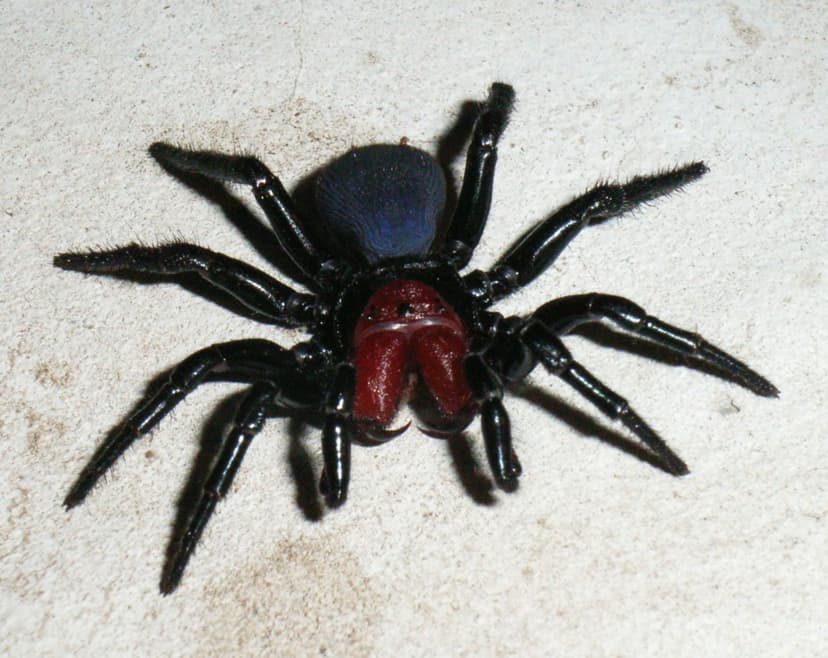
Actinopodidae
Actinopodidae is a family of mygalomorph spiders native to mainland Australia and South America, typically inhabiting open forests. This family includes the mouse spiders (Missulena species), which are notable for their medically significant and potentially dangerous bites.