
Theridiosomatidae
Web building with a unique slingshot technique, rapidly contracting the web to capture prey.
Ray spiders, belonging to the family Theridiosomatidae, are small, cosmotropical arachnids known for their distinctive cone-shaped webs and a unique hunting strategy that utilizes their webs as high-speed slingshots. With nearly 200 described species across 24 genera, these spiders are typically found in wet, shaded forest environments and are characterized by their small size, usually under 3 mm in body length.
Key Facts
- ›Theridiosomatidae includes almost 200 described species divided into 24 genera.
- ›They are typically less than 3 MM in body length, making them very small spiders.
- ›Ray spiders are best known for their cone-shaped webs and their 'slingshot' hunting technique.
- ›They are primarily found in wet or humid, shaded forest habitats.
- ›Their distribution is cosmotropical, with many genera restricted to the Neotropics.
- ›Fossils of ray spiders are known from the Mesozoic era.
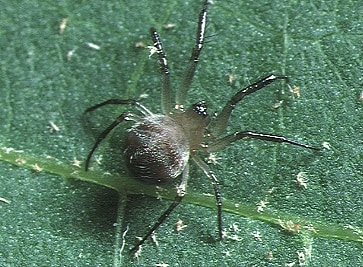
Ray Spiders
Cosmotropical, Neotropics, Old World Tropics, Europe, North America, Korea, Japan
- Distinctive Cone-Shaped Webs
- Hunting Technique Using Webs As High-Speed Slingshots
- Pit Organs On the Prolateral Margins of the Sternum
- Fused Spermathecae In Females
- Distinctive Conformation of the Male Palp Bulb and Sperm Duct Reservoir Route
- Labiosternal Glands
Use Webs As Slingshots For Hunting
About Theridiosomatidae
Ray Spiders (Theridiosomatidae)
Ray spiders, scientifically classified under the family Theridiosomatidae, are a group of small, cosmotropical arachnids first described by Eugène Simon in 1881. This family encompasses nearly 200 recognized species organized into 24 distinct genera. They are most famously recognized for their unique, cone-shaped webs and an extraordinary hunting method that employs these webs as high-speed slingshots to ensnare prey.
Habitat and Distribution
Theridiosomatids are primarily found in wet or humid, shaded forest environments, showing a preference for dark locations. Their webs are typically situated low to the ground, nestled within vegetation or leaf litter. Geographically, their distribution is cosmotropical, with a significant portion of their genera concentrated in the Neotropics. However, many genera are also present in the Old World Tropics, and a few species have managed to extend their range into colder temperate regions such as Europe and North America.
Physical Characteristics and Hunting
These spiders are notably diminutive, with most individuals measuring less than 2.5 mm in body length, and rarely exceeding 3 mm. Their appearance can vary, with coloration ranging from uniform shades to patterns of transverse silvery bands or mottled blotches. A key diagnostic feature for the family is the presence of pit organs on the prolateral margins of the sternum. Their most distinctive attribute is their hunting strategy. Unlike many web-building spiders that wait passively, ray spiders actively manipulate their webs, contracting them with remarkable speed to launch themselves or their silken traps at unsuspecting prey, a behavior that earns them the moniker "ray spiders."
Source: Wikipedia ↗
Frequently Asked Questions
What is the common name for spiders in the family Theridiosomatidae?
Spiders in the family Theridiosomatidae are commonly known as ray spiders. This name likely refers to the radial structure of their webs or their hunting method.
Where are ray spiders found geographically?
Ray spiders are primarily cosmotropical in distribution, meaning they are found in tropical regions around the world. Many genera are restricted to the Neotropics, while others are found in the Old World Tropics, with a few species extending into colder temperate regions.
What kind of habitat do ray spiders prefer?
Theridiosomatids almost exclusively inhabit wet or humid, shaded forest environments. They tend to prefer dark situations, and their webs are often found near the ground in low vegetation or leaf litter.
How do ray spiders hunt their prey?
Ray spiders are renowned for their remarkable hunting technique. They use their webs as high-speed slingshots, rapidly contracting the web to launch themselves or ensnare unsuspecting prey.
What is the typical size of a ray spider?
Ray spiders are very small arachnids. Their total body length typically ranges from 0.5 to 3.0 mm, with most species measuring less than 2.5 mm.
Do ray spiders build webs?
Yes, ray spiders are web builders. They construct distinctive cone-shaped webs which they then employ in their unique slingshot hunting strategy.
Related Spider species

Dipluridae
Dipluridae, commonly known as curtain-web spiders, are a family of mygalomorph spiders characterized by two pairs of booklungs and stabbing chelicerae. While historically encompassing genera now moved to other families, the current Dipluridae are primarily found in South America and the Caribbean, known for building messy funnel-webs or silk-lined burrows.

Deinopidae
Deinopidae, commonly known as net-casting spiders, are a family of circumtropical cribellate spiders recognized for their unique hunting strategy. These stick-like spiders catch prey by stretching a specialized web between their front legs and then propelling themselves forward, entangling their victims. Their exceptional night vision, facilitated by large posterior median eyes, allows them to hunt effectively in low-light conditions.

Hypochilidae
Hypochilidae, commonly known as lampshade spiders, represent one of the most primitive lineages within the araneomorph spiders. These long-legged arachnids are characterized by their distinctive "lampshade" style webs, typically constructed under overhangs and within caves. The family is distributed across North America and China, with most species found in mountainous regions.