
African helmeted turtle
Pelomedusidae·Omnivorous, feeding on aquatic invertebrates, small fish, vegetation, and carrion. Hatchlings consume tadpoles.·hard-shelled
The African helmeted turtle, also known as the marsh terrapin or crocodile turtle, is a species of omnivorous side-necked terrapin found in freshwater and stagnant water bodies across much of Sub-Saharan Africa and in southern Yemen. It is distinguished by its lack of a hinged plastron, allowing it to right itself with its neck when overturned, and its unique behavior of collectively drowning larger prey.
Key Facts
- ›Occurs in fresh and stagnant water bodies throughout much of Sub-Saharan Africa and in southern Yemen.
- ›Typically measures less than 20 cm in carapace length, though larger individuals exist.
- ›Has a black or brown carapace, gray-brown tail and feet, and a yellowish underside (plastron).
- ›Possesses a long, muscular neck that it uses to right itself when overturned.
- ›Is an omnivore, feeding on aquatic invertebrates, small fish, vegetation, and carrion.
- ›Can bury itself for months or even years during dry spells and hibernates or aestivates during extreme weather.

- Black Or Brown Carapace.
- Grayish-Brown Top of Tail and Feet.
- Yellowish Underside .
- Males Have Long, Thick Tails; Females Have Shorter Tails and Broader Carapaces.
- Hatchlings Are Olive To Black With A Shell Size of About 3 cm.
- Possesses Two Small Tubercles Under the Chin and Musk Glands In the Sides of the Carapace As Hatchlings.
- Semiaquatic.
- Can Right Itself With A Vigorous Flick of Its Long Muscular Neck When Upside Down.
- Embarks On Long Overland Journeys During Wet Weather.
- Digs Into the Ground and Buries Itself When Water Bodies Dry Up.
- Hibernates During Cold Weather and Aestivates During Hot, Dry Weather.
- Groups Have Been Observed Capturing and Drowning Larger Prey.
- All Food Is Taken Underwater To Be Eaten.
About African helmeted turtle
The African helmeted turtle, scientifically known as Pelomedusa subrufa, is a distinct species of omnivorous, side-necked terrapin belonging to the family Pelomedusidae. Commonly referred to as the marsh terrapin or crocodile turtle, it is also known in the pet trade as the African side-necked turtle. This species is naturally found in freshwater and stagnant water bodies across a significant portion of Sub-Saharan Africa, extending its range to southern Yemen.
Description and Characteristics
African helmeted turtles are generally small, with most individuals measuring less than 20 centimeters in straight carapace length, although larger specimens up to 32.5 cm have been recorded. Their carapace is typically black or brown, complemented by grayish-brown coloration on the top of the tail and feet, and a yellowish plastron (underside). Males are identifiable by their long, thick tails, while females possess shorter tails and broader carapaces. Hatchlings are olive to black and measure about 3 cm in shell length, featuring two small tubercles under their chin and musk glands on the sides of their carapace.
A unique characteristic of the genus Pelomedusa is the absence of a hinged plastron, a feature present in other species within the Pelomedusidae family that allows them to close their shell to protect their head and limbs. Unlike many other turtles, the African helmeted turtle possesses a long, muscular neck that it can use to effectively right itself when overturned.
Geographic Range and Habitat
The geographic distribution of P. subrufa is extensive, spanning from Cape Town in the south to Sudan in the north and Ghana in the west of Africa. It has also been documented in Madagascar and Yemen. This semiaquatic species prefers habitats such as rivers, lakes, and marshes, and also occupies rain pools and fertilized areas. Standing water bodies like swamps, pans, dams, and lakes are particularly favored, though they are found to a lesser extent along rivers. They are typically absent from mountainous, forested, or desert environments.
Diet and Behavior
As an omnivore, the African helmeted turtle consumes a wide variety of food, primarily aquatic invertebrates, small fish, and vegetation, and it may also scavenge on carrion. Its fine claws aid in tearing prey. Notably, groups of these turtles have been observed cooperatively capturing and drowning larger prey, such as doves, with the ensuing commotion sometimes mistaken for crocodile activity. All feeding takes place underwater.
Seasonal movements are a significant aspect of their behavior. During wet weather, they often leave their aquatic homes to undertake long overland journeys. Conversely, during exceptionally dry periods when water sources evaporate, they will bury themselves in the ground, remaining dormant until the rains return, a state that can last for months or even years. They also exhibit hibernation during cold weather and aestivation during hot, dry conditions.
Reproduction
Courtship in P. subrufa can occur throughout the year. Males initiate courtship by following females and nodding their heads. If the female is receptive, she may respond by nodding or remaining still, allowing the male to mount. Mating involves head-shaking by both individuals. Females typically lay between two and ten eggs, usually in the late spring and early summer, depositing them in flask-shaped nests dug 4 to 18 cm deep. The incubation period for the eggs ranges from 75 to 90 days.
Captivity
The African helmeted turtle is a popular choice in the pet trade, partly due to its distinctive head-tucking behavior, which is a notable characteristic for a side-necked turtle.
Source: Wikipedia ↗
Frequently Asked Questions
What is the scientific name for the African helmeted turtle?
The scientific name for the African helmeted turtle is Pelomedusa subrufa. Recent genetic research suggests that the genus Pelomedusa may comprise at least 10 different species, rather than just one as previously believed.
Where can the African helmeted turtle be found?
The African helmeted turtle is naturally found in fresh and stagnant water bodies across much of Sub-Saharan Africa, ranging from Cape Town in the south to Sudan in the north and Ghana in the west. It has also been recorded in Madagascar and Yemen.
What does the African helmeted turtle eat?
This species is omnivorous and consumes a varied diet. It primarily eats aquatic invertebrates, small fish, and vegetation, and may also feed on carrion. All food is taken underwater to be eaten.
What are the distinctive physical characteristics of the African helmeted turtle?
African helmeted turtles typically have a black or brown carapace and a yellowish plastron. Males are distinguished by a long, thick tail, while females have shorter tails and broader carapaces. A unique characteristic is the absence of a hinged plastron, unlike other species in its family.
How does the African helmeted turtle behave when water bodies dry up?
During exceptionally dry weather, the African helmeted turtle will typically dig into the ground and bury itself until rains return, a state it can endure for months or even years. It also hibernates during cold weather and aestivates during hot, dry periods.
What are the reproduction habits of the African helmeted turtle?
Courtship can occur year-round, with males following and nodding their heads at females. Females lay an average of two to ten eggs in flask-shaped nests, typically during late spring and early summer. The eggs hatch in 75 to 90 days.
Is the African helmeted turtle a freshwater or marine species?
The African helmeted turtle is a freshwater species. It inhabits rivers, lakes, marshes, and other standing water bodies, and is generally absent from mountainous, forested, or desert regions.
Related Turtles
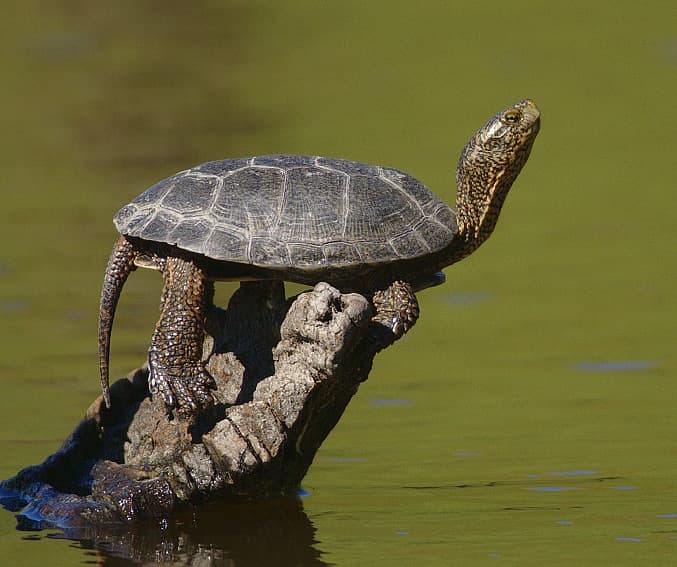
Actinemys marmorata
The western pond turtle (Actinemys marmorata), also known as the Pacific pond turtle, is a species of turtle endemic to the western coast of the United States and Mexico. It is characterized by its low, broad, smooth carapace and yellowish plastron, and it plays a significant role in its ecosystem as an omnivore, consuming insects, crayfish, and plant matter.
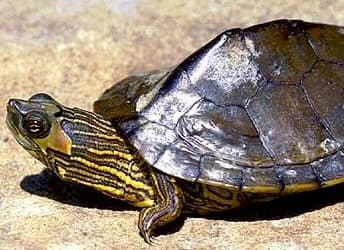
Alabama map turtle
The Alabama map turtle, scientifically known as Graptemys pulchra, is a species of emydid turtle native to the southern United States. It is distinguished by a black stripe with knobs running down the center of its back, which wears down with age. This turtle is endemic to the Mobile Bay drainage basin and faces threats from habitat destruction.

Acanthochelys macrocephala
The big-headed pantanal swamp turtle (Acanthochelys macrocephala) is a species of turtle found in Brazil, Bolivia, Argentina, and Paraguay. Distinctive for its extremely broad head, it is the largest species within the Acanthochelys genus, reaching up to 23.5 cm in carapace length. This species inhabits marshes, swamps, and slow-flowing streams.