
Alabama map turtle
Reptilia·Omnivore, feeding on mollusks, insects, carrion, and vegetation, with a preference for the imported oriental mussel (Corbicula maniliensis).·Near Threatened·Hard-shelled
The Alabama map turtle, scientifically known as Graptemys pulchra, is a species of emydid turtle native to the southern United States. It is distinguished by a black stripe with knobs running down the center of its back, which wears down with age. This turtle is endemic to the Mobile Bay drainage basin and faces threats from habitat destruction.
Key Facts
- ›Endemic to the Mobile Bay drainage basin in the southeastern United States.
- ›Distinguished by a black dorsal stripe with knobs that diminish with age.
- ›Males and females exhibit significant size dimorphism, with females being much larger.
- ›Females have large heads adapted for crushing snails and mollusks.
- ›Listed as near Threatened by the IUCN and threatened by the U.S. Fish and Wildlife Service due to similarity of appearance to the Pearl River map turtle.
- ›Primary food source for adults is the imported oriental mussel.
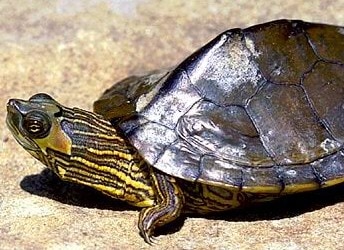
- Black Stripe Down the Center of the Back With Knobs .
- Olive To Dull Green Carapace In Adults, More Olive With A Dark Stripe In Juveniles.
- Adult Males Range From 9.0–12.7 cm Carapace Length; Adult Females Range From 18.0–29.2 cm Carapace Length.
- Females Have Extremely Large Heads For Crushing Snails and Mollusks.
- Hingeless Yellow Plastron Notched At the Back.
- Brown To Olive Head With A Large Light Green To Yellow Mark Between and Behind the Eyes.
- Webbed Feet; Striped Tail and Limbs.
- Seasonal Activity Is Primarily Determined By Water Temperature; Temperatures Below 19 °C Lead To A Decline In Feeding and Activity.
- No Complete Hibernation Observed, But Activity Significantly Reduces In Cooler Temperatures.
- Males Have Long, Thick Tails With the Vent Past the Carapace Edge.
- Habitat Destruction
- Habitat Fragmentation
- Human Disturbances
- Similarity of Appearance To the Pearl River Map Turtle
- Alligator Snapping Turtle
About Alabama map turtle
The Alabama Map Turtle
The Alabama map turtle, scientifically classified as Graptemys pulchra, is a distinct species of emydid turtle native to the southern United States. Its most recognizable feature is a prominent black stripe running down the center of its back, which is accompanied by knob-like protrusions that gradually wear down as the turtle ages. This turtle is endemic to the Mobile Bay drainage basin, inhabiting the flowing water systems of Alabama, Georgia, Florida, Mississippi, and possibly Louisiana.
Description and Characteristics
Distinguishing the Alabama map turtle from other species within the Graptemys genus involves examining several key features. While males are relatively small, typically measuring between 9.0 and 12.7 cm in carapace length and retaining much of their juvenile coloration, females are significantly larger, ranging from 18.0 to 29.2 cm. Adult females possess notably large heads, an adaptation for crushing snails and mollusks, and their patterns become less distinct, appearing drabber than those of juveniles and males. The carapace, or upper shell, is generally olive to dull green, with a subtly visible black stripe in adults. Juveniles exhibit a darker stripe on a more olive carapace. The plastron, or bottom shell, is yellow and unhinged, with a notch at the rear. The head is typically brown to olive, marked by a prominent light green to yellow patch situated between and behind the eyes.
Habitat and Behavior
The Alabama map turtle prefers lotic, or flowing water, environments, particularly large coastal plains streams that support substantial populations of mollusks. There are notable differences in habitat preference based on age and sex; juveniles and adult males favor shallow waters with accessible basking logs, while adult females are more inclined to inhabit deeper waters and prefer sandbars with a specific coarseness.
Diet and Reproduction
As omnivores, Alabama map turtles consume a varied diet including mollusks, insects, carrion, and vegetation. The imported oriental mussel (Corbicula maniliensis) is a primary food source for adults. Smaller individuals and juveniles tend to feed more heavily on insects. Reproduction involves males reaching sexual maturity in three to four years, while females mature much later, around 14 years of age. Mating typically occurs in the autumn. Females lay an average of 29 eggs per season, usually on exposed sandbars located between 1 and 20 meters from the water's edge. The incubation period lasts approximately 74 to 79 days at a temperature of 29 °C. Nest predators commonly include fish crows and raccoons.
Conservation Status
The Alabama map turtle is designated as Near Threatened by the International Union for Conservation of Nature (IUCN). It is considered at high risk of extirpation due to its confinement to specific river systems and susceptibility to human disturbances such as habitat destruction and fragmentation. In 2024, the U.S. Fish and Wildlife Service listed the species as threatened, primarily based on its similarity in appearance to the Pearl River map turtle, which can complicate conservation efforts.
Source: Wikipedia ↗
Frequently Asked Questions
What makes the Alabama map turtle distinctive from other turtles?
The Alabama map turtle possesses a black stripe running down the center of its back, featuring knobs that protrude. These projections wear down and become less prominent as the turtle ages, serving as a key diagnostic feature.
Where is the Alabama map turtle found?
This species is endemic to the Mobile Bay drainage basin in the southeastern United States. Its range extends from the Pearl River in Mississippi and Louisiana eastward to the Yellow River in Florida and Alabama.
What is the conservation status of the Alabama map turtle?
The Alabama map turtle is listed as Near Threatened by the IUCN. It is also designated as a protected species in Alabama, a rare species in Georgia, and a species of special concern in Mississippi. The U.S. Fish and Wildlife Service lists it as threatened due to its similarity in appearance to the Pearl River map turtle.
How do males and females differ in the Alabama map turtle?
There is significant sexual dimorphism. Adult males are much smaller, ranging from 9.0–12.7 cm, and retain juvenile coloration. Adult females are considerably larger, ranging from 18.0–29.2 cm, and develop extremely large heads for crushing prey, becoming drabber in appearance.
What do Alabama map turtles eat?
Their diet includes mollusks, insects, carrion, and vegetation. A primary food item for adults is the imported oriental mussel. Smaller individuals and juveniles tend to feed more on insects.
What are the reproductive habits of the Alabama map turtle?
Males reach sexual maturity in 3-4 years, while females mature around 14 years old. Mating occurs in autumn, and females lay an average of 29 eggs per season, often on sandbars. Incubation lasts approximately 74 to 79 days.
Related Turtles

Acanthochelys macrocephala
The big-headed pantanal swamp turtle (Acanthochelys macrocephala) is a species of turtle found in Brazil, Bolivia, Argentina, and Paraguay. Distinctive for its extremely broad head, it is the largest species within the Acanthochelys genus, reaching up to 23.5 cm in carapace length. This species inhabits marshes, swamps, and slow-flowing streams.
Actinemys marmorata
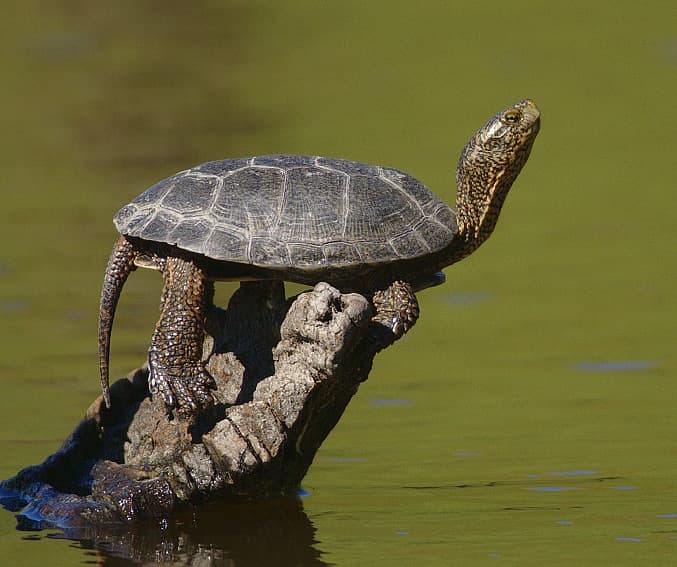
The western pond turtle (Actinemys marmorata), also known as the Pacific pond turtle, is a species of turtle endemic to the western coast of the United States and Mexico. It is characterized by its low, broad, smooth carapace and yellowish plastron, and it plays a significant role in its ecosystem as an omnivore, consuming insects, crayfish, and plant matter.

African spurred tortoise
The African spurred tortoise, also known as the sulcata tortoise, is the largest mainland tortoise in Africa and the third largest globally. It inhabits the arid regions bordering the Sahara Desert and the Sahel. This species is distinctive for its large size, furrowed scales, and its ability to dig extensive burrows for thermoregulation.