
Actinemys marmorata
Reptilia·Omnivorous, consuming insects, crayfish, aquatic invertebrates, fish, tadpoles, frogs, carrion, filamentous algae, lily pads, and tule and cattail roots. Juveniles are primarily carnivorous.·Vulnerable·Hard-shelled
The western pond turtle (Actinemys marmorata), also known as the Pacific pond turtle, is a species of turtle endemic to the western coast of the United States and Mexico. It is characterized by its low, broad, smooth carapace and yellowish plastron, and it plays a significant role in its ecosystem as an omnivore, consuming insects, crayfish, and plant matter.
Key Facts
- ›Native range extends from western Washington state to northern Baja California, Mexico.
- ›Carapace length typically ranges from 11–21 cm (4.5–8.5 in) and is smooth without a keel or serrations in adults.
- ›Omnivorous diet includes insects, crayfish, fish, tadpoles, frogs, carrion, and various plant foods.
- ›Females lay 5–13 eggs per clutch, often traveling some distance from water to find suitable nesting sites.
- ›Hatchlings and eggs commonly overwinter in the nest, emerging in the spring.
- ›Vulnerable on the IUCN Red List due to habitat destruction, modification, and competition from invasive species.
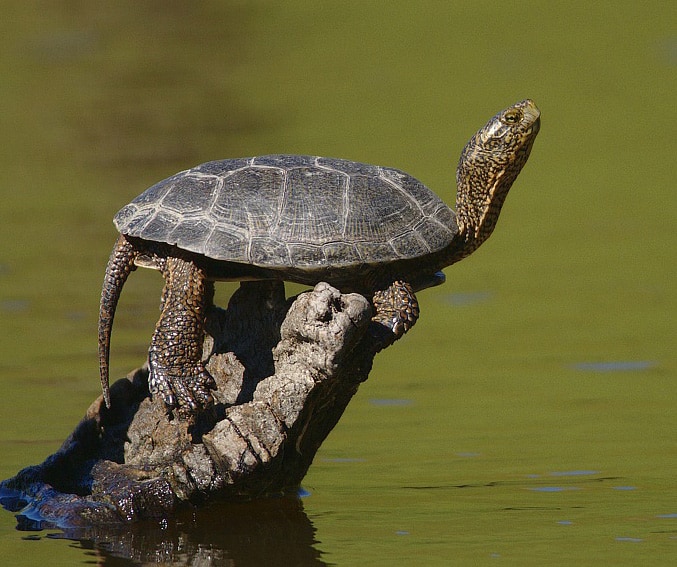
- Dorsal Color Is Usually Dark Brown Or Dull Olive, With Or Without Darker Streaking.
- Plastron Is Yellowish, Sometimes With Dark Blotches.
- Carapace Is Low and Broad, Typically Widest Behind the Middle.
- Adult Carapace Is Smooth, Lacking A Keel Or Serrations.
- Males Have A Light Or Pale Yellow Throat, Distinguishing Them From Females.
- Individuals Aggregate To Bask On Emergent Logs, Boulders, Or Aquatic Vegetation.
- Can Spend Extended Periods Out of Water, Up To 200 Days, Especially During Dry Seasons.
- Overwinter Outside of Water In Terrestrial Sites.
- Can Be Difficult To Observe In the Wild Due To Their Basking Habits and Tendency To Hide.
- Habitat Destruction and Modification
- Competition From Invasive Species
- Predation By Native and Non-Native Animals
- Modification of Sandy Banks Needed For Egg Laying
- Draining of Wetlands
About Actinemys marmorata
The Western Pond Turtle
The western pond turtle, scientifically known as Actinemys marmorata and also commonly called the Pacific pond turtle, is a medium-sized turtle species native to the western coast of North America. Its natural range extends from northern Baja California, Mexico, north through California, Oregon, and into Washington state. Once found in British Columbia, Canada, it is now considered extirpated from that region.
Description and Habitat
This species is characterized by a low, broad, and smooth carapace, typically ranging from 11 to 21 cm in straight carapace length. The dorsal coloration is usually dark brown or dull olive, sometimes with darker streaking, while the plastron is yellowish, occasionally marked with dark blotches. Western pond turtles inhabit a variety of freshwater environments, including marshes, streams, rivers, ponds, and lakes. They favor areas with ample basking opportunities, such as emergent logs or boulders, and are also known to bask on aquatic vegetation. Crucially, terrestrial habitats are also vital, as these turtles can spend significant periods out of water, particularly during dry seasons and for overwintering, sometimes traveling considerable distances from water sources.
Diet and Behavior
Actinemys marmorata is an omnivorous species. Its diet includes a wide array of food items such as insects, crayfish, other aquatic invertebrates, small fish, tadpoles, frogs, and carrion. Plant matter, including algae and roots, also forms part of their diet, with juveniles being more carnivorous and adults incorporating more plant material as they mature. Behaviorally, they are known for aggregating to bask and can be challenging to observe due to their secretive nature. Many hatchlings and eggs overwinter within the nest, emerging in the spring.
Reproduction and Conservation
Female western pond turtles lay clutches of 5 to 13 eggs, typically once or twice a year. They often travel away from water to find suitable nesting sites, usually in open, sandy, or hardpan areas. Despite their resilience, western pond turtles are currently listed as Vulnerable on the IUCN Red List. Major threats include habitat destruction and modification, competition from invasive species like the red-eared slider, and predation. Conservation efforts are ongoing to protect this species and its remaining habitats.
Source: Wikipedia ↗
Frequently Asked Questions
What is the scientific name for the western pond turtle?
The scientific name for the western pond turtle is Actinemys marmorata. Previously, this species was sometimes considered part of the genus Emys, but Actinemys is now widely accepted.
Where are western pond turtles found?
Western pond turtles are naturally found along the western coast of North America, from northern Baja California, Mexico, up through California, Oregon, and into Washington state. They were formerly found in British Columbia, Canada, but are now considered extirpated there.
What do western pond turtles eat?
The western pond turtle is omnivorous. Its diet consists primarily of insects and crayfish, but they also eat fish, tadpoles, frogs, carrion, filamentous algae, lily pads, and tule and cattail roots. Juveniles are more carnivorous, while adults incorporate more plant matter.
How long do western pond turtles live?
Western pond turtles can survive for more than 50 years in the wild. Their age at first reproduction is estimated to be between 10 to 12 years in the northern parts of their range.
What are the main threats to western pond turtles?
Major threats include habitat destruction and modification, such as the removal of ponds and draining of wetlands, which impacts nesting sites and water availability. They also face significant competition from introduced invasive species like the red-eared slider and predation from both native and non-native animals.
How do western pond turtles reproduce?
Female western pond turtles lay 5–13 eggs per clutch, either once or twice a year. They often travel away from water to find suitable nesting sites, typically in open areas of sand or hardpan. The nests are covered by the females to conceal them from predators.
Related Turtles

African spurred tortoise
The African spurred tortoise, also known as the sulcata tortoise, is the largest mainland tortoise in Africa and the third largest globally. It inhabits the arid regions bordering the Sahara Desert and the Sahel. This species is distinctive for its large size, furrowed scales, and its ability to dig extensive burrows for thermoregulation.
African softshell turtle
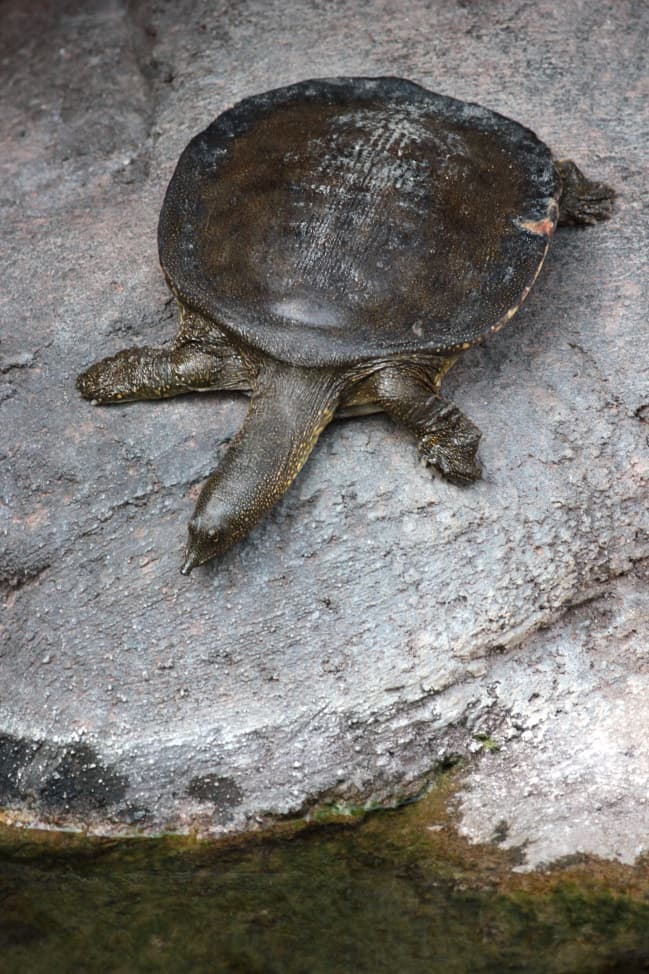
The African softshell turtle (Trionyx triunguis) is a large, omnivorous turtle found in freshwater and brackish water across much of Africa and parts of the Near East. It is the sole surviving species in the genus Trionyx and is notable for its leathery, soft shell and its historical association with ancient Egyptian religion as a symbol of evil.
Alabama map turtle
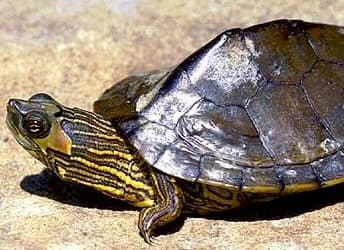
The Alabama map turtle, scientifically known as Graptemys pulchra, is a species of emydid turtle native to the southern United States. It is distinguished by a black stripe with knobs running down the center of its back, which wears down with age. This turtle is endemic to the Mobile Bay drainage basin and faces threats from habitat destruction.