
African spurred tortoise
Reptilia·Mostly herbivores, consuming grasses, succulents, hay, flowers, and occasionally plant matter from water surfaces. Will sometimes eat carcasses of dead animals and refuse if available.·Endangered·Hard-shelled
The African spurred tortoise, also known as the sulcata tortoise, is the largest mainland tortoise in Africa and the third largest globally. It inhabits the arid regions bordering the Sahara Desert and the Sahel. This species is distinctive for its large size, furrowed scales, and its ability to dig extensive burrows for thermoregulation.
Key Facts
- ›It is the largest mainland tortoise species in Africa and third largest in the world.
- ›The African spurred tortoise is native to the southern edge of the Sahara Desert and the Sahel.
- ›Males can reach over 100 kg, with some recorded above 120 kg.
- ›They excavate deep burrows, sometimes up to 15 meters deep, to escape extreme heat.
- ›The species is currently ranked as endangered due to habitat loss and overharvesting for the pet trade.
- ›They are primarily herbivores, feeding on grasses, succulents, and hay.

Largest Mainland Tortoise In Africa., Third-Largest Tortoise Species In the World., Males Have Spurs On Their Hind Legs., Scales Have Distinct Furrows., Hatchlings Are Small But Grow Rapidly.
- Highly Territorial, Especially Males Who Fight For Breeding Rights.
- Excavate Deep Burrows For Aestivation .
- Passive and Docile In Captivity, Rarely Aggressive.
- Can Become Stressed By Frequent Handling.
- Curious, Sometimes Leading Them To Get Stuck On Their Backs.
Habitat Loss, Competition With Livestock, Wildfires, Overharvesting For the Pet Trade, Predation On Eggs, Climate Change
About African spurred tortoise
The African spurred tortoise, scientifically known as Centrochelys sulcata, is a remarkable reptile renowned for its impressive size and its adaptation to harsh, arid environments. It holds the distinction of being the largest mainland tortoise species in Africa and ranks as the third-largest tortoise species globally, surpassed only by the Galapagos tortoise and the Aldabra giant tortoise. This species is the sole living representative of its genus, Centrochelys.
Range and Habitat
This tortoise is native to the arid landscapes found along the southern fringe of the Sahara Desert and the Sahel region. Its natural range encompasses countries such as Senegal, Mali, Mauritania, Chad, Sudan, and Ethiopia, extending through grasslands, savannas, and thorn shrublands. In these dry environments, the African spurred tortoise exhibits a crucial survival behavior: excavating extensive burrows. These subterranean retreats can reach depths of up to 15 meters (49 ft) and lengths of 30 meters (98 ft), providing refuge from extreme temperatures and access to higher moisture levels. They are often found on hills, stable dunes, and flat areas interspersed with shrubs and tall grasses, sometimes settling near interrupted streams or rivers.
Physical Characteristics and Lifespan
Adult males are significantly larger than females, with an average straight carapace length of around 86 cm (34 inches) and a mass often exceeding 81 kg (179 lb), with some individuals weighing over 100 kg (220 lb). Females typically have a carapace length of about 57.8 cm (22.8 inches). A distinctive feature of this species is the presence of prominent spurs on its hind legs, from which it derives its common name. Despite their massive adult size, hatchlings are surprisingly small, measuring only about 44 mm (1.7 inches) and weighing around 40 grams (1.4 oz). They grow rapidly, especially during periods of higher rainfall. While their lifespan in the wild is not precisely documented but is believed to exceed 75 years, tortoises in captivity have been recorded living for around 54 years.
Diet and Behavior
The African spurred tortoise is predominantly herbivorous. Its diet consists mainly of various grasses, succulent plants, and hay, emphasizing high fiber content and low protein to prevent health issues like metabolic bone disease. They have been observed to consume flowers, cactus pads, and even algae from water surfaces. Occasionally, they will supplement their diet with carcasses of dead animals, particularly goats and zebras found near their habitats, and may scavenge from human refuse if settlements are nearby. In their natural habitat, males are highly territorial and engage in combat for breeding rights, often vocalizing during these disputes and copulation. Despite their robust nature, they are known to be curious and can inadvertently get stuck on their backs, requiring assistance to right themselves.
Reproduction
Breeding activities typically commence after the rainy season, from September through November. Females begin nesting about sixty days after mating, potentially excavating multiple nests before selecting the ideal location. They often lay two to three clutches of eggs, with each clutch containing between 14 and 40 eggs. The nesting process involves digging a substantial depression, sometimes requiring up to five hours. After laying eggs at a rate of about one every three minutes, the female meticulously covers the nest, a process that can take over an hour. The incubation period for the eggs ranges from 90 to 120 days, ideally at temperatures between 86 to 88°F (30 to 31°C).
Conservation Status
The African spurred tortoise is currently classified as an endangered species. Studies indicate a significant decline in their population and a drastic reduction in their historical range. Major threats contributing to their precarious status include habitat loss driven by climate change, competition for grazing resources with livestock, wildfires that decimate their food supply, and relentless overharvesting for the international pet trade. The removal of tortoises, particularly young ones, before they reach sexual maturity (estimated around 15 years) severely impacts their ability to reproduce and sustain wild populations. Conservation efforts primarily involve reintroduction programs and the establishment of captive breeding colonies, with hopes of expanding these initiatives through collaboration with private tortoise owners.
Source: Wikipedia ↗
Frequently Asked Questions
What is the scientific name for the African spurred tortoise?
The scientific name for the African spurred tortoise is Centrochelys sulcata. It is the only living species within its genus, Centrochelys.
Where are African spurred tortoises found in the wild?
African spurred tortoises are native to the Sahara Desert and the Sahel, a transitional zone of grasslands and savannas. They can be found in countries such as Burkina Faso, Chad, Ethiopia, Mali, Nigeria, Senegal, and Sudan.
How large do African spurred tortoises get?
They are very large tortoises. Males typically have a straight carapace length of around 86 cm and can weigh over 100 kg, with some exceeding 120 kg. Females are smaller, with a carapace length of about 57.8 cm.
What do African spurred tortoises eat?
African spurred tortoises are primarily herbivores. Their diet consists mainly of grasses, succulents, and hay, which should be high in fiber and low in protein. They may also occasionally eat dead animals found in the wild.
What is the conservation status of the African spurred tortoise?
The African spurred tortoise is currently ranked as an endangered species. Their populations have declined significantly due to threats such as habitat loss, competition with livestock, and overharvesting for the pet trade.
How long do African spurred tortoises live?
In captivity, their lifespan is around 54 years. In the wild, their lifespan is unknown but is believed to exceed 75 years, though this is becoming increasingly difficult to ascertain due to their endangered status.
What are the main threats to African spurred tortoises?
Major threats include habitat loss due to climate change, competition for resources with livestock like cattle, wildfires that destroy grasslands, and overharvesting for the pet trade. Predators also pose a risk to their eggs.
Related Turtles
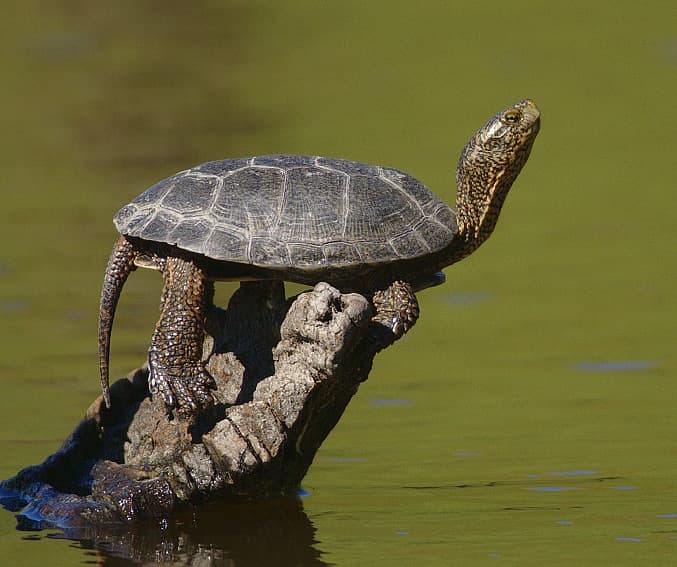
Actinemys marmorata
The western pond turtle (Actinemys marmorata), also known as the Pacific pond turtle, is a species of turtle endemic to the western coast of the United States and Mexico. It is characterized by its low, broad, smooth carapace and yellowish plastron, and it plays a significant role in its ecosystem as an omnivore, consuming insects, crayfish, and plant matter.
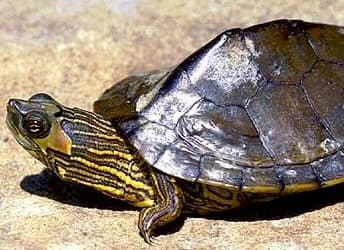
Alabama map turtle
The Alabama map turtle, scientifically known as Graptemys pulchra, is a species of emydid turtle native to the southern United States. It is distinguished by a black stripe with knobs running down the center of its back, which wears down with age. This turtle is endemic to the Mobile Bay drainage basin and faces threats from habitat destruction.
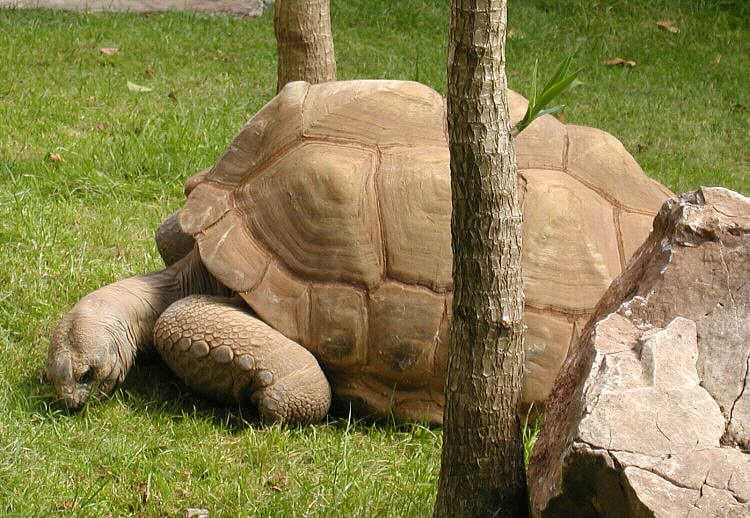
Aldabra giant tortoise
The Aldabra giant tortoise is one of the largest living tortoise species, native to the Aldabra atoll in the Seychelles. It is distinguished by its high-domed, tan or brown carapace, long neck to reach higher vegetation, and stocky, scaled legs. Historically found on many Indian Ocean islands, it is now primarily found in the Seychelles, with a significant population on Aldabra atoll.