
Alabama red-bellied cooter
Testudines·Aquatic vegetation·hard-shelled
The Alabama red-bellied cooter, also known as the Alabama red-bellied turtle, is a species of pond turtle native to Alabama. It is recognized as the official reptile of the state and inhabits the freshwater to brackish waters of the Mobile-Tensaw River Delta. This turtle is distinctive for its role as a state symbol and its specific habitat within Alabama.
Key Facts
- ›Native to Alabama, USA.
- ›Official reptile of the state of Alabama.
- ›Inhabits fresh to brackish waters of the Mobile-Tensaw River Delta.
- ›Females lay 4 to 9 eggs in sandy soil nests.
- ›Mature females can reach up to 14 inches in carapace length.
- ›Threatened by predation from various animals including humans, wild boars, and alligators.

- Mature Females Up To 14 Inches Carapace Length.
- Mature Males Up To 12 Inches Carapace Length.
Seen Sunning Itself On Logs.
- Predation On Eggs and Hatchlings By Humans, Wild Boars, Raccoons, Fish Crows, Mexican Long-Nosed Armadillos, Red Imported Fire Ants, Aquatic Snakes, and Great Blue Herons.
- Predation On Adults By American Alligators.
About Alabama red-bellied cooter
The Alabama red-bellied cooter, scientifically known as Pseudemys alabamensis, is a species of turtle native to the state of Alabama in the United States. It is also referred to as the Alabama red-bellied turtle and holds the distinction of being the official reptile of Alabama. This species belongs to the Emydidae family, commonly known as pond turtles.
Habitat and Distribution
This turtle is found in the freshwater to brackish waters of the Mobile-Tensaw River Delta, primarily within Mobile and Baldwin counties in Alabama. Sightings have also been recorded in the central part of Alabama, specifically in the Elmore County region. Its range may extend into southeastern Mississippi, including Harrison and Jackson counties, and potentially into northwest Florida.
Life History and Reproduction
The Alabama red-bellied cooter typically feeds on aquatic vegetation and is often observed basking on logs in its environment. Nesting activities occur annually from May through July. Female turtles deposit their eggs, numbering between 4 and 9, in nests dug into sandy soil on dry land. Hatchlings usually emerge during the summer months. In cases where nesting occurs late in July, it is possible for hatchlings to remain in the nest over winter and emerge in the following spring.
Physical Characteristics
A mature female Alabama red-bellied cooter can grow to approximately 14 inches (360 mm) in carapace length, while mature males are generally smaller, reaching up to 12 inches (300 mm) in carapace length.
Predation and Conservation Efforts
The eggs and young of the Alabama red-bellied cooter are preyed upon by a variety of animals, including humans, wild boars, raccoons, fish crows, Mexican long-nosed armadillos, and red imported fire ants. Aquatic snakes and great blue herons also pose a threat to hatchlings, while adult turtles may be preyed upon by American alligators. Efforts to protect the species have included the construction of fences along causeways, such as one along US 98, which significantly reduced hatchling mortality.
Source: Wikipedia ↗
Frequently Asked Questions
Where does the Alabama red-bellied cooter live?
The Alabama red-bellied cooter is native to Alabama and inhabits the fresh to brackish waters of the Mobile-Tensaw River Delta in Mobile and Baldwin counties. It has also been observed in the Elmore County region of central Alabama, and may be found in southeastern Mississippi and potentially northwest Florida.
What is the Alabama red-bellied cooter known for?
The Alabama red-bellied cooter is recognized as the official reptile of the state of Alabama. Its presence is specifically tied to the aquatic environments of the Mobile-Tensaw River Delta.
What do Alabama red-bellied cooters eat?
The diet of the Alabama red-bellied cooter consists primarily of aquatic vegetation. They are often observed sunning themselves on logs in their habitat.
How do Alabama red-bellied cooters reproduce?
Nesting for the Alabama red-bellied cooter occurs between May and July. Females lay 4 to 9 eggs in nests dug in sandy soil on dry land. Hatchlings typically emerge in the summer, though those laid late in July may overwinter in the nest.
What are the threats to the Alabama red-bellied cooter?
The eggs and hatchlings of the Alabama red-bellied cooter are vulnerable to predation from humans, wild boars, raccoons, fish crows, Mexican long-nosed armadillos, and red imported fire ants. Aquatic snakes and great blue herons also prey on hatchlings, while adult turtles may be eaten by American alligators.
What is the size of an Alabama red-bellied cooter?
Mature female Alabama red-bellied cooters can reach a carapace length of up to 14 inches (360 mm). Mature males are slightly smaller, with a carapace length of up to 12 inches (300 mm).
Related Turtles
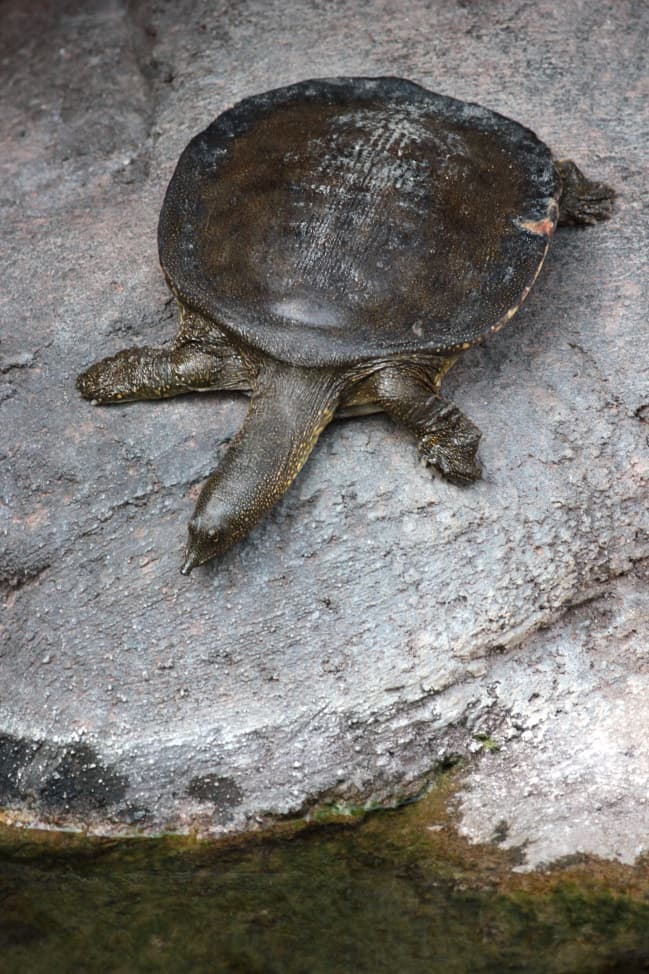
African softshell turtle
The African softshell turtle (Trionyx triunguis) is a large, omnivorous turtle found in freshwater and brackish water across much of Africa and parts of the Near East. It is the sole surviving species in the genus Trionyx and is notable for its leathery, soft shell and its historical association with ancient Egyptian religion as a symbol of evil.

Actinemys pallida
The Actinemys pallida, also known as the southwestern pond turtle, is an aquatic turtle belonging to the genus Actinemys within the Emydidae family. It is native to bodies of water found in southern California and Baja California.

African helmeted turtle
The African helmeted turtle, also known as the marsh terrapin or crocodile turtle, is a species of omnivorous side-necked terrapin found in freshwater and stagnant water bodies across much of Sub-Saharan Africa and in southern Yemen. It is distinguished by its lack of a hinged plastron, allowing it to right itself with its neck when overturned, and its unique behavior of collectively drowning larger prey.