
Acorn woodpecker
The Acorn Woodpecker is a medium-sized woodpecker recognized by its striking black and white plumage, with males sporting a red cap. These birds are highly social and exhibit cooperative breeding behaviors, living in family groups. They are predominantly found in oak-filled forests across Central America and into the western United States and Colombia, relying heavily on acorns for sustenance and storage.
Key Facts
- ›Found in oak woodlands from the western United States to Colombia.
- ›Distinctive black and white plumage with a red cap in males.
- ›Highly social birds known for cooperative breeding and living in family groups.
- ›Store acorns in drilled holes in 'granaries' for food security.
- ›Primarily feed on insects, sap, and fruit, in addition to acorns.
- ›Their call is often described as sounding like laughter.

Acorn Woodpecker
North America, Central America, South America
Forested Areas With Oaks, Coastal Areas, Foothills
White forehead, throat, belly, and rump, Red cap in adult males, White circles on wings visible in flight, Eyes turn white within months of fledging
Insects, Acorns, Sap, Fruit, Seeds
Sallying from tree limbs to catch insects, Drilling holes to drink sap, Storing acorns in granaries
Cavity in a dead tree, Cavity in a dead part of a tree
Call Sounds Almost Like They Are Laughing
About Acorn woodpecker
The Acorn Woodpecker (Melanerpes formicivorus) is a distinctive medium-sized woodpecker found across Central America and extending into the western United States and parts of Colombia. It is easily recognizable by its striking plumage, which includes a brownish-black head, back, wings, and tail, contrasted by a white forehead, throat, belly, and rump. Adult males are further distinguished by a red cap, while females have a black area between the forehead and this cap. Their eyes are initially dark in fledglings but turn white within a few months, and white circles are visible on their wings when in flight.
A remarkable characteristic of the Acorn Woodpecker is its highly social and cooperative breeding behavior. These birds live and breed in family groups, which can consist of up to 15 individuals. These groups exhibit complex social structures, ranging from monogamous pairs to polygynandrous breeding collectives, often including non-breeding 'helpers at the nest' who are offspring from previous breeding events. This cooperative breeding is a relatively rare evolutionary trait in birds, driven in part by the limited availability of crucial resources like territories and acorn storage sites.
Acorn Woodpeckers are named for their heavy reliance on acorns, which they store in meticulously drilled holes in dead trees and branches known as 'granaries.' These storage trees can contain thousands of holes, utilized year after year. While acorns are a vital food source, their primary diet also includes insects, sap, and fruit. They forage by sallying from branches to catch insects, drilling into trees to drink sap, and consuming fruit and seeds. The maintenance of these granaries and defense against potential cache robbers are significant aspects of their daily lives.
Conservation of the Acorn Woodpecker is closely tied to the health of oak woodlands. Habitat loss and degradation pose significant threats, as do competition for nesting cavities from non-native species in urbanized areas. The preservation of mature oak stands and the provision of dead limbs and snags are crucial for maintaining populations by ensuring the availability of food, nesting sites, and storage locations.
Source: Wikipedia ↗
Frequently Asked Questions
What is the scientific name for the Acorn Woodpecker?
The scientific name for the Acorn Woodpecker is Melanerpes formicivorus. This binomial name was given by William Swainson in 1827, with 'formicivorus' combining Latin words for 'ant' and 'eating'.
Where are Acorn Woodpeckers found?
Acorn Woodpeckers inhabit forested areas with oak trees. Their range extends from the western United States (Oregon, California, southwestern states) through Central America down to Colombia.
What do Acorn Woodpeckers eat?
While their name suggests a strong reliance on acorns, Acorn Woodpeckers primarily feed on insects, sap, and fruit. Acorns are a crucial supplementary food source, especially during leaner times, and are stored in large quantities.
How do Acorn Woodpeckers store food?
Acorn Woodpeckers drill thousands of small holes into dead trees, branches, or even wooden structures to create 'granaries.' They then store acorns in these holes, protecting their cache from other animals.
What is unique about Acorn Woodpecker social behavior?
Acorn Woodpeckers are cooperative breeders, living in family groups that can include non-breeding helpers. They exhibit complex social structures, with multiple males and females sometimes breeding communally within the same group.
What are the main threats to Acorn Woodpeckers?
Habitat loss and degradation are significant threats to Acorn Woodpeckers. Competition for nesting cavities from non-native species is also a concern, particularly in urbanized environments.
Related Woodpecker species

Greater flameback
The greater flameback, also known as the greater goldenback, is a large woodpecker species found across the northern Indian subcontinent, extending to southern China, the Malay Peninsula, and parts of Indonesia and Borneo. This species is characterized by its distinctive golden-yellow to dark brown back and wings, red rump, and a prominent red crown in adult males.
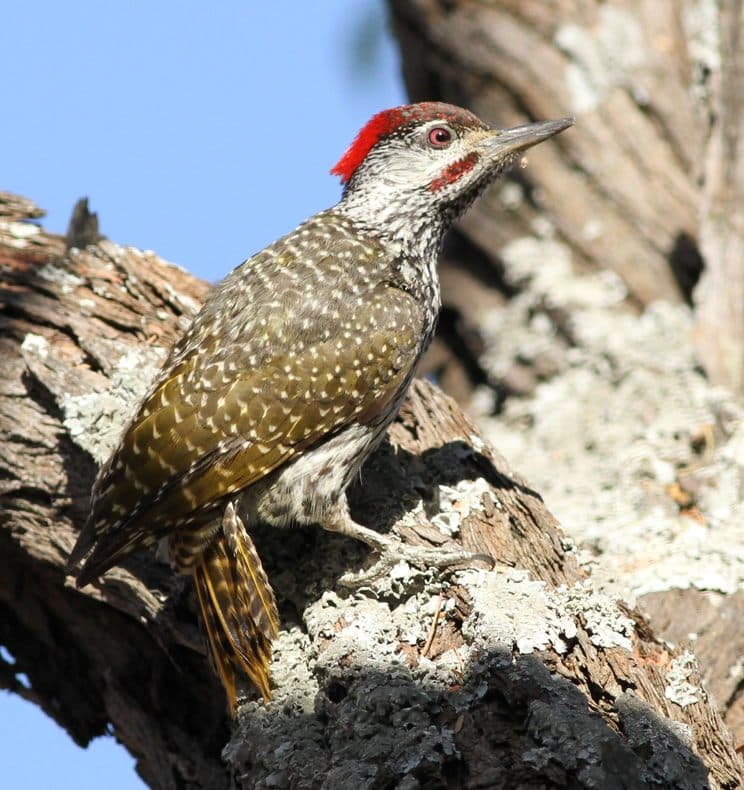
Golden-tailed woodpecker
The golden-tailed woodpecker is a species of bird found in woodlands and forests south of the equator, extending into parts of Africa. It is distinguished by its barred, greenish upper plumage, streaked underparts, and a characteristic strident call. This woodpecker primarily feeds on ants and termites, foraging by probing and gleaning, and excavates its nests in trees.
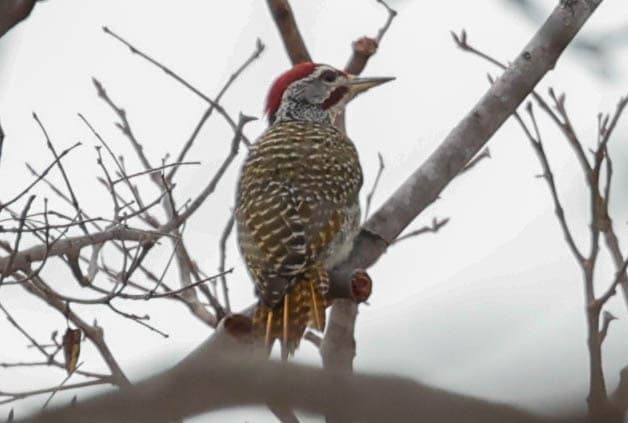
Speckle-throated woodpecker
The Speckle-throated woodpecker is an East African bird known for its greenish upperparts with yellowish barring and pale yellowish underparts marked with black speckles, particularly on the throat. It inhabits open woodlands across parts of Mozambique, Malawi, Tanzania, and formerly Kenya. This species is often considered a subspecies of Bennett's woodpecker.