
Speckle-throated woodpecker
The Speckle-throated woodpecker is an East African bird known for its greenish upperparts with yellowish barring and pale yellowish underparts marked with black speckles, particularly on the throat. It inhabits open woodlands across parts of Mozambique, Malawi, Tanzania, and formerly Kenya. This species is often considered a subspecies of Bennett's woodpecker.
Key Facts
- ›Distinguished by black speckles on its pale yellowish underparts and throat.
- ›Found in open woodlands with broad-leaved trees and tall grass understory.
- ›Geographic range includes Mozambique, Malawi, Tanzania, and historically Kenya.
- ›Vocalizations include a "wi-wi-wi-wi-wi" call and a short churr.
- ›Bill color is pale, described as yellow or off-white.
- ›Has been considered a subspecies of both Nubian and Bennett's woodpeckers.
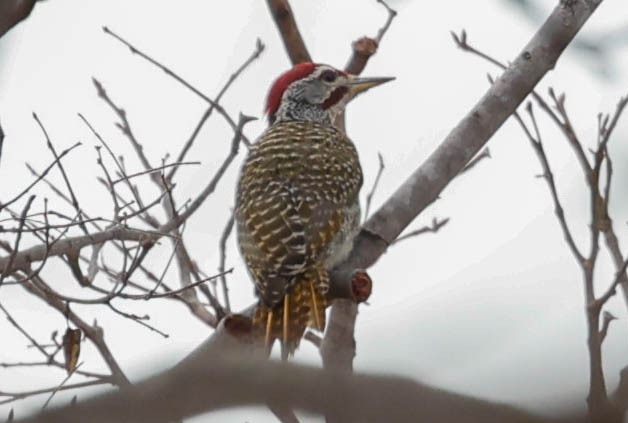
Reichenow's Woodpecker
Mozambique, Malawi, Tanzania, Kenya
Open Woodland, Broad-Leaved Woodland, Woodland With Tall Grass Understory
Black Speckles On Throat, Yellowish Barring On Upperparts, Pale Yellow Or Off-White Bill
Wi-Wi-Wi-Wi-Wi, Short Churr
About Speckle-throated woodpecker
The Speckle-throated woodpecker, scientifically known as Campethera scriptoricauda, is a species of bird found in East Africa. It is also recognized by the common name Reichenow's woodpecker, named in honor of the German ornithologist Anton Reichenow. This species occupies a distinct ecological niche within its range, often being considered a subspecies of either Bennett's woodpecker or the Nubian woodpecker by various authorities.
Description and Identification
The plumage of the Speckle-throated woodpecker is characterized by greenish upperparts adorned with yellowish barring, which contributes to a slightly yellower overall appearance compared to the Nubian woodpecker. Its underparts are pale yellowish and prominently marked with black speckles. These speckles are particularly concentrated on the throat, serving as a key differentiating feature from both the Nubian and Bennett's woodpeckers. The bird's bill is pale, typically described as yellow or off-white.
Distribution and Habitat
The Speckle-throated woodpecker is distributed across several East African countries. Its range encompasses open woodlands in Mozambique, specifically between Beira and the lower Zambezi river. It is also found in central and southeastern Malawi, and in eastern and central Tanzania, extending north to Handeni, the North Pare Mountains, and the region around Mount Kilimanjaro. Historically, it was also observed around Mombasa, Kenya. The preferred habitat is open woodland, with a particular affinity in Mozambique for broad-leaved woodland featuring an understory of tall grass, where it is considered relatively common.
Taxonomy and Classification
The taxonomic status of the Speckle-throated woodpecker has been a subject of discussion among ornithologists. It has been treated as a subspecies of the Nubian woodpecker (Campethera nubica). Furthermore, some authorities group it with Bennett's woodpecker (Campethera bennettii), citing evidence of intergradation in Malawi. However, current practice, including that of the Handbook of the Birds of the World, recognizes it as a distinct species.
Vocalizations
The calls of the Speckle-throated woodpecker vary by region. In Tanzania, its vocalizations include a repetitive "wi-wi-wi-wi-wi" and a short churring sound. Notably, in Mozambique, its vocalizations are considered indistinguishable from those of Bennett's woodpecker.
Source: Wikipedia ↗
Frequently Asked Questions
What are the key physical characteristics of the Speckle-throated woodpecker?
The Speckle-throated woodpecker has greenish upperparts with yellowish barring and pale yellowish underparts. Its most distinctive feature is the presence of black speckles that extend onto the throat, differentiating it from similar species.
Where can the Speckle-throated woodpecker be found?
This woodpecker inhabits open woodlands in East Africa. Its range includes areas of Mozambique, central and southeastern Malawi, and eastern and central Tanzania. It was also formerly found around Mombasa, Kenya.
What type of habitat does the Speckle-throated woodpecker prefer?
The Speckle-throated woodpecker prefers open woodlands, particularly those with broad-leaved trees and an understory of tall grass. It is considered rather common in such environments in Mozambique.
What are the vocalizations of the Speckle-throated woodpecker?
In Tanzania, its calls include a repetitive "wi-wi-wi-wi-wi" sound and a short churr. In Mozambique, it is considered vocally indistinguishable from Bennett's woodpecker.
What is the taxonomic classification of the Speckle-throated woodpecker?
The Speckle-throated woodpecker has been classified as a subspecies of the Nubian woodpecker. Some authorities also lump it with Bennett's woodpecker, though it is treated as a separate species by others, including the Handbook of the Birds of the World.
Related Woodpecker species

Acorn woodpecker
The Acorn Woodpecker is a medium-sized woodpecker recognized by its striking black and white plumage, with males sporting a red cap. These birds are highly social and exhibit cooperative breeding behaviors, living in family groups. They are predominantly found in oak-filled forests across Central America and into the western United States and Colombia, relying heavily on acorns for sustenance and storage.
Golden-tailed woodpecker
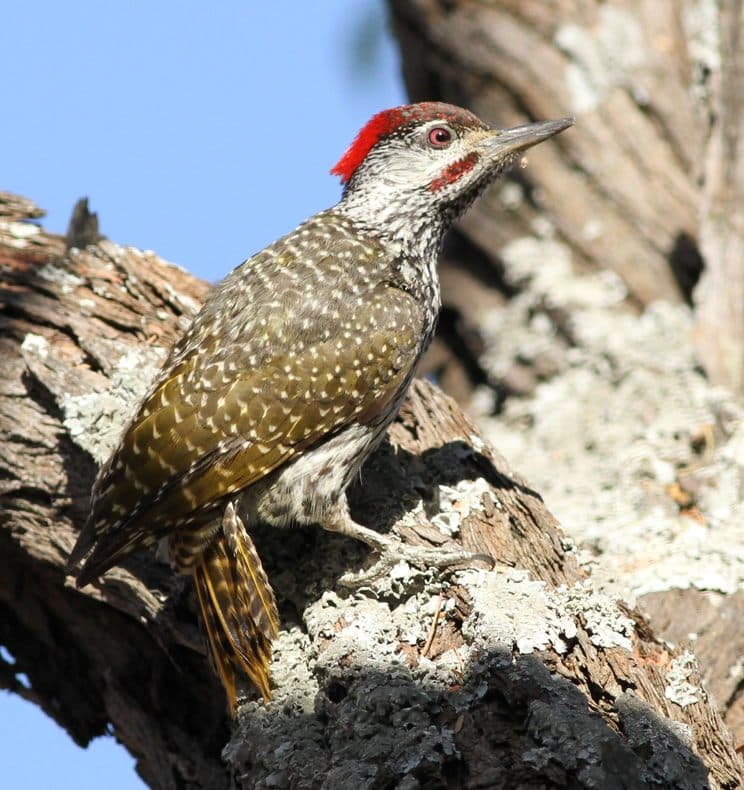
The golden-tailed woodpecker is a species of bird found in woodlands and forests south of the equator, extending into parts of Africa. It is distinguished by its barred, greenish upper plumage, streaked underparts, and a characteristic strident call. This woodpecker primarily feeds on ants and termites, foraging by probing and gleaning, and excavates its nests in trees.
White-spotted woodpecker
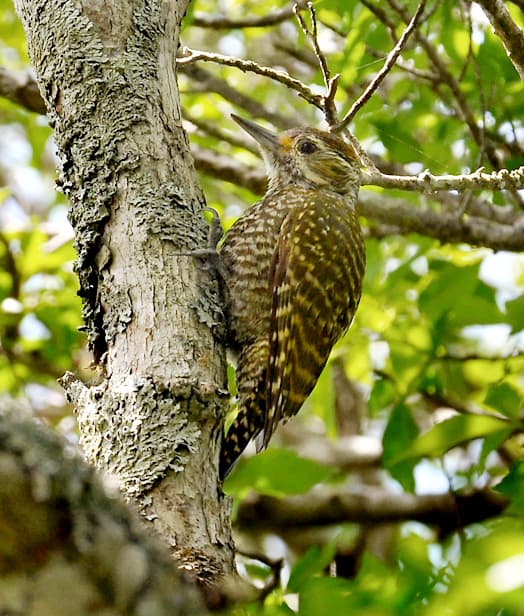
The white-spotted woodpecker is a species found in Argentina, Brazil, Paraguay, and Uruguay, inhabiting various wooded landscapes. It is characterized by its olive-green upperparts with yellowish bars and streaked olive underparts, with males and females differing primarily in head plumage. This species is known for its varied vocalizations and its habit of excavating nest cavities.