
Andaman woodpecker
The Andaman woodpecker is a species of bird endemic to the Andaman Islands of India, inhabiting tropical moist lowland forests. This bird is characterized by its predominantly slate-grey to black plumage, a striking red crest, and a length of approximately 38 cm. Sadly, it faces a vulnerable conservation status due to ongoing habitat loss.
Key Facts
- ›Endemic to the Andaman Islands in India.
- ›Primarily inhabits tropical moist lowland forests.
- ›Males possess a bright red crest and red crown and malar area.
- ›Forages on large tree trunks and branches, and has been observed on the ground for ants.
- ›Breeds between January and March, nesting in tree holes.
- ›Assessed as vulnerable by the IUCN due to habitat loss.
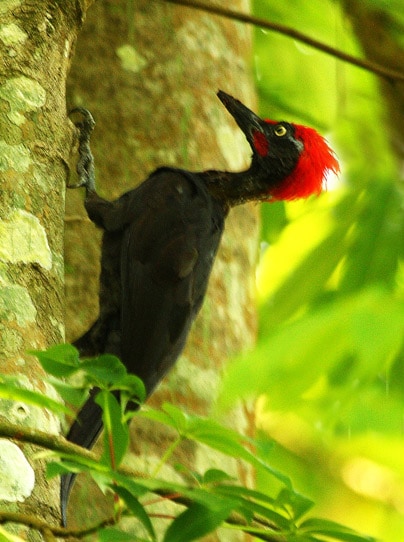
Mulleripicus Hodgei
Andaman Islands
Tropical Moist Lowland Forests, Rain Forests
Bright Red Crest, Red Crown, Red Malar Area
Ants, Insects
Forages On Large Trunks and Branches, Forages On the Ground For Ants
Nest Hole In Dead Trees
Distinctive Calls
About Andaman woodpecker
The Andaman woodpecker (Dryocopus hodgei), once known scientifically as Mulleripicus Hodgei, is a distinct bird species endemic to the Andaman Islands in India. It is a member of the woodpecker family, Picidae, and is recognized for its adaptation to the tropical moist lowland forests that characterize its island home.
Physical Description
Adult Andaman woodpeckers typically measure around 38 cm in length, with a weight ranging from 156 to 255 grams. Their plumage is predominantly a slate-grey to black hue, strikingly contrasted by a vibrant red crest. Males are further distinguished by a red crown and a red malar area situated beneath the eye. The skin around their eyes is grey, their legs are slaty, and their bills are black, with pale yellow irises. Juvenile birds share the adult silhouette but exhibit duller, browner plumage and brown eyes, and may have feathered crowns.
Behavior and Reproduction
While detailed behavioral observations are limited, the Andaman woodpecker is known to live in pairs and also congregates in small flocks. Their foraging behavior involves searching for food on the large trunks and branches of trees, and they have been recorded feeding on ants found on the ground. The breeding season for this species occurs between January and March. Nests are constructed in cavities within dead trees, typically positioned at heights of 6 to 14 meters above the forest floor, with clutches usually consisting of two eggs.
Habitat and Conservation
The Andaman woodpecker's range is exclusively confined to the Andaman Islands, where it inhabits the lowland rainforests. The primary threat to the species' survival is habitat loss, exacerbated by the increasing human population on the islands and the subsequent clearing of forests for agricultural purposes. In response to these pressures, the International Union for Conservation of Nature (IUCN) has assessed the Andaman woodpecker as vulnerable to extinction.
Source: Wikipedia ↗
Frequently Asked Questions
What is the scientific name of the Andaman woodpecker?
The scientific name of the Andaman woodpecker is Dryocopus hodgei. It was first described by Edward Blyth in 1860 as Mulleripicus Hodgei, with the specific name honoring Captain S. Hodge.
Where can the Andaman woodpecker be found?
The Andaman woodpecker is found exclusively in the Andaman Islands, which are part of India. Its natural habitat is the tropical moist lowland forests of these islands.
What are the key physical characteristics of the Andaman woodpecker?
The Andaman woodpecker is about 38 cm long and largely slate-grey to black. It is distinguished by a bright red crest, and males also have a red crown and malar area. Its irises are pale yellow, and its legs and bill are slaty-colored and black, respectively.
What is the diet of the Andaman woodpecker?
The Andaman woodpecker forages on large trunks and branches of trees. It has also been observed seeking food on the ground, particularly for ants.
What is the conservation status of the Andaman woodpecker?
The Andaman woodpecker is classified as vulnerable to extinction. This status is primarily due to the ongoing threat of habitat loss caused by increasing human population and land clearing for agriculture in the Andaman Islands.
When does the Andaman woodpecker breed and where does it nest?
The breeding season for the Andaman woodpecker occurs between January and March. They build their nests in holes within dead trees, typically located 6 to 14 meters off the forest floor.
Related Woodpecker species

Southern sooty woodpecker
The southern sooty woodpecker is a bird species endemic to the Philippines, found on the islands of Mindanao, Leyte, and Samar. It is characterized by its light ashy gray plumage, white ivory-colored bill, and a distinctive red mark on the male's cheek. This species inhabits tropical moist lowland primary forests and is currently assessed as vulnerable due to significant habitat loss.

Kaempfer's woodpecker
Kaempfer's woodpecker, also known as the Piauí woodpecker, is a species endemic to Brazil. This bird is characterized by its rufous-red head with a bushy crest and a yellow to creamy buff back with black bars. Its diet primarily consists of ants found in bamboo, and it inhabits areas associated with bamboo growth in Cerrado and babassu palm forests.
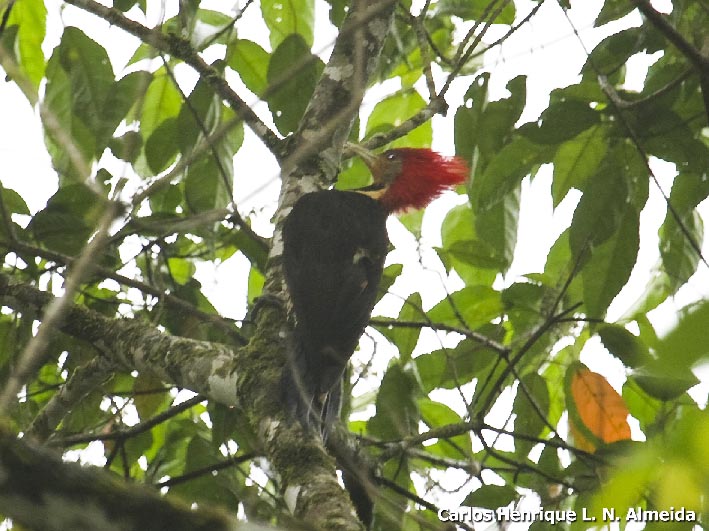
Helmeted woodpecker
The helmeted woodpecker (Celeus galeatus) is a Vulnerable species found in Argentina, Brazil, and Paraguay, primarily inhabiting the Atlantic Forest. This medium-sized woodpecker is distinguished by its cinnamon face, long red crest, and black and buff plumage, with males exhibiting a distinctive red malar patch. It primarily forages by probing soft decaying trees rather than hammering, and its limited vocalizations include a distinctive long call.