
Southern sooty woodpecker
The southern sooty woodpecker is a bird species endemic to the Philippines, found on the islands of Mindanao, Leyte, and Samar. It is characterized by its light ashy gray plumage, white ivory-colored bill, and a distinctive red mark on the male's cheek. This species inhabits tropical moist lowland primary forests and is currently assessed as vulnerable due to significant habitat loss.
Key Facts
- ›Endemic to the Philippines, found on Mindanao, Leyte, and Samar islands.
- ›Distinguished by light ashy gray plumage and a white ivory-colored bill.
- ›Males possess a bright red mark on their cheeks, unlike the northern subspecies.
- ›Inhabits tropical moist lowland primary forests up to 1,000 meters above sea level.
- ›Assessed as Vulnerable by the IUCN Red List, with a declining population.
- ›Feeds on invertebrates, likely including larvae found in dead wood.

Philippines
Tropical Moist Lowland Primary Forest
White ivory-colored bill, Male's bright red cheek mark, Larger white spots on neck and face
Invertebrates, Larvae
Forages High Up On Tall Trees
Cavities
About Southern sooty woodpecker
The southern sooty woodpecker (Mulleripicus fuliginosus) is a distinct bird species found exclusively in the Philippines. It inhabits the islands of Mindanao, Leyte, and Samar, preferring tropical moist lowland primary forests up to an elevation of 1,000 meters. This species is easily recognizable by its light ashy gray plumage and a striking white, ivory-colored bill. Males are further distinguished by a bright red mark on their cheeks and more prominent white spots on their neck and face, differentiating them from their northern counterparts.
Ecology and Behavior
Information regarding the southern sooty woodpecker's behavior is somewhat limited. It is typically observed alone or in pairs and forages high in the canopy of tall trees. Its diet is presumed to consist of invertebrates, with a particular focus on larvae found in dead wood. Like other woodpeckers, it is a cavity nester; a nest observed in April contained two chicks, indicating the breeding season likely spans from April to August.
Conservation Status
The southern sooty woodpecker faces significant threats, primarily from habitat loss and degradation. It cannot readily adapt to degraded or secondary forest environments, making the preservation of primary forests crucial for its survival. Consequently, the IUCN Red List has classified the species as Vulnerable, with its population trend showing a decline. Threats include legal and illegal logging, conversion of forests to farmlands, charcoal burning, and mining.
While the species occurs in some protected areas like Pasonanca Natural Park and Samar Island Natural Park, protection measures are often lax. Proposed conservation actions include conducting surveys to determine population size and identify strongholds, monitoring habitat trends, increasing effectively protected primary forest areas, and implementing long-term habitat restoration using native tree species.
Source: Wikipedia ↗
Frequently Asked Questions
What are the key physical characteristics of the southern sooty woodpecker?
The southern sooty woodpecker has light ashy gray plumage and a distinct white ivory-colored bill. Males are further identified by a bright red mark on their cheek and larger white spots on their neck and face.
Where is the southern sooty woodpecker found?
This species is endemic to the Philippines, with its range including the islands of Mindanao, Leyte, and Samar. It specifically inhabits tropical moist lowland primary forests.
What does the southern sooty woodpecker eat?
While not extensively documented, it is presumed to feed on invertebrates, particularly larvae found within dead wood. It forages high up on tall trees.
What is the conservation status of the southern sooty woodpecker?
The southern sooty woodpecker is listed as Vulnerable on the IUCN Red List. Its population is believed to be declining, primarily due to habitat loss.
How does the southern sooty woodpecker differ from the northern sooty woodpecker?
The southern sooty woodpecker has lighter ashy gray plumage, a white bill, and a red cheek mark on males. The northern subspecies has dark gray plumage and burgundy facial markings on males.
When is the breeding season for the southern sooty woodpecker?
The breeding season is reported to occur from April to August, particularly noted in Samar and Leyte. Nests observed during this period have contained chicks.
Related Woodpecker species
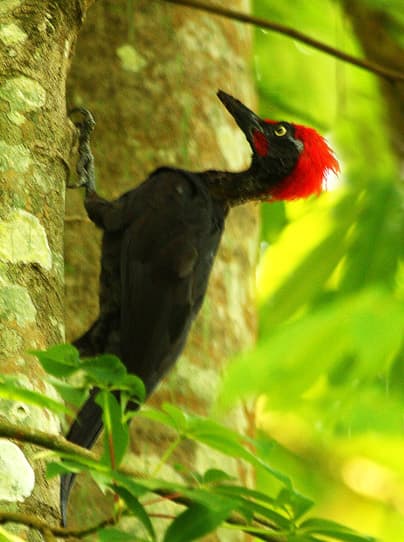
Andaman woodpecker
The Andaman woodpecker is a species of bird endemic to the Andaman Islands of India, inhabiting tropical moist lowland forests. This bird is characterized by its predominantly slate-grey to black plumage, a striking red crest, and a length of approximately 38 cm. Sadly, it faces a vulnerable conservation status due to ongoing habitat loss.

Kaempfer's woodpecker
Kaempfer's woodpecker, also known as the Piauí woodpecker, is a species endemic to Brazil. This bird is characterized by its rufous-red head with a bushy crest and a yellow to creamy buff back with black bars. Its diet primarily consists of ants found in bamboo, and it inhabits areas associated with bamboo growth in Cerrado and babassu palm forests.
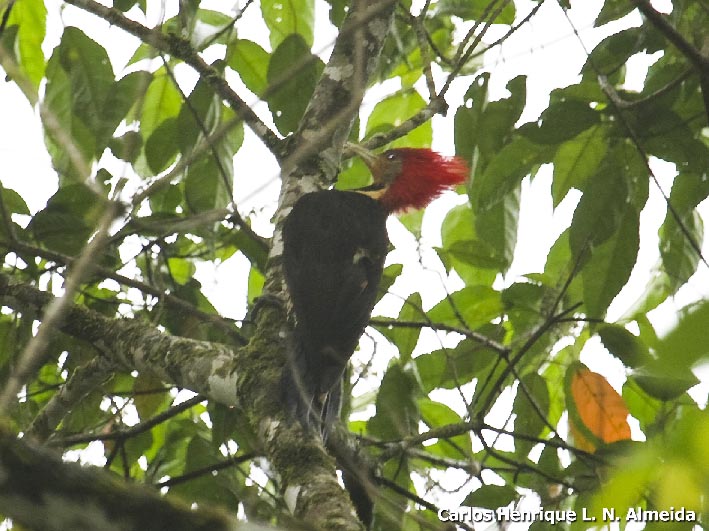
Helmeted woodpecker
The helmeted woodpecker (Celeus galeatus) is a Vulnerable species found in Argentina, Brazil, and Paraguay, primarily inhabiting the Atlantic Forest. This medium-sized woodpecker is distinguished by its cinnamon face, long red crest, and black and buff plumage, with males exhibiting a distinctive red malar patch. It primarily forages by probing soft decaying trees rather than hammering, and its limited vocalizations include a distinctive long call.