
Antillean piculet
The Antillean piculet is a small woodpecker endemic to the Caribbean island of Hispaniola, shared by the Dominican Republic and Haiti. It is notable for being the sole member of its genus, Nesoctites, and is evolutionarily distinct from other piculets. This species inhabits a variety of forest types and scrublands, preferring dense undergrowth and foraging primarily for insects.
Key Facts
- ›The Antillean piculet is the only member of the genus Nesoctites.
- ›It is endemic to Hispaniola, an island shared by the Dominican Republic and Haiti.
- ›They primarily forage in the forest understory, gleaning insects from small branches and probing leaves.
- ›Their diet consists mainly of insects, particularly ants and beetles, supplemented by arthropods and fruit.
- ›The breeding season runs from February to July, and they excavate nest holes or use abandoned ones.
- ›Unlike many woodpeckers, they are not known to drum.
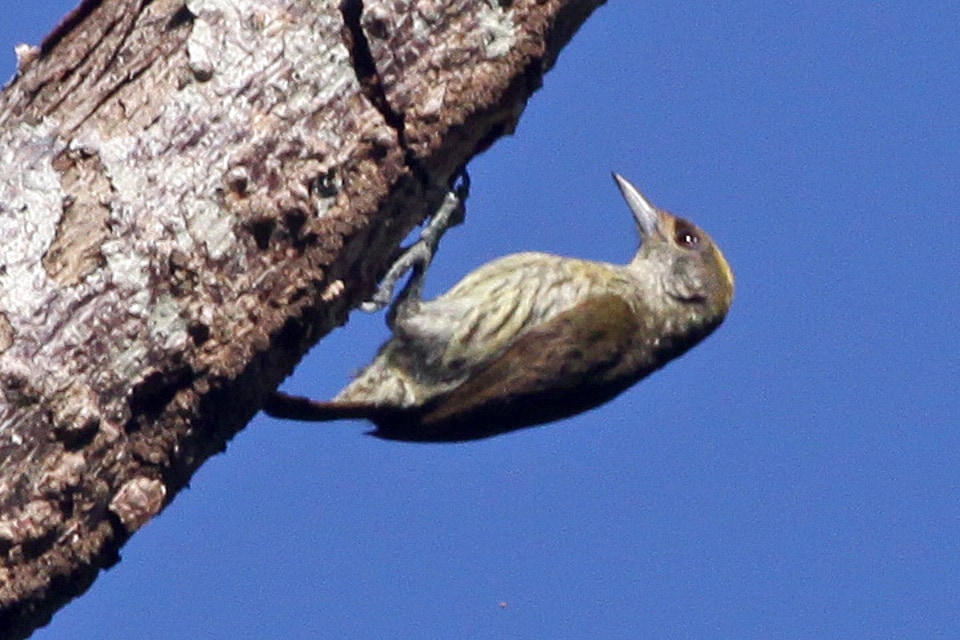
Antillean Piculet
Hispaniola, GonâVe Island
Humid Broadleaf Forests, Dry Broadleaf Forests, Hispaniolan Pine Forests, Semi-Arid Scrubland, Thorn Forest, Mangrove Forest, Orchards, Plantations
Lemon Yellow, Orange-Red, Red, Yellowish Green, Dull Olive Green, Yellow-Green, Rusty-Bronze, Brownish Olive, Bronze, Dull Whitish, Olive, White, Pale Yellowish White
- Lemon yellow crown with an orange-red to red patch in males
- Double the size of Neotropical piculets of genus Picumnus
Insects, Ants, Beetles, Arthropods, Fruit
Gleaning Small Branches, Twigs, and Vines, Probing Flowers, Probing Clusters of Leaves and Pine Needles
Nest Hole Excavated By the Bird, Abandoned Nest Hole, Stump, Tree, Palm, Fence Post
- Contact and Territorial Call: 'Kuk-Ki-Ki-Ki-Ke-Ku-Kuk'
- Alarm Calls: Mechanical 'Pit' and 'Pew' Notes
- Fight Chatter: 'Continuous Noisy 'Yeh-Yeh-Yeh-Yeh' Chatter'
About Antillean piculet
The Antillean piculet (Nesoctites micromegas) is a unique species of bird belonging to the woodpecker family, Picidae. It holds the distinction of being the sole member of the genus Nesoctites, highlighting its evolutionary isolation. This species is exclusively found on the Caribbean island of Hispaniola, an area shared by the Dominican Republic and Haiti, with a distinct subspecies residing on Gonâve Island off the Haitian coast. Fossil evidence suggests its ancestors have been isolated on Hispaniola for at least 25 million years, underscoring its ancient lineage.
Habitat and Distribution
The Antillean piculet inhabits a diverse array of environments across Hispaniola. Its preferred habitats include humid and dry broadleaf forests, the Hispaniolan pine forests dominated by Pinus occidentalis, semi-arid scrubland, and thorn forest. It can also be found in mangrove forests and occasionally ventures into orchards and plantations. A common thread across these varied landscapes is a preference for dense undergrowth. While most numerous between 400 and 800 meters in elevation, it has been recorded as high as 1,770 meters in the Sierra de Bahoruco.
Behavior and Diet
This species is a year-round resident, displaying no migratory patterns. Foraging primarily occurs in the forest understory, typically below 8 meters, though they will also feed in the upper canopy. Their foraging technique involves gleaning insects from small branches, twigs, and vines, as well as probing flowers and clusters of leaves and pine needles. They hunt either solitarily or in pairs. The diet of the Antillean piculet consists mainly of insects, with a particular fondness for ants and beetles, complemented by other arthropods and a notable amount of fruit.
Reproduction and Vocalizations
The breeding season for the Antillean piculet spans from February to July. They create their nests by excavating a hole or by utilizing a cavity abandoned by another woodpecker species. These nest sites are typically located within 5 meters of the ground in structures such as stumps, trees, palms, or fence posts. Pairs are known to be quite territorial, actively calling and displaying towards intruders. A clutch usually contains two to four eggs, though the incubation period and time to fledging are not precisely documented. In terms of vocalizations, the Antillean piculet possesses a varied repertoire. Pairs use a distinct 'kuk-ki-ki-ki-ke-ku-kuk' call for contact and territorial defense. Alarm calls are described as mechanical 'pit' and 'pew' notes, and they emit a 'continuous noisy 'yeh-yeh-yeh-yeh' chatter' during conflicts. Notably, unlike many other woodpecker species, the Antillean piculet is not known to drum.
Source: Wikipedia ↗
Frequently Asked Questions
What is the scientific name of the Antillean piculet?
The scientific name of the Antillean piculet is Nesoctites micromegas. It is the only species within its genus, Nesoctites.
Where can the Antillean piculet be found?
The Antillean piculet is found on the Caribbean island of Hispaniola, which is divided between the Dominican Republic and Haiti. A subspecies, N. m. abbotti, is restricted to Gonâve Island off the coast of Haiti.
What kind of habitats does the Antillean piculet prefer?
This species inhabits a range of environments including humid and dry broadleaf forests, pine forests, semi-arid scrubland, and thorn forests. They also occur in mangrove forests and sometimes in orchards and plantations, always favoring areas with dense undergrowth.
What does the Antillean piculet eat?
The diet of the Antillean piculet is primarily composed of insects, with ants and beetles being particularly common. They also consume other arthropods and a significant amount of fruit.
How does the Antillean piculet forage for food?
They mostly forage in the forest understory, below about 8 meters, but will also feed in the canopy. Their foraging method involves gleaning small branches, twigs, and vines, and they also probe flowers and clusters of leaves and pine needles.
What are the nesting habits of the Antillean piculet?
The Antillean piculet excavates its own nest hole or uses one previously dug by another woodpecker. Nests are typically situated within 5 meters of the ground in stumps, trees, palms, or fence posts. Pairs are known to be territorial during the breeding season.
Does the Antillean piculet drum?
No, the Antillean piculet is not known to drum. While many woodpecker species use drumming for communication, this particular species relies on vocalizations and other behaviors.
Related Woodpecker species

Olive-backed woodpecker
The olive-backed woodpecker is a species of bird found across Southeast Asia, inhabiting tropical moist lowland, mangrove, and montane forests. It is characterized by its yellow-green upperparts, gray-olive underparts, and distinctive black and white stripes on the sides of its head. Males possess a prominent red crest, while females have a smaller black crest.
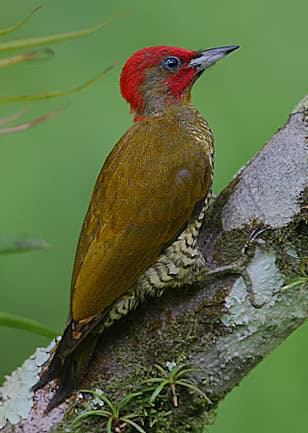
Rufous-winged woodpecker
The rufous-winged woodpecker is a bird species found in Central America, inhabiting humid forests and sometimes nearby open areas with large trees. This species is characterized by its bronze-green upperparts and cinnamon-rufous flight feathers, with males and females differing primarily in head plumage. It is known for its distinctive song and drumming, and primarily feeds on ants and beetles.

Greater flameback
The greater flameback, also known as the greater goldenback, is a large woodpecker species found across the northern Indian subcontinent, extending to southern China, the Malay Peninsula, and parts of Indonesia and Borneo. This species is characterized by its distinctive golden-yellow to dark brown back and wings, red rump, and a prominent red crown in adult males.