
Rufous-winged woodpecker
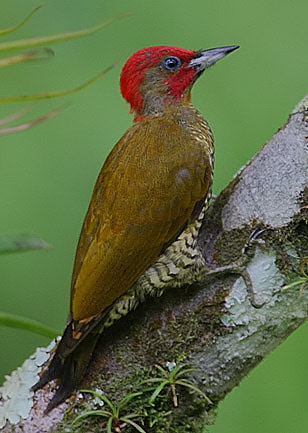
The rufous-winged woodpecker is a bird species found in Central America, inhabiting humid forests and sometimes nearby open areas with large trees. This species is characterized by its bronze-green upperparts and cinnamon-rufous flight feathers, with males and females differing primarily in head plumage. It is known for its distinctive song and drumming, and primarily feeds on ants and beetles.
Key Facts
- ›Found in Costa Rica, Honduras, Nicaragua, and Panama.
- ›Adults have bronze-green upperparts and cinnamon-rufous flight feathers.
- ›Males have red on their heads from forehead to hindneck, while females have red only on the nape and hindneck.
- ›Feeds mainly on ants and adult and larval beetles.
- ›Nests are excavated in recently dead or rotten wood between 2.5 and 5 meters above the ground.
- ›Assessed by the IUCN as Least Concern, though its population is believed to be decreasing.
Central America
Humid Forest, Open Areas With Large Trees
Bronze-Green, Cinnamon-Rufous, Red, Brownish Olive, Blackish, Olive-Green, Pale Yellow-Buff
Sexual Dimorphism In Head Plumage, Cinnamon-Rufous Flight Feathers
Ants, Beetles
- Forages at most forest levels, favoring the interior
- Pecks into the substrate
- Forages alone, in pairs, or in mixed-species flocks
- Excavated nest hole in recently dead or rotten wood
- Song: Vigorous, Jay-Like 'Chea, Chea, Chea, Chea'
- Song: Loud, Emphatic Series of Slightly Nasal Downslurred 'Heew' Notes
- Drums In Long Bursts
About Rufous-winged woodpecker
The rufous-winged woodpecker (Piculus simplex) is a species of bird belonging to the Picidae family, specifically within the Picinae subfamily. Its geographic range extends across Central America, encompassing eastern Honduras, Nicaragua, Costa Rica, and western Panama.
Description and Identification
Adult rufous-winged woodpeckers typically measure around 18 cm in length and weigh between 51 to 55 grams. The species exhibits sexual dimorphism, with males and females differing in their head plumage. Both sexes share bronze-green upperparts. The flight feathers are predominantly cinnamon-rufous, with the tail being blackish, sometimes showing a hint of cinnamon-rufous on the outer feathers. The throat and upper breast are olive-green, often marked with pale buffish yellow spots, while the rest of the underparts are pale yellow-buff with distinct dark olive barring. The beak is short and blackish with a paler gray mandible, the iris can be pale bluish, yellowish, or white, and the legs are olive to grayish.
Males are characterized by red coloration from their forehead to hindneck and extending widely onto the malar region, with the remainder of the face being brownish green. Females, conversely, display mostly brownish olive on their heads, with red restricted to the nape and hindneck. Juveniles are duller and grayer, with less distinct barring on their underparts.
Distribution and Habitat
This woodpecker inhabits humid forest environments and is also known to frequent isolated large trees situated in nearby open areas. Its altitudinal distribution reaches up to 750 meters on the Caribbean slope and up to 900 meters on the Pacific slope.
Behavior and Ecology
The rufous-winged woodpecker is a resident species, remaining within its range throughout the year. It typically forages alone but may also be observed in pairs or as part of mixed-species feeding flocks. Its foraging activities occur at various forest strata, with a preference for the forest interior. It primarily finds food by pecking into substrates.
Diet
The primary food sources for the rufous-winged woodpecker include ants and both adult and larval beetles.
Reproduction
The breeding season for this species spans from February to May. They excavate nest holes in recently dead or rotten wood, typically positioned between 2.5 and 5 meters above the ground. A clutch usually consists of two to four eggs. Details regarding the incubation period, time to fledging, and parental care are not extensively documented.
Vocalizations and Sounds
The characteristic song of the rufous-winged woodpecker has been described as a vigorous, jay-like "chea, chea, chea, chea." It is also characterized by a loud, emphatic series of slightly nasal, downslurred "heew" notes. Additionally, the species engages in drumming, producing long bursts of this sound.
Conservation Status
The rufous-winged woodpecker is listed as Least Concern by the IUCN. While it possesses a large range and an estimated population of at least 50,000 mature individuals, this population is believed to be in decline. No immediate threats have been identified. The species is considered uncommon to fairly common and is present in two protected areas within Costa Rica.
Source: Wikipedia ↗
Frequently Asked Questions
Where does the rufous-winged woodpecker live?
The rufous-winged woodpecker is found in eastern Honduras, extending through Nicaragua and Costa Rica into western Panama. It primarily inhabits humid forests but can also be found near isolated large trees in adjacent open areas.
What are the physical characteristics of the rufous-winged woodpecker?
Adults measure about 18 cm long and weigh between 51 to 55 g. They have bronze-green upperparts and flight feathers that are mostly cinnamon-rufous. Males have extensive red on their heads, while females have red only on the nape and hindneck.
What does the rufous-winged woodpecker eat?
The diet of the rufous-winged woodpecker consists primarily of ants and adult and larval beetles. It typically forages alone or in pairs, and occasionally as part of mixed-species feeding flocks.
How does the rufous-winged woodpecker reproduce?
The breeding season for this species is from February to May. They excavate nest holes in dead or rotten wood, typically 2.5 to 5 meters above the ground, and lay clutches of two to four eggs.
What sounds does the rufous-winged woodpecker make?
The rufous-winged woodpecker's song is described as a vigorous, jay-like 'chea, chea, chea, chea' or a loud, slightly nasal series of downslurred 'heew' notes. It also drums in long bursts.
Related Woodpecker species

Stripe-cheeked woodpecker
The stripe-cheeked woodpecker is a species endemic to Panama, characterized by its bronze-green upperparts and buffy white underparts with greenish olive barring. Males and females exhibit sexual dimorphism primarily in head plumage, with males displaying more extensive red coloration. This bird inhabits humid forests at mid-elevations.
Antillean piculet
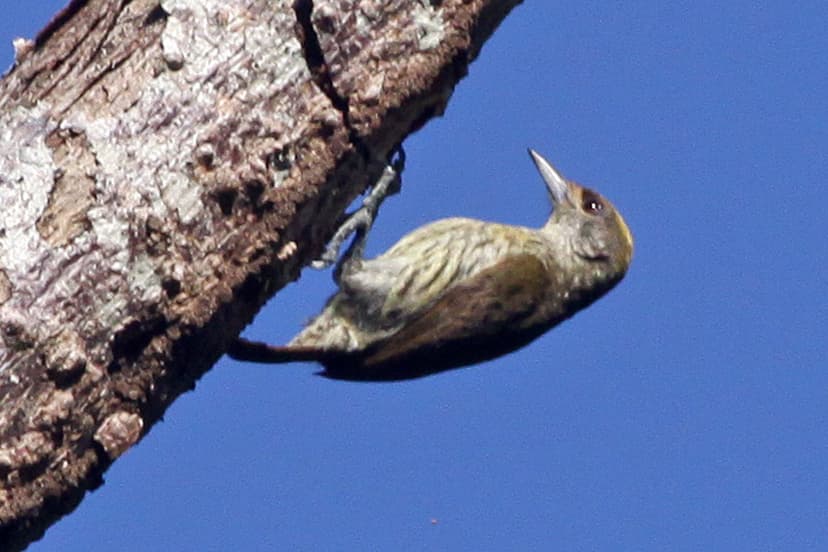
The Antillean piculet is a small woodpecker endemic to the Caribbean island of Hispaniola, shared by the Dominican Republic and Haiti. It is notable for being the sole member of its genus, Nesoctites, and is evolutionarily distinct from other piculets. This species inhabits a variety of forest types and scrublands, preferring dense undergrowth and foraging primarily for insects.
Yellow-browed woodpecker
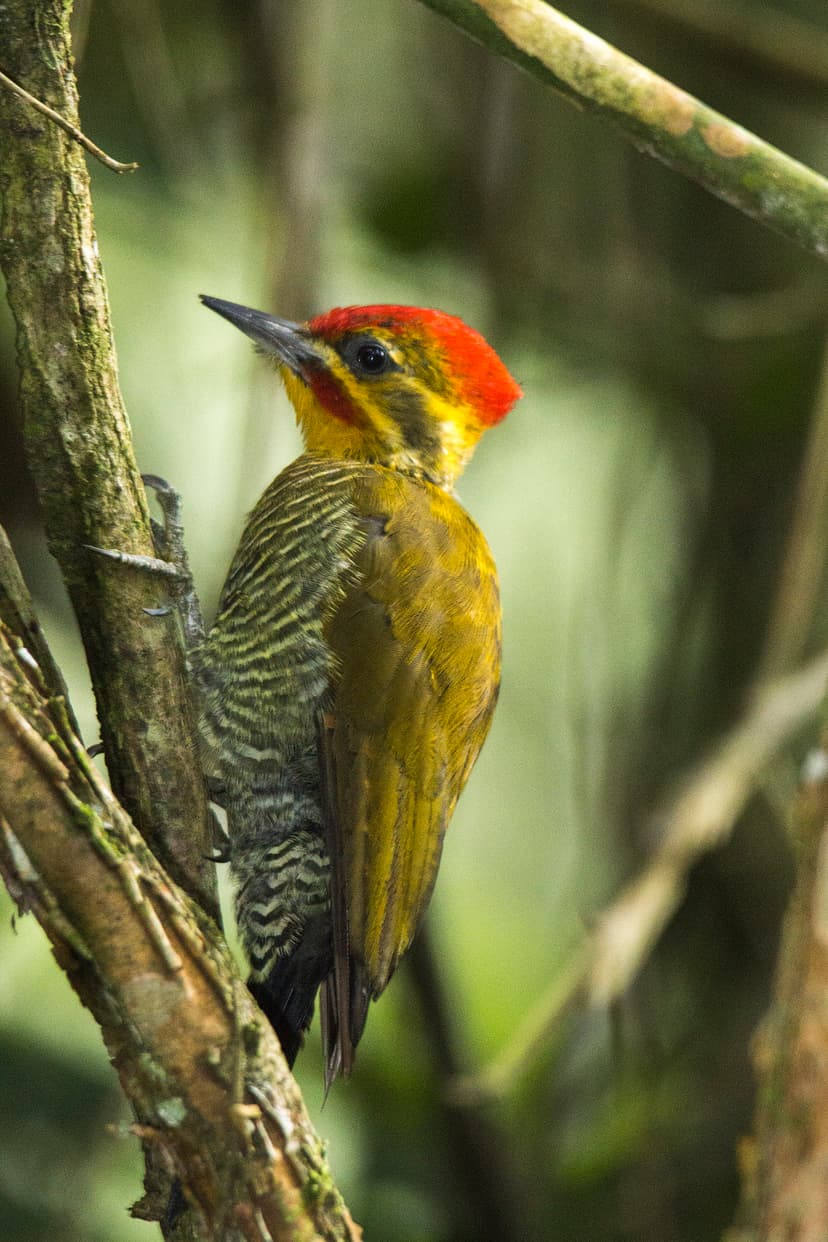
The yellow-browed woodpecker, also known as the white-browed woodpecker, is a Near Threatened bird species found in Argentina, Brazil, Paraguay, and Uruguay. Measuring between 21 to 22 cm, it is characterized by its olive green upperparts and whitish underparts with dark olive bars, with males and females exhibiting distinct head plumage. This species primarily inhabits humid forests and woodlands, often foraging in the mid-levels for ants and their eggs.