
Buff-necked woodpecker
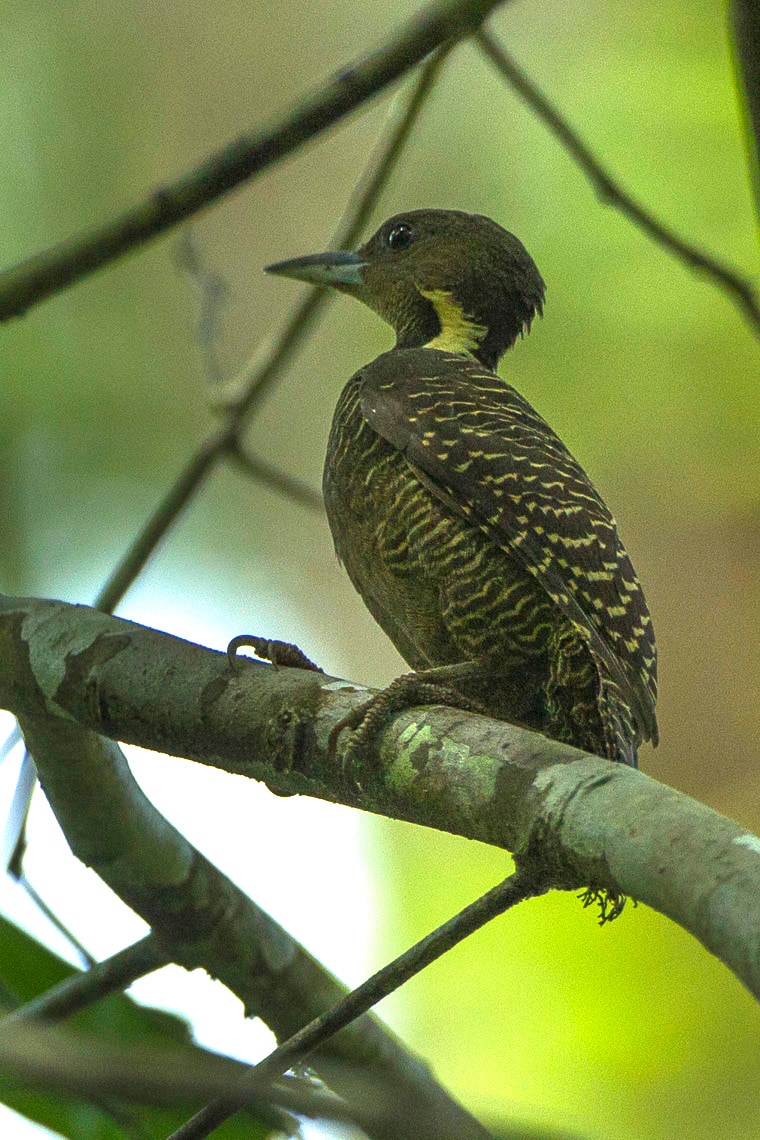
The buff-necked woodpecker is a small, dark brown bird found in Southeast Asia's lowland forests. It is characterized by pale wing barring, a dirty-cream stripe on its neck, and a pointed, curved bill. This species primarily feeds on ants and termites, foraging by gleaning and probing tree branches.
Key Facts
- ›Found in primary evergreen, semi-evergreen lowland forests, and peat swamp forests.
- ›Feeds mainly on ants and termites by surface gleaning and probing branches.
- ›Nests in rotted stumps.
- ›Distinguished from close relatives by the absence of a nuchal crest.
- ›Considered an augur animal by some indigenous populations in Borneo.
Tukki's Woodpecker
Brunei, Indonesia, Malaysia, Myanmar, Singapore, Thailand
Primary Evergreen Lowland Forests, Semi-Evergreen Lowland Forests, Peat Swamp Forests
Dark Brown, Pale Wing Barring, Dirty-Cream
Pale Wing Barring, Dirty-Cream Stripe On the Neck, Pointed, Curved Bill, Lack of A Nuchal Crest
Ants, Termites
Surface Gleaning, Probing On Branches and Sapling Trunks, Forages In the Midstory, Favors Small Perches, Feeds On Arboreal Ant Nests
Rotted Stumps
- Described as a "bad voice" by one informant, foretelling thunder or dangerous encounters.
About Buff-necked woodpecker
The Buff-Necked Woodpecker
The buff-necked woodpecker (Meiglyptes tukki) is a species of bird belonging to the family Picidae. First described by French ornithologist René Primevère Lesson in 1839, this species is found across several Southeast Asian countries, including Brunei, Indonesia, Malaysia, Myanmar, Singapore, and Thailand.
Habitat and Distribution
This woodpecker primarily inhabits primary evergreen and semi-evergreen lowland forests, as well as peat swamp forests. Its distribution spans a significant portion of Southeast Asia, making it a notable resident of these varied forest ecosystems.
Physical Characteristics and Behavior
The buff-necked woodpecker is a small, predominantly dark brown bird distinguished by pale wing barring and a distinctive dirty-cream stripe on its neck. It possesses a pointed bill that curves along the culmen. A key identifying feature is the absence of a nuchal crest, which sets it apart from its close relatives. Foraging behavior involves surface gleaning and probing on branches and sapling trunks, with a diet centered on ants and termites. They are often observed foraging in the midstory, occupying a niche distinct from sympatric species like Meiglyptes tristis. Pairs tend to forage within close proximity, and individuals have been seen participating in interspecies flocks.
Nesting and Reproduction
Nesting sites for the buff-necked woodpecker are typically found in rotted stumps. While specific details about their breeding season and clutch size are not detailed, their nesting habits are consistent with other cavity-nesting woodpecker species.
Relationship with Humans and Conservation
The buff-necked woodpecker faces threats primarily from habitat loss, particularly in the Greater Sundaic region, due to timber harvesting and the expansion of palm-oil and rubber plantations. While some observations suggest the species might forage in palm-oil plantations, other surveys indicate its absence from disturbed agricultural areas, highlighting an uncertain resilience to habitat alteration. Historically, one subspecies, Meiglyptes tukki tukki, held cultural significance among some Kenyah populations in Borneo, where it was considered an augur animal, with sightings interpreted as omens. Details regarding its conservation status and population trend are not specified.
Source: Wikipedia ↗
Frequently Asked Questions
What is the scientific name of the buff-necked woodpecker?
The scientific name of the buff-necked woodpecker is Meiglyptes tukki. It was first described by French ornithologist René Primevère Lesson in 1839.
Where is the buff-necked woodpecker found?
The buff-necked woodpecker is found in Brunei, Indonesia, Malaysia, Myanmar, Singapore, and Thailand. It inhabits lowland forests and peat swamp forests.
What does the buff-necked woodpecker eat?
The buff-necked woodpecker primarily feeds on ants and termites. It forages by surface gleaning and probing on branches and sapling trunks.
What are the key physical characteristics of the buff-necked woodpecker?
It is a small, dark brown bird with pale wing barring and a dirty-cream stripe on its neck. It has a pointed, curved bill and lacks a nuchal crest, which distinguishes it from similar species.
What are the nesting habits of the buff-necked woodpecker?
The buff-necked woodpecker nests in rotted stumps. Pairs have been observed foraging close to each other, and individuals sometimes join interspecies flocks.
What are the conservation concerns for the buff-necked woodpecker?
The species is presumed to be threatened by habitat loss due to timber harvesting and the expansion of palm-oil and rubber plantations. Its resilience to habitat disturbance is not well understood.
Related Woodpecker species

Black-necked woodpecker
The black-necked woodpecker is a bird species endemic to Peru, measuring 26 to 27 cm in length. It exhibits distinct plumage differences between males and females, particularly on their heads. This species primarily feeds on ants and their larvae, foraging at various levels within its semi-arid to arid habitat.
Blood-colored woodpecker
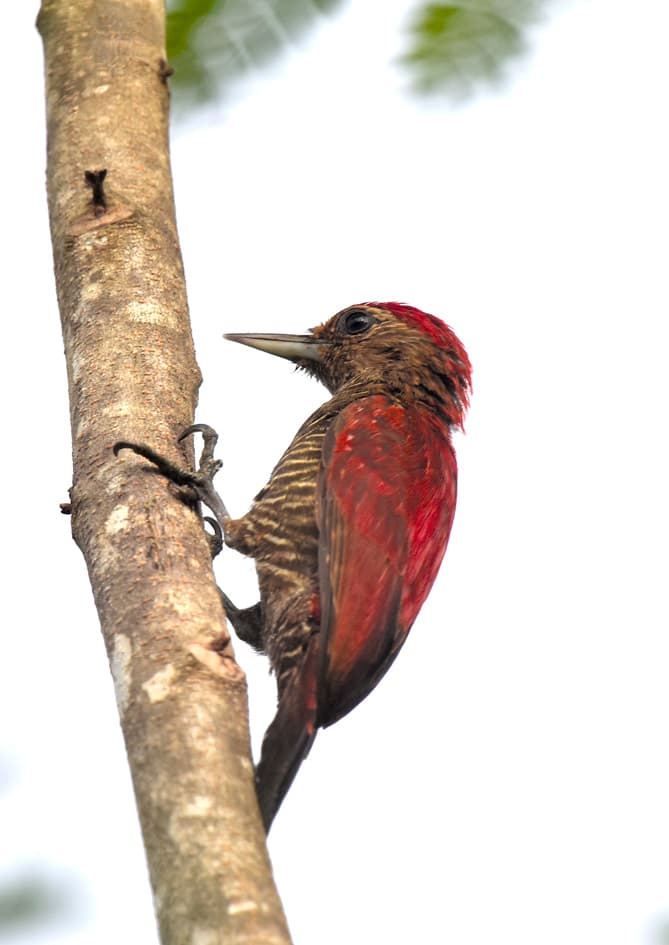
The blood-colored woodpecker is a small bird found in Guyana and Suriname, inhabiting coastal lowlands like mangroves and swamp forests. It is characterized by its crimson-red upperparts and distinctive head plumage, with males having a crimson crown and females a brown crown with white tips. This species is a year-round resident, known for its varied diet and unique nesting habits.
Dot-fronted woodpecker
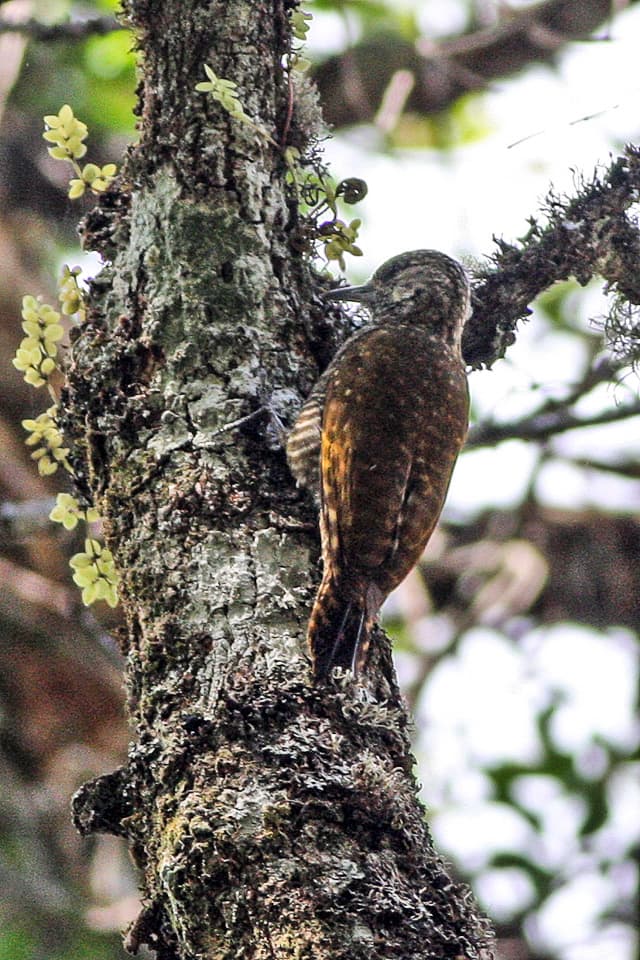
The dot-fronted woodpecker (Veniliornis frontalis) is a species found in Argentina and Bolivia, inhabiting dry montane woodlands and humid forests. Measuring approximately 16 cm in length, it is characterized by its olive to gray-brown forehead with white spots, and males display red on their crown and nape.