
Crimson-mantled woodpecker
The crimson-mantled woodpecker is a species of bird found in the montane forests and páramo zones of Bolivia, Colombia, Ecuador, Peru, and Venezuela. It is characterized by its distinctive crimson red nape and mantle, with males and females differing primarily in the color of their crowns. This woodpecker primarily feeds on small arthropods, especially ants, and also consumes fruit.
Key Facts
- ›Found in Bolivia, Colombia, Ecuador, Peru, and Venezuela.
- ›Males have a red crown, while females have a black crown.
- ›Both sexes share a crimson red nape and mantle.
- ›Primary diet consists of small arthropods, particularly ants, and fruit.
- ›Inhabits humid montane forests and the lower páramo zone.
- ›Nests are built in tree cavities.
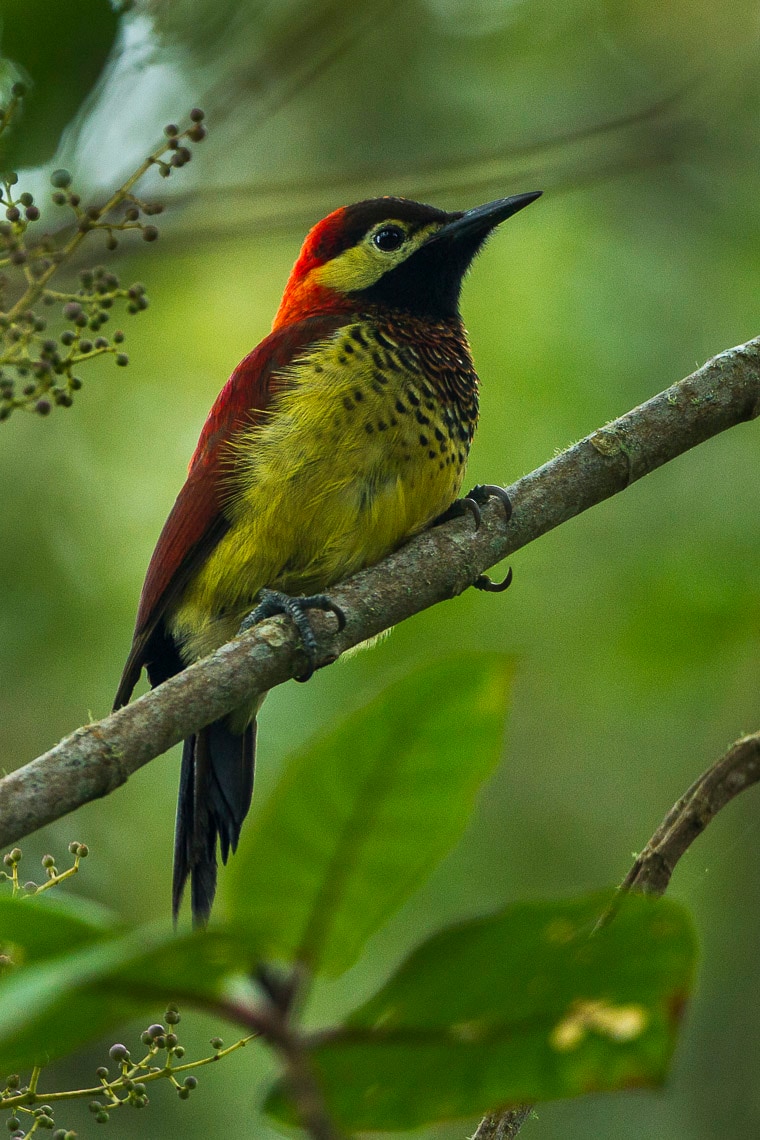
Crimson-Mantled Woodpecker
South America
Humid Montane Forest, PáRamo Zone
Crimson Red Nape and Mantle, Male Red Crown, Female Black Crown
Ants, Small Arthropods, Fruit
Forages At Any Forest Level, Forages On Moss- and Lichen-Covered Limbs, Forages On Trunks, Joins Mixed-Species Feeding Flocks
Tree Cavities
Series of Monotone, Rapid Metallic Notes, Descending Low Churr, Rising "Ree?" Call
About Crimson-mantled woodpecker
The crimson-mantled woodpecker (Colaptes rivolii) is a striking bird species found across the Andean regions of South America, inhabiting the humid montane forests and the lower edges of the páramo zone. Its distinctive plumage, featuring a crimson red nape and mantle, sets it apart. Males are further identified by a red crown, while females possess a black crown, a key difference between the sexes.
Distribution and Habitat
This species is distributed across Bolivia, Colombia, Ecuador, Peru, and Venezuela, with its range divided among six recognized subspecies. The crimson-mantled woodpecker prefers elevations typically between 2,000 and 3,300 meters, thriving in the dense vegetation of montane forests and the transition zone to alpine grasslands.
Behavior and Diet
The crimson-mantled woodpecker exhibits varied foraging behaviors, searching for food at all levels of the forest, often on moss- and lichen-covered branches and tree trunks. Its primary diet consists of small arthropods, with ants being a significant component, supplemented by fruits. While they occasionally forage alone or in pairs, they also readily join mixed-species feeding flocks.
Nesting and Conservation
Nesting occurs within tree cavities, though other details of their breeding biology are not extensively documented. The breeding season appears to vary geographically, with some observations suggesting periods between June and November, and others between February and March.
Status
The crimson-mantled woodpecker is currently listed as 'Least Concern' by the IUCN. Its population is believed to be stable, and no immediate threats have been identified. While human activity can cause local habitat destruction, its overall impact on the species is considered minimal.
Source: Wikipedia ↗
Frequently Asked Questions
Where is the crimson-mantled woodpecker found?
The crimson-mantled woodpecker is found in the Andean regions of Bolivia, Colombia, Ecuador, Peru, and Venezuela. Its range extends through various subspecies across these countries.
What are the distinguishing features of the crimson-mantled woodpecker?
Adult males have a red crown, while females have a black crown. Both sexes are identified by their crimson red nape and mantle. Their underparts are typically yellow with dark markings on the breast and belly.
What does the crimson-mantled woodpecker eat?
The primary food source for the crimson-mantled woodpecker is small arthropods, with a particular preference for ants. They also supplement their diet with fruit.
What is the habitat of the crimson-mantled woodpecker?
This species inhabits the interior and edges of humid montane forests. They are also found in the lower edge of the páramo zone, typically at elevations between 2,000 and 3,300 meters in Ecuador.
How does the crimson-mantled woodpecker breed?
The crimson-mantled woodpecker nests in tree cavities. While the precise breeding season varies geographically, it is believed to occur at different times of the year in different regions.
What is the conservation status of the crimson-mantled woodpecker?
The crimson-mantled woodpecker is assessed as 'Least Concern' by the IUCN. Its population is believed to be stable, and no immediate threats have been identified.
Related Woodpecker species
Yellow-vented woodpecker
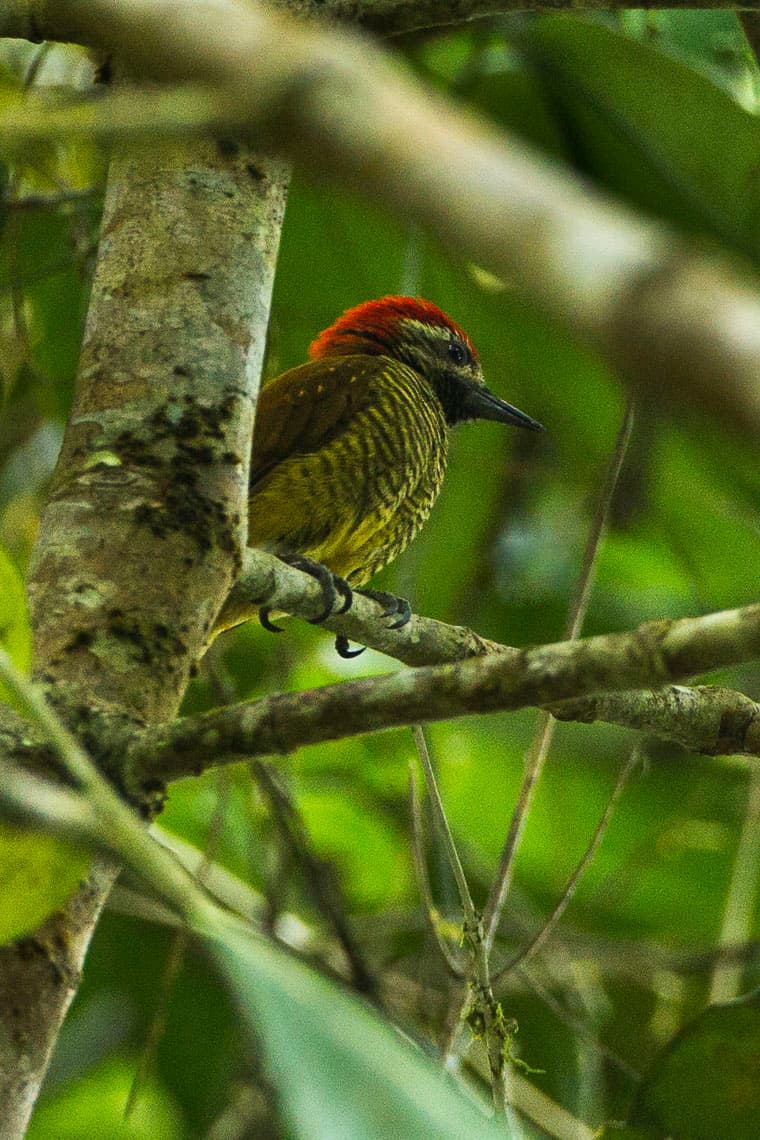
The yellow-vented woodpecker is a species found in the montane forests of Colombia, Ecuador, Peru, and Venezuela. It is characterized by its yellow flanks and belly, and males have a red crown while females have a black crown. This species primarily inhabits humid cloud forests and is known for its relatively quiet nature.
Ocellated piculet
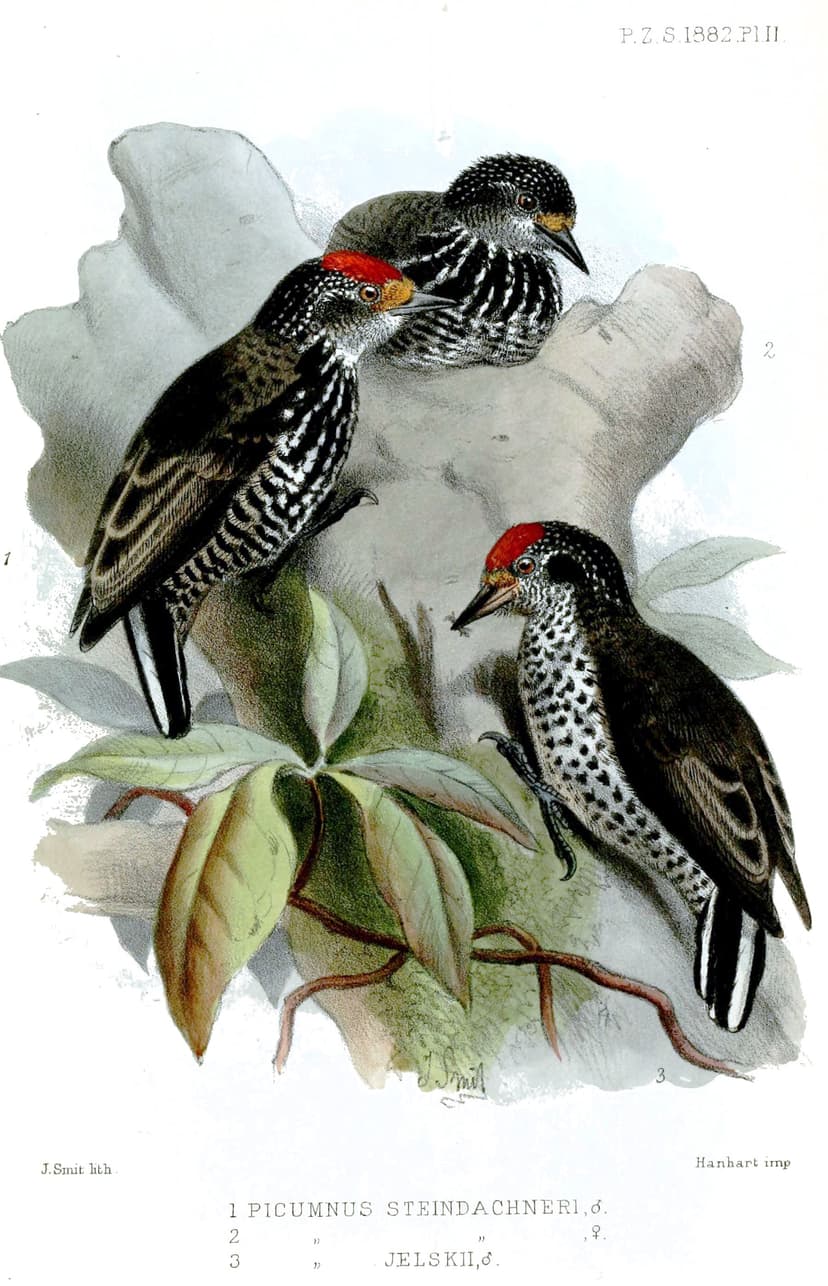
The ocellated piculet is a small bird species found in the montane forests of Bolivia and Peru, with a possible extension into Argentina. Measuring between 9 to 10 cm, it is characterized by its predominantly brownish plumage, with males displaying red tips on their forehead feathers and males and females having spotted caps. They forage in pairs or singly, often as part of mixed-species flocks, and their diet is known to include insects.

Andean flicker
The Andean flicker is a distinctive woodpecker species found in the open, high-altitude landscapes of South America, including the páramo and puna. It is characterized by its terrestrial foraging behavior, colonial nesting in earthen banks, and a varied vocal repertoire. This species is widespread across several Andean countries and is currently listed as Least Concern.