
Yellow-vented woodpecker
The yellow-vented woodpecker is a species found in the montane forests of Colombia, Ecuador, Peru, and Venezuela. It is characterized by its yellow flanks and belly, and males have a red crown while females have a black crown. This species primarily inhabits humid cloud forests and is known for its relatively quiet nature.
Key Facts
- ›Found in Colombia, Ecuador, Peru, and Venezuela.
- ›Inhabits humid montane forests, particularly cloud forests.
- ›Measures 16 to 17 cm in length.
- ›Males have a red crown, while females have a black crown.
- ›Its underparts are greenish-white, becoming yellow on the flanks and belly.
- ›Assessed as Least Concern by the IUCN, with a believed stable population.
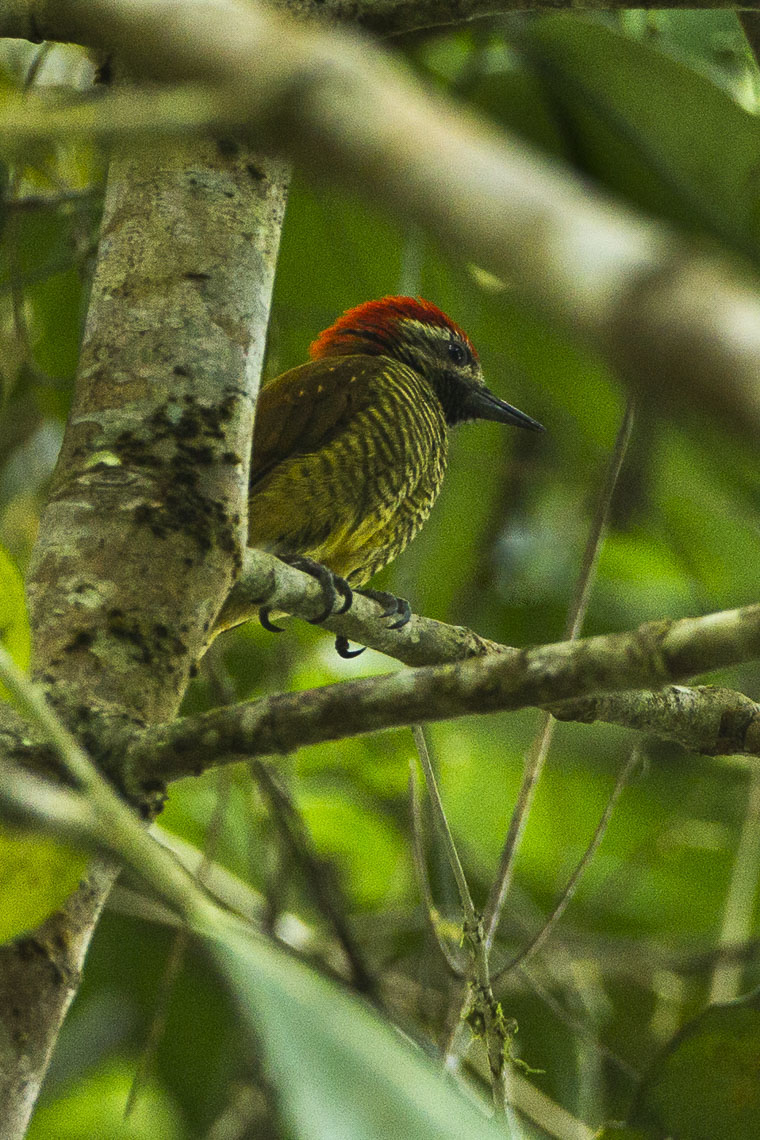
Yellow-Vented Woodpecker
Colombia, Ecuador, Peru, Venezuela
Yellow Flanks and Belly, Male Red Crown, Female Black Crown
- Forages from the forest's middle strata to the canopy
- Spends significant time at one spot, hammering on tree trunks or branches
Fast, Rattled 'Krrrrrrrrrrrrrrr'
About Yellow-vented woodpecker
The yellow-vented woodpecker (Veniliornis dignus) is a species of bird belonging to the woodpecker family, Picidae. This species is distributed across several South American countries, including Colombia, Ecuador, Peru, and Venezuela. It is a resident bird, meaning it stays in its range throughout the year.
Taxonomy and Classification
The yellow-vented woodpecker is placed in the genus Veniliornis by the International Ornithological Committee and BirdLife International. However, some taxonomic systems, such as the American Ornithological Society and Clements taxonomy, have reclassified species from Veniliornis into the genus Dryobates. Three subspecies are recognized: V. d. dignus, V. d. baezae, and V. d. valdizani, each with slight variations in beak length and plumage barring.
Description and Identification
Measuring between 16 and 17 cm in length and weighing between 35 and 46 grams, the yellow-vented woodpecker exhibits sexual dimorphism in its plumage. Both sexes share a predominantly blackish olive face with white stripes behind and below the eye. Their mantle and back are a yellow-green with a bronze tinge, while their underparts are greenish-white, transitioning to yellow on the flanks and belly, marked with heavy olive-blackish bars. The key distinguishing feature between sexes is the crown: males sport a red forehead to nape, whereas females have a uniformly blackish crown. Juveniles are generally duller and have greener upperparts.
Distribution and Habitat
The yellow-vented woodpecker primarily inhabits humid montane forests, with a particular affinity for cloud forests. It is rarely observed outside of mature, primary forest environments. The species' elevational range typically falls between 1,200 and 2,700 meters (3,900 to 8,900 feet), though it can be found as low as 700 meters in Peru. Its distribution spans the Pacific slope of Ecuador's Andes, the Colombian Andes, and southwestern Venezuela.
Behavior and Ecology
This woodpecker forages from the mid-levels of the forest up to the canopy. It is often observed alone or in pairs, but may occasionally join mixed-species foraging flocks. The yellow-vented woodpecker is known to spend considerable time at a single location, diligently hammering at tree trunks and branches in search of food. Its vocalizations are not extensive, but it is known to produce a fast, rattled call described as 'krrrrrrrrrrrrrrr'.
Breeding Biology
Information regarding the breeding biology of the yellow-vented woodpecker is limited. The breeding season is thought to occur between March and August, but detailed records on nesting habits, clutch size, or parental care are not readily available.
Conservation Status
The International Union for Conservation of Nature (IUCN) has assessed the yellow-vented woodpecker as Least Concern. Despite its population size not being precisely known, it is believed to be stable across its large range. No significant immediate threats have been identified, although it is considered rare in Peru and uncommon elsewhere, possibly existing at very low densities.
Source: Wikipedia ↗
Frequently Asked Questions
What is the scientific name of the yellow-vented woodpecker?
The scientific name of the yellow-vented woodpecker is Veniliornis dignus. Some taxonomic systems, starting in 2018, have moved species from the genus Veniliornis into the genus Dryobates.
Where is the yellow-vented woodpecker found?
This woodpecker species is distributed across Colombia, Ecuador, Peru, and Venezuela. It is primarily found in the humid montane forests of these regions, particularly in cloud forest environments.
What are the physical characteristics of the yellow-vented woodpecker?
The yellow-vented woodpecker is approximately 16 to 17 cm long. Adults have a mostly blackish olive face with white stripes, a yellow-green mantle and back, and greenish-white underparts that turn yellow on the flanks and belly with dark barring. Males have a red crown, while females have a black crown.
What is the habitat of the yellow-vented woodpecker?
The species inhabits humid montane forests, with a strong preference for cloud forests. It is rarely found outside of mature primary forest and typically resides at elevations between 1,200 and 2,700 meters.
What does the yellow-vented woodpecker eat?
Specific details about the diet of the yellow-vented woodpecker are not known. However, it forages in the middle strata to the canopy of the forest.
What is the conservation status of the yellow-vented woodpecker?
The yellow-vented woodpecker is currently listed as Least Concern by the IUCN. Its population is believed to be stable, and no immediate threats have been identified.
Related Woodpecker species
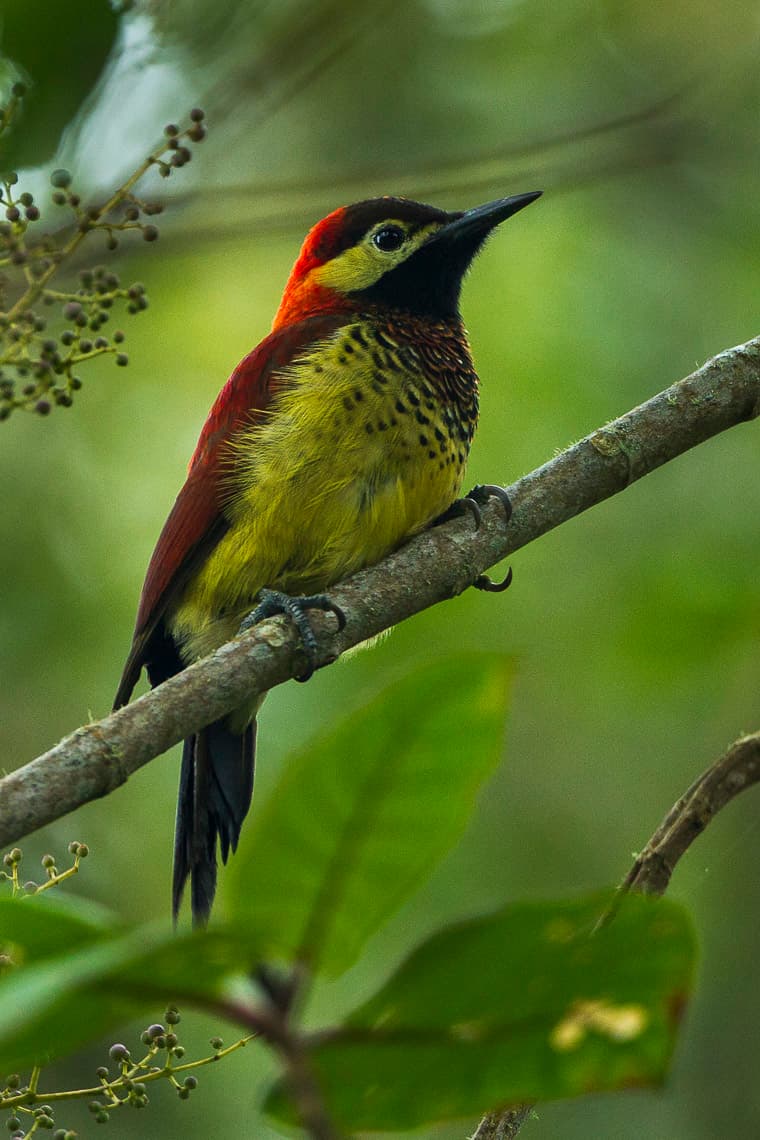
Crimson-mantled woodpecker
The crimson-mantled woodpecker is a species of bird found in the montane forests and páramo zones of Bolivia, Colombia, Ecuador, Peru, and Venezuela. It is characterized by its distinctive crimson red nape and mantle, with males and females differing primarily in the color of their crowns. This woodpecker primarily feeds on small arthropods, especially ants, and also consumes fruit.
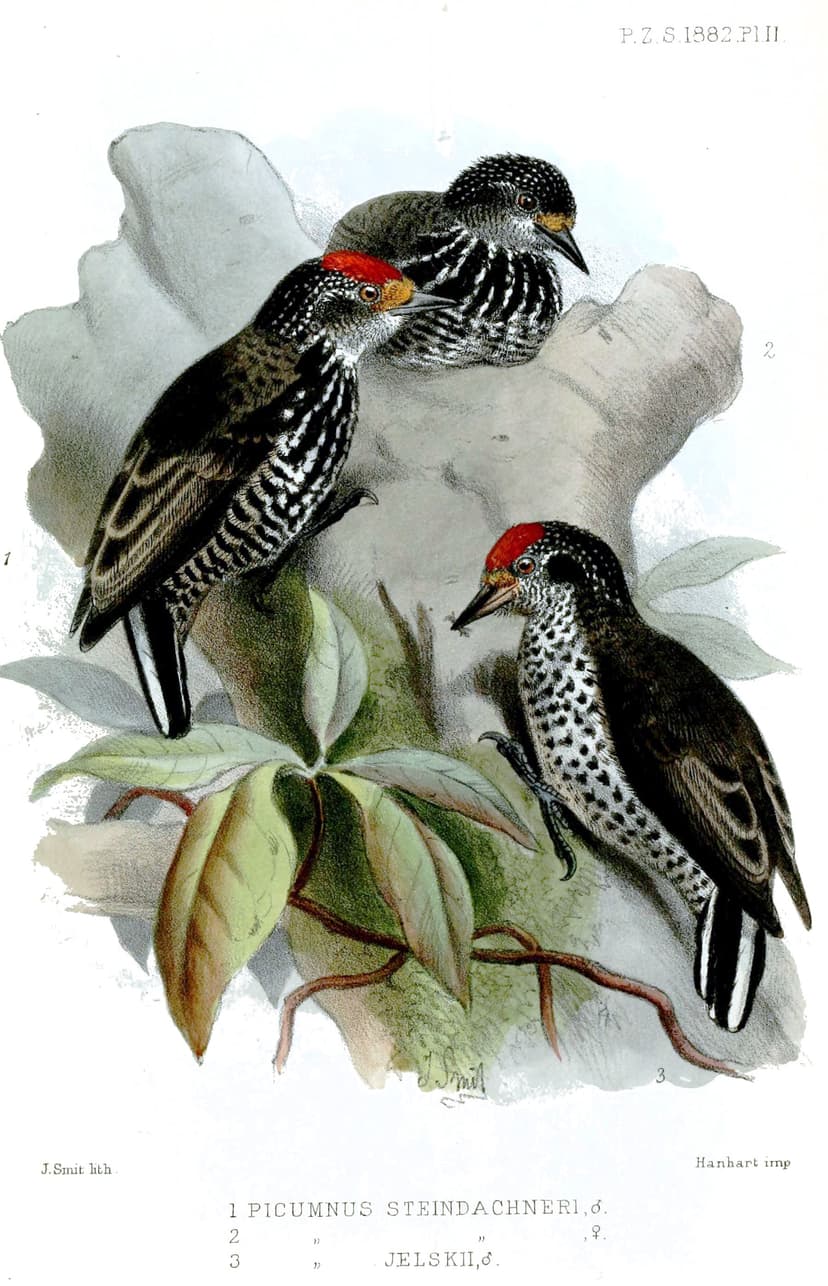
Ocellated piculet
The ocellated piculet is a small bird species found in the montane forests of Bolivia and Peru, with a possible extension into Argentina. Measuring between 9 to 10 cm, it is characterized by its predominantly brownish plumage, with males displaying red tips on their forehead feathers and males and females having spotted caps. They forage in pairs or singly, often as part of mixed-species flocks, and their diet is known to include insects.
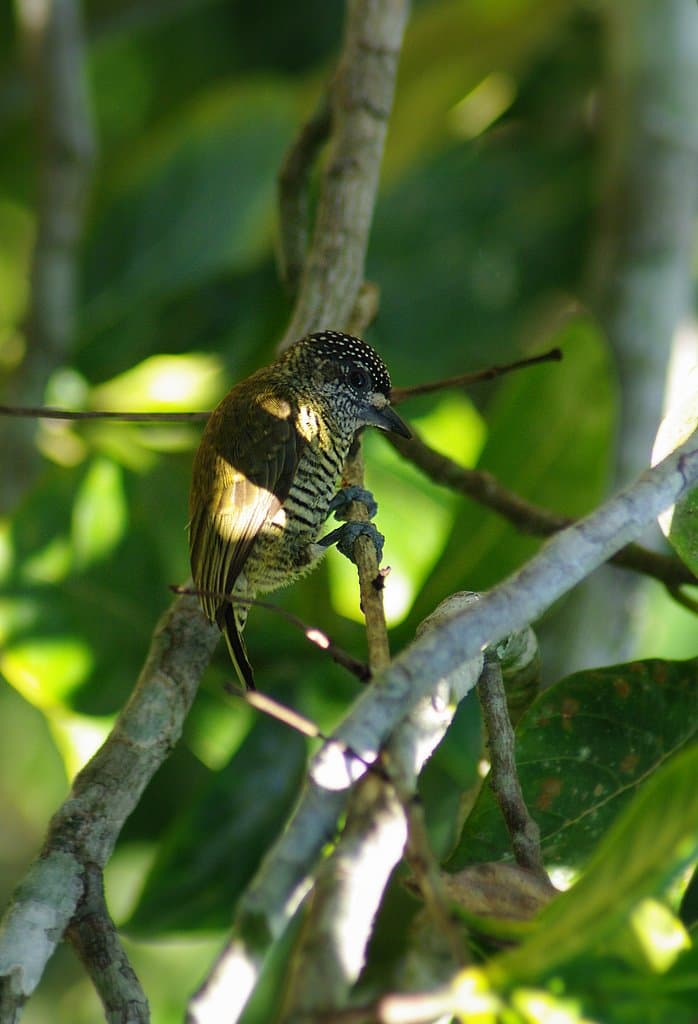
Golden-spangled piculet
The golden-spangled piculet is a small bird found across several South American countries, inhabiting diverse wooded environments from rainforests to savannas. It is characterized by its distinctive plumage, with males and females exhibiting variations in their spotted caps, and is known for foraging in the lower strata of forests and nesting in soft wood.