
Gilded flicker
The gilded flicker is a large woodpecker found in the desert regions of the Southwestern United States and northwestern Mexico. It is distinguished from the similar northern flicker by its yellow underwings. This species primarily feeds on ants and other insects, foraging on the ground and also consuming fruits and berries.
Key Facts
- ›Distinguished by yellow underwings, unlike the northern flicker's red underwings.
- ›Inhabits Sonoran, Yuma, and eastern Colorado Desert regions.
- ›Nests predominantly in saguaro cacti, excavating cavities a year in advance.
- ›Diet mainly consists of ants, supplemented by other insects, fruits, and berries.
- ›Forages on the ground, probing anthills and picking up insects.
- ›Occasionally hybridizes with the northern flicker where ranges overlap.

Gilded-Shafted Flicker
Northwestern Mexico, Southwestern United States, Baja California Peninsula
Desert, Saguaro Cacti, Desert Dry Washes, Riparian Areas
Yellow Underwings
Ants, Insects, Beetles, Termites, Fruits, Berries
Forages On the Ground, Probes Anthills With Tongue
Saguaro cacti, Desert dry washes with cottonwood or willows
About Gilded flicker
The gilded flicker (Colaptes chrysoides) is a notable woodpecker species recognized for its distinctive yellow underwings, which differentiate it from the similar northern flicker found in the same arid environments. This large woodpecker measures approximately 29 cm (11 inches) in length and inhabits the Sonoran, Yuma, and eastern Colorado Desert regions of the Southwestern United States, extending into northwestern Mexico and the Baja California peninsula. Its survival is closely tied to the saguaro cactus, which serves as its primary nesting site.
Habitat and Nesting
This species most frequently excavates its nest holes within saguaro cacti (Carnegiea gigantea), often choosing locations higher up on the cactus. These cavities are typically excavated a full year before they are occupied, allowing the saguaro to develop a hardened sap lining, known as a saguaro boot, to protect itself from moisture loss. While saguaros are preferred, gilded flickers may also nest in desert dry washes, utilizing trees like Fremont's cottonwood or willows. In contrast, northern flickers rarely use saguaros for nesting, preferring riparian trees.
Diet and Foraging
The diet of the gilded flicker primarily consists of ants, supplemented by other insects such as beetles and termites. They are ground foragers, adept at picking insects off the surface or using their specialized tongues to probe into anthills. Beyond insects, they also consume fruits and berries, particularly when available in their desert habitat.
Taxonomy and Hybridization
Four subspecies of the gilded flicker are recognized, reflecting variations across its geographic range: the Cape gilded flicker (C. c. chrysoides), the brown gilded flicker (C. c. brunnescens), Mearns' gilded flicker (C. c. mearnsi), and the Mexican gilded flicker (C. c. tenebrosus). In the narrow zones where their ranges and habitats overlap, gilded flickers occasionally hybridize with northern flickers, indicating a degree of genetic compatibility between these closely related species.
Source: Wikipedia ↗
Frequently Asked Questions
What differentiates the gilded flicker from the northern flicker?
The primary distinguishing feature of the gilded flicker is its yellow underwings, whereas the northern flicker, which shares some of its range, has red underwings. This coloration is a key visual cue for identification.
Where does the gilded flicker typically build its nest?
The gilded flicker most commonly excavates its nest holes in saguaro cacti, often placing them nearer to the top of the cactus than to the ground. Less frequently, they may use cavities in desert dry washes with cottonwood or willow trees.
What is the main diet of the gilded flicker?
The gilded flicker's diet is predominantly composed of ants. They also consume other insects such as beetles and termites, and will supplement their diet with fruits and berries.
How does the gilded flicker find its food?
This woodpecker forages on the ground, picking up insects directly or using its tongue to probe into anthills. This behavior allows them to access their primary food source efficiently.
What are the different subspecies of the gilded flicker?
Four subspecies of the gilded flicker are recognized: the Cape gilded flicker (C. c. chrysoides), the brown gilded flicker (C. c. brunnescens), Mearns' gilded flicker (C. c. mearnsi), and the Mexican gilded flicker (C. c. tenebrosus).
Related Woodpecker species

American three-toed woodpecker
The American three-toed woodpecker is a medium-sized woodpecker found in North American coniferous forests. It is characterized by its black and white plumage, with males displaying a distinctive yellow cap. These birds are strongly associated with insect-infested trees, often following disturbances like forest fires.

Black-backed woodpecker
The Black-backed woodpecker is a medium-sized woodpecker found in the boreal forests of North America. Adults are predominantly black with white undersides and males sport a distinctive yellow cap. This species is a specialist in burnt forests, often feeding on insect outbreaks in recently burned trees.
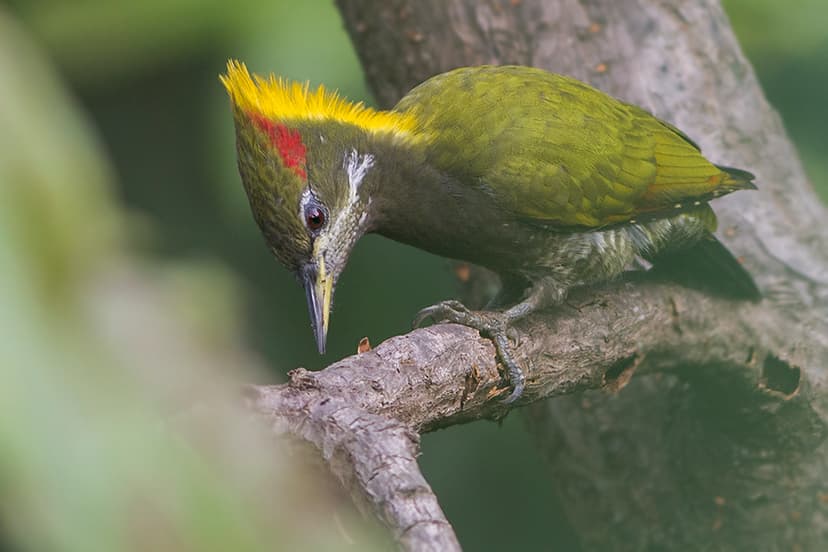
Lesser yellownape
The lesser yellownape is a widespread woodpecker found breeding in tropical and subtropical Asia, from the Indian subcontinent to Southeast Asia. This largish species is characterized by its green upperparts, bright yellow tufted nape, and distinctive red markings on the male's head. It inhabits jungles and nests in tree cavities.