
Lesser yellownape
The lesser yellownape is a widespread woodpecker found breeding in tropical and subtropical Asia, from the Indian subcontinent to Southeast Asia. This largish species is characterized by its green upperparts, bright yellow tufted nape, and distinctive red markings on the male's head. It inhabits jungles and nests in tree cavities.
Key Facts
- ›The lesser yellownape is a largish woodpecker, measuring approximately 27 cm in length.
- ›Its plumage is predominantly green, with a notable bright yellow tuft on the nape.
- ›Adult males exhibit red markings above the eye and nape, along with red moustachial stripes.
- ›The species nests in tree cavities and typically lays two to four white eggs.
- ›It is a jungle species with a straight, pointed bill, stiff tail, and zygodactyl feet for climbing.
- ›The lesser yellownape's long tongue can be extended to capture insects.
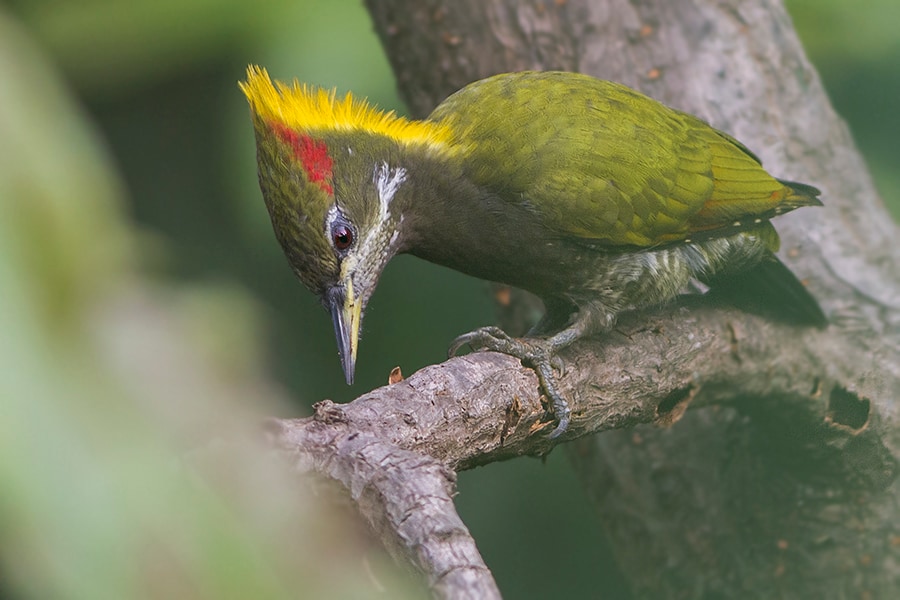
Lesser Yellownape
Indian Subcontinent, Southeast Asia
Jungle
Bright Yellow Tufted Nape, Red Markings Above Eye and Nape, Red Moustachial Stripes, Red Patch Above Ear Coverts
Insects
- Long tongue can be darted forward to capture insects
Tree Cavity
About Lesser yellownape
The lesser yellownape (Picus chlorolophus) is a widespread woodpecker species commonly found breeding in the tropical and subtropical regions of Asia, primarily across the Indian subcontinent and Southeast Asia. Its range extends from India, Bhutan, Nepal, Bangladesh, and Sri Lanka eastward through Thailand, Burma, Cambodia, Laos, Indonesia, Malaysia, and Vietnam. Much of the detailed scientific understanding of this species originates from studies conducted in various parts of India.
Ecology and Description
This species thrives in jungle environments and exhibits typical woodpecker morphology. It possesses a straight, pointed bill, a stiff tail that aids in support when clinging to tree trunks, and zygodactyl feet, featuring two toes pointing forward and two backward, ideal for arboreal locomotion. The lesser yellownape's long tongue is adapted for darting out to capture insects, which form its primary diet. The bird measures approximately 27 cm in length. Its upperparts are green, distinguished by a bright yellow tufted nape. The neck and breast are also green, while the belly is whitish with fine green barring. The rump and tail are blackish.
Sexual Dimorphism and Juveniles
The adult male lesser yellownape is identifiable by its green head, white throat, and striking red markings above the eye and on the nape, complemented by red moustachial stripes. Females, in contrast, display only a red patch above the ear coverts. Young birds resemble the female but are generally duller in appearance.
Subspecies
Three subspecies of the lesser yellownape are recognized: chloropus found in the Himalayas, chlorigaster in Peninsular India, and wellsi in Sri Lanka.
Source: Wikipedia ↗
Frequently Asked Questions
What is the size of the lesser yellownape?
The lesser yellownape is considered a largish species of woodpecker, with a typical length of about 27 centimeters.
What are the distinctive physical features of the lesser yellownape?
It is primarily green in color with a bright yellow tufted nape. Adult males have prominent red markings above the eye and nape, as well as red moustachial stripes, while females have a smaller red patch above the ear coverts.
Where does the lesser yellownape typically build its nests?
This species is a jungle dweller and nests within a tree cavity, a common practice among many woodpecker species.
What is the typical clutch size for the lesser yellownape?
When nesting, the lesser yellownape typically lays between two and four white eggs in its tree cavity nest.
What is the geographic range of the lesser yellownape?
The lesser yellownape is widespread throughout tropical and subtropical Asia, commonly breeding in the Indian subcontinent and Southeast Asia, with its range extending across countries like India, Nepal, Sri Lanka, Thailand, and Malaysia.
Related Woodpecker species

Scaly-bellied woodpecker
The scaly-bellied woodpecker is a large, green woodpecker species found in the Indian subcontinent and adjacent regions, including Afghanistan, Iran, India, Nepal, Pakistan, and Turkmenistan. It is characterized by distinct scaling on its underside, a black moustache, and a large pale bill. Males have a red crown, while females have a blackish crown.

African grey woodpecker
The African grey woodpecker is a widespread bird species found throughout much of Sub-Saharan and equatorial Africa. It is characterized by its green upperparts, pale grey head and underparts, and a red rump and belly patch, with males distinguished by a red crown. This woodpecker primarily inhabits forests and woodlands, where it nests in tree holes and feeds on insects.
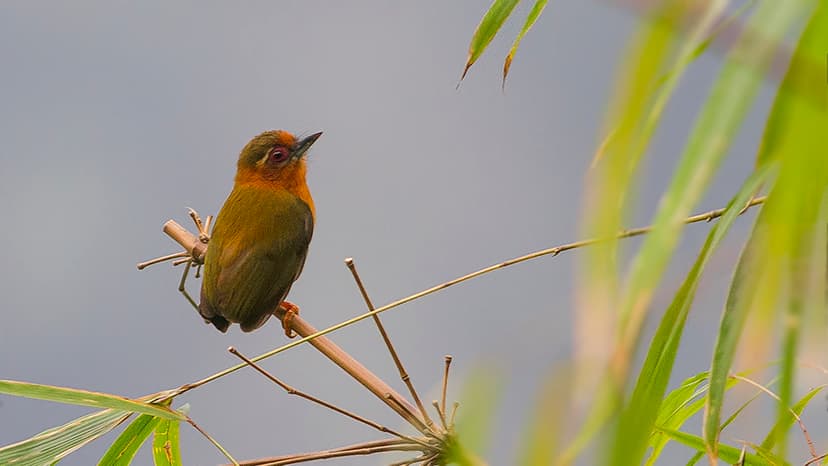
White-browed piculet
The white-browed piculet is a small bird found across Southeast Asia, inhabiting temperate and moist montane forests. It is characterized by its olive-green upperparts, rufous underparts, and a distinctive white streak above its eye. This species primarily feeds on insects and other invertebrates, often foraging in pairs or mixed-species flocks in the forest understory.