
Luzon flameback
The Luzon flameback is a large woodpecker species native to the northern Philippine islands of Luzon, Polillo, Catanduanes, and Marinduque. It is characterized by its vibrant red back and yellowish belly, with males displaying a striking red crest and females a more subdued black one. This species inhabits tropical lowland and montane forests.
Key Facts
- ›The Luzon flameback is distinguished by its red back and yellowish belly.
- ›Males possess a prominent red crest, while females have a black crest with white spots.
- ›It is found on the Philippine islands of Luzon, Polillo, Catanduanes, and Marinduque.
- ›Primary habitats include tropical moist lowland and montane forests.
- ›Nests are built in tree cavities, with breeding believed to occur from January to may.
- ›The species is assessed as Least Concern by the IUCN but faces threats from habitat loss and illegal wildlife trade.

Luzon Flameback
Philippines
Red Back, Yellowish Belly, Red Crest, Black Crest With White Spots
Large Caterpillars, Wood-Boring Larvae, Pupae, Ants
Pecking Wood, Hammering Wood To Find Insects
Tree Cavities
About Luzon flameback
The Luzon flameback (Chrysocolaptes haematribon) is a species of woodpecker native to the northern islands of the Philippines, including Luzon, Polillo, Catanduanes, and Marinduque. This species is recognized for its substantial size and striking coloration, featuring a vibrant red back that lends it its name and a contrasting yellowish belly. Males exhibit a prominent red crest, while females possess a more subdued black crest speckled with white.
Habitat and Ecology
This woodpecker primarily inhabits tropical moist lowland forests and is also found, though less commonly, in tropical moist montane forests up to an elevation of 1,500 meters. While specific dietary studies are limited, it is presumed to feed on large caterpillars, wood-boring larvae, pupae, and ants, utilizing its foraging behavior of pecking and hammering on trees and snags to locate insect prey. Luzon flamebacks are often observed in pairs or small family groups and have been seen associating with other woodpecker species.
Nesting and Reproduction
Nesting occurs within tree cavities. The breeding season is believed to take place between January and May. While not directly documented for the Luzon flameback, the closely related and well-studied Greater flameback typically lays two to five eggs, which incubate for about two weeks and fledge within a month.
Conservation Status
The Luzon flameback is currently assessed as a Least Concern species by the IUCN, indicating it remains locally common in suitable habitats. However, the species faces significant threats, notably habitat loss due to deforestation and the detrimental impact of the illegal wildlife trade. Consequently, its population trend is believed to be declining. Despite its presence in multiple protected areas, the effectiveness of conservation measures is often challenged by ongoing deforestation and hunting.
Source: Wikipedia ↗
Frequently Asked Questions
What are the main physical characteristics of the Luzon flameback?
The Luzon flameback is a large woodpecker notable for its red back, which gives it its name, and a yellowish belly. Males are sexually dimorphic, featuring a bright red crest, while females have a more muted black crest adorned with white spots.
Where is the Luzon flameback found?
This woodpecker species is endemic to the northern islands of the Philippines, specifically Luzon, Polillo, Catanduanes, and Marinduque. It is sometimes considered a subspecies of the broader greater flameback.
What kind of habitat does the Luzon flameback prefer?
The natural habitats of the Luzon flameback are tropical moist lowland forests. It can also be found, though less frequently, in tropical moist montane forests up to an elevation of 1,500 meters.
What does the Luzon flameback eat?
While specific dietary details are not extensively documented, it is presumed to feed on large caterpillars, wood-boring larvae, pupae, and ants, similar to other flameback species. They forage by pecking and hammering wood on trees and snags.
What is the conservation status of the Luzon flameback?
The International Union for Conservation of Nature (IUCN) classifies the Luzon flameback as a Least Concern species, as it remains locally common in appropriate habitats. However, the species' population is believed to be declining due to ongoing habitat loss and threats from the illegal wildlife trade.
Related Woodpecker species
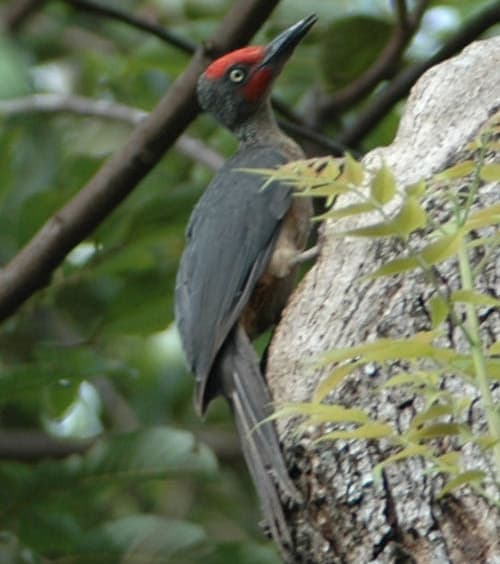
Ashy woodpecker
The Ashy woodpecker is a large bird species found exclusively on the island of Sulawesi and its surrounding Indonesian islands. It inhabits tropical lowland and montane forests, preferring dense woodland but also appearing in secondary forests and savanna patches. This species is characterized by its grey plumage, a distinctive red facial marking in males, and a long black bill.

Northern sooty woodpecker
The Northern sooty woodpecker is a bird species found in the Philippines, inhabiting tropical lowland and montane forests. Distinguishable by its darker gray plumage and the male's burgundy facial markings, this species is typically observed alone or in pairs. Its primary diet is believed to consist of invertebrates, and it nests in tree cavities.
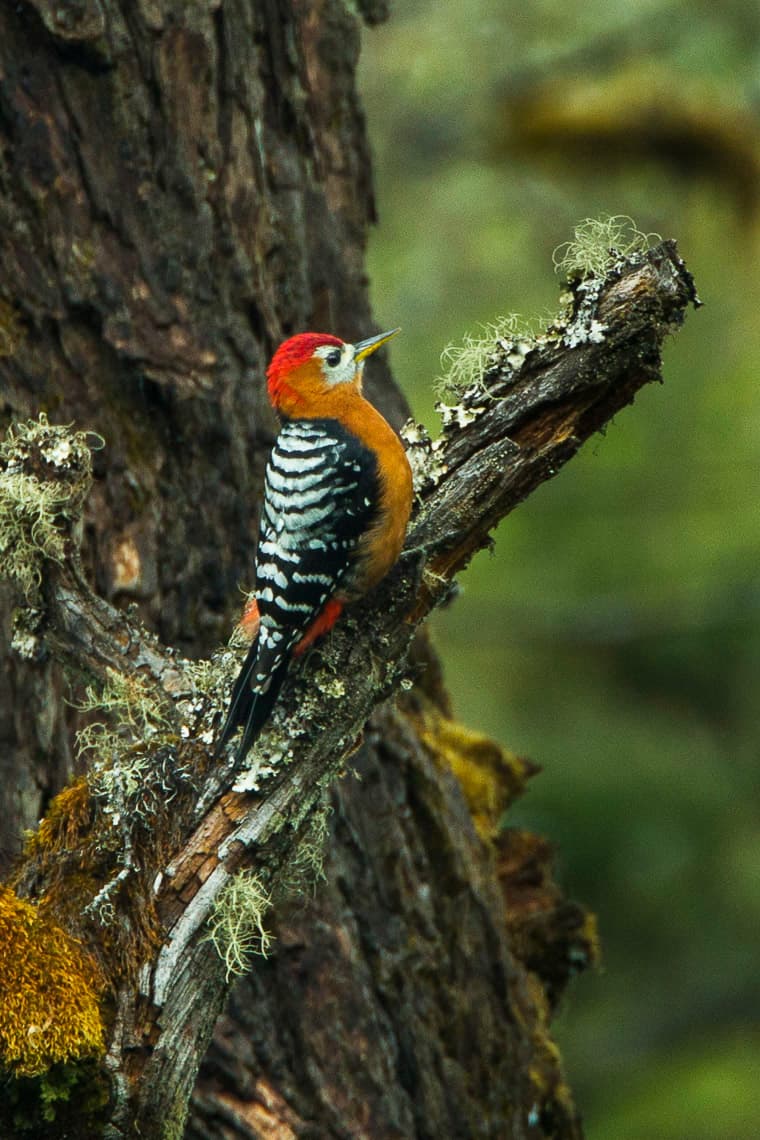
Rufous-bellied woodpecker
The rufous-bellied woodpecker, also known as the rufous-bellied sapsucker, is a bird species found across the Himalayas and parts of Southeast Asia, inhabiting subtropical and tropical moist forests. It is characterized by its distinctive pitting of tree bark to feed on sap, and its plumage includes a black mantle and back with white barring on the wings and tail, contrasted by a rufous or cinnamon underside.