
Rufous-bellied woodpecker
The rufous-bellied woodpecker, also known as the rufous-bellied sapsucker, is a bird species found across the Himalayas and parts of Southeast Asia, inhabiting subtropical and tropical moist forests. It is characterized by its distinctive pitting of tree bark to feed on sap, and its plumage includes a black mantle and back with white barring on the wings and tail, contrasted by a rufous or cinnamon underside.
Key Facts
- ›Ranges in length from 19 to 23 cm (7.5 to 9.1 in).
- ›Males have a red crown, while females have a black crown speckled with white.
- ›Feeds on tree sap, primarily in spring, and also consumes wood-boring and bark insects.
- ›Inhabits subtropical or tropical moist lowland and montane forests.
- ›Found across the Indian subcontinent and Southeast Asia, including India, Nepal, Thailand, and Vietnam.
- ›Conservation status is listed as 'least concern' by the IUCN, despite a declining population trend.
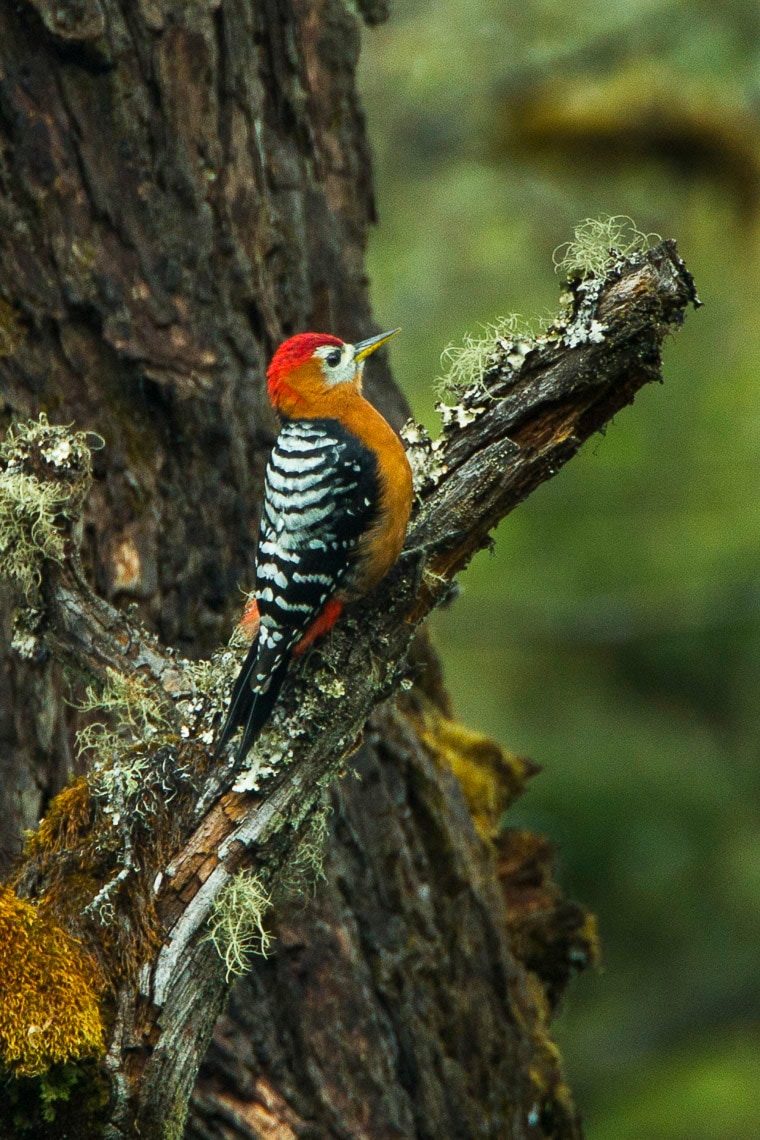
Rufous-Bellied Sapsucker
Indian Subcontinent, Southeast Asia
Male Red Crown, Female Black Crown Speckled With White, Black Mantle and Back, Black Wings Barred With White, Rufous Or Cinnamon Throat and Underparts, Black Lower Belly Barred With White, Red Or Pink Under-Tail Coverts
Tree Sap, Wood-Boring Insects, Bark Insects
Makes small pits on tree bark to feed on sap, Extracts sap using a brushy-tipped tongue
About Rufous-bellied woodpecker
The rufous-bellied woodpecker, scientifically known as Dendrocopos hyperythrus, is a bird species recognized for its unique feeding habits and distinct plumage. It is also referred to as the rufous-bellied sapsucker due to its method of creating numerous small pits on tree bark from which it drinks sap.
Description and Habitat
This woodpecker typically measures between 19 and 23 cm (7.5 to 9.1 inches) in length. A notable sexual dimorphism exists in its crown coloration: males display a red crown, while females possess a black crown speckled with white. Both sexes share black mantles and backs, with wings that are black and barred with white. The tail is predominantly black, featuring white barring on the outer feathers. The face is white, and the throat and underparts are a uniform cinnamon or rufous hue, with the lower belly being black and barred with white. The under-tail coverts are red or pink. Its iris is chestnut, the upper mandible of its beak is black, the lower mandible is grey, and its legs are grey or olive.
The natural habitats of the rufous-bellied woodpecker are subtropical or tropical moist lowland and montane forests. It is found across a wide geographic range that includes the Himalayas, the Indian subcontinent, and parts of Southeast Asia. Countries within its distribution include Bangladesh, Bhutan, Cambodia, Hong Kong, India, Korea, Myanmar, Nepal, Thailand, Manchuria, Ussuriland, and Vietnam.
Ecology and Diet
A key adaptation for the rufous-bellied woodpecker is its tongue, which has a brushy tip, enabling it to feed effectively on sap. Sap is a primary food source, particularly sought during the spring season. At other times of the year, the woodpecker supplements its diet with wood-boring and bark insects. It commonly utilizes trees such as Quercus semecarpifolia, Quercus glauca, Betula utilis, Ilex dipyrena, and various Rhododendron species for sap extraction. The wells created by the woodpeckers for sap collection are often visited by other bird species, including the rufous sibia, white-browed fulvetta, and green-tailed sunbird, among others.
Conservation Status
While the rufous-bellied woodpecker has a broad geographic distribution, it is generally considered an uncommon bird. Its population has declined in certain areas due to the clearing of deciduous forests, which are essential for its survival. The overall population trend is believed to be decreasing. Nevertheless, the International Union for Conservation of Nature (IUCN) has assessed its conservation status as 'least concern'.
Source: Wikipedia ↗
Frequently Asked Questions
What is the rufous-bellied woodpecker's scientific name?
The scientific name for the rufous-bellied woodpecker is Dendrocopos hyperythrus. This binomial nomenclature is used to classify the species within the scientific community.
What do rufous-bellied woodpeckers eat?
Rufous-bellied woodpeckers primarily feed on tree sap, which they access by creating small pits in the bark, especially during the spring. They also consume wood-boring and bark insects throughout the rest of the year.
Where can I find a rufous-bellied woodpecker?
This species is found along the Himalayas in the Indian subcontinent and Southeast Asia. Its range includes countries such as India, Nepal, Bhutan, Thailand, and Vietnam, in subtropical and tropical moist forests.
How can I identify a rufous-bellied woodpecker?
Distinguishing features include the male's red crown and the female's black, white-speckled crown. Both sexes have a black mantle and back with white barring on the wings and tail, and a uniform cinnamon or rufous throat and underparts.
What is the conservation status of the rufous-bellied woodpecker?
The rufous-bellied woodpecker is classified as 'least concern' by the International Union for Conservation of Nature (IUCN). Despite this status, its population trend is considered to be decreasing.
Related Woodpecker species
Necklaced woodpecker
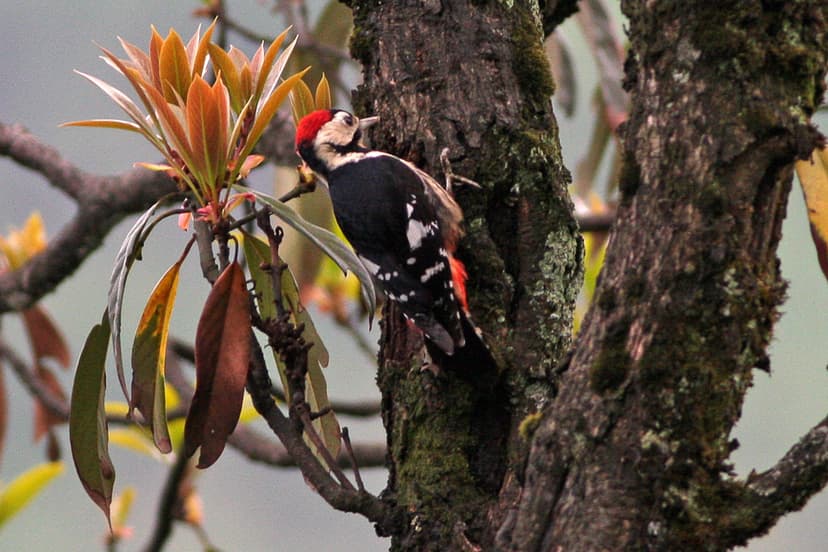
The necklaced woodpecker is a small, stout, black-and-white bird found in lowland and montane forests across Southeast Asia and China. It is characterized by buffy underparts, with males displaying a distinctive fiery orange neck patch and a crimson red crown.

Checker-throated woodpecker
The checker-throated woodpecker, also known as the checker-throated yellownape or Javan yellownape, is a species of bird native to Southeast Asia. It inhabits subtropical and tropical moist forests, and its population is declining due to deforestation.
Brown-fronted woodpecker
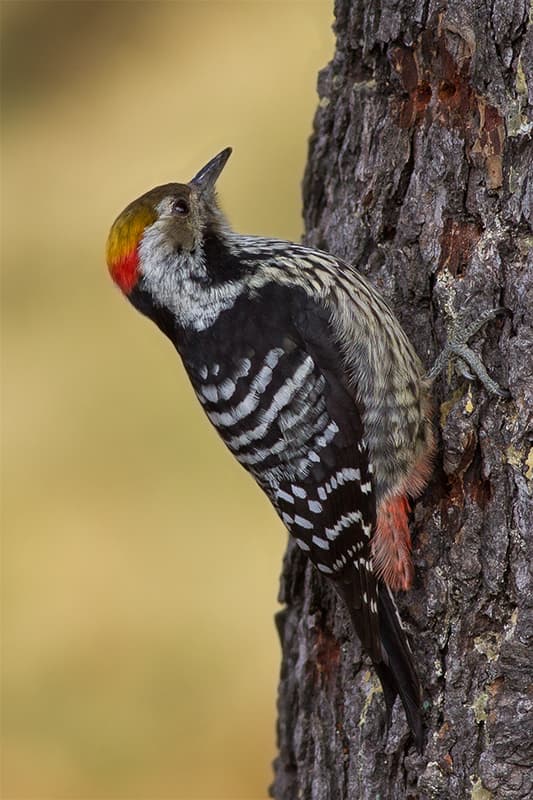
The brown-fronted woodpecker is a medium-sized, pied bird found in the lower-to-middle altitudes of the Himalayas, spanning across Afghanistan, India, Nepal, Pakistan, and Bhutan. Its natural habitats include temperate and moist montane forests. It is characterized by prominent black markings, yellow in its crown, and distinct underpart streaking.