
Melancholy woodpecker
The melancholy woodpecker is a species of woodpecker found in West Africa, inhabiting forests, woodlands, and clearings. This bird, measuring 17-18 cm in length, is characterized by its bronzy-green upperparts and greenish-yellow underparts with brown streaks. It is known for its insectivorous diet, foraging in family groups within the forest canopy.
Key Facts
- ›Found in West Africa from Sierra Leone east to Nigeria.
- ›Measures between 17-18 cm in length.
- ›Feeds primarily on insects, foraging in the forest canopy.
- ›Often joins mixed-species foraging flocks.
- ›Assessed as a species of Least Concern by the IUCN due to a large range and stable population.

West Africa
Olive-Brown, Red, Blackish, White, Bronzy-Green, Greenish-Bronze, Black, Grey-Black, Greenish-Yellow, Brown
- Red nape in males, blackish nape in females
- White face with olive-brown malar stripe
- Dusky ear coverts
- White supercilium
- Bronzy-green upperparts
- Greenish-yellow underparts with broad brown streaks
Insects
Forages In Families, Joins Mixed-Species Foraging Flocks, Forages In the Canopy
Tinny Trill, Series of Rrek and Rrak Notes, B-Ddddddd-D-It, Br-R-R-R-R-R-R, Zh-Dzeeeep, Pit Notes In Disputes, Drums Quietly and Stridently
About Melancholy woodpecker
The melancholy woodpecker (Dendropicos lugubris) is a species of woodpecker native to West Africa, found in countries such as Sierra Leone, Ivory Coast, Ghana, Liberia, Nigeria, and Togo. It inhabits a variety of forest types, including open forests, forest edges, clearings, secondary forests, and woodlands, extending up to 1,200 meters in elevation. The species also adapts to environments like swamps, plantations, and gardens.
Description and Identification
Adult melancholy woodpeckers typically measure between 17 and 18 centimeters in length. Their plumage features bronzy-green upperparts and greenish-yellow underparts marked with broad brown streaks. Distinctive facial markings include a white face, an olive-brown malar stripe, dusky ear coverts, and a white supercilium. Males exhibit a red nape, while females have a blackish nape. Juvenile birds are duller and lack the bronzy tone on their upperparts.
Behavior and Diet
These woodpeckers are primarily insectivorous, foraging for their food within the forest canopy. They are often observed foraging in family groups and frequently join mixed-species foraging flocks, indicating a social aspect to their feeding behavior. Vocalizations include a tinny trill, various rrek and rrak notes, and other calls such as 'b-ddddddd-d-it', 'br-r-r-r-r-r-r', and 'zh-dzeeeep'. They also emit pit notes during disputes. Drumming is described as quiet and strident.
Reproduction and Conservation
The breeding season for the melancholy woodpecker may occur between December and March. The species is considered to be of Least Concern by the International Union for Conservation of Nature (IUCN). This status is attributed to its large geographic range and a population trend that is considered stable. It is sometimes considered a subspecies of the Gabon woodpecker (Dendropicos gabonensis).
Source: Wikipedia ↗
Frequently Asked Questions
What is the scientific name of the melancholy woodpecker?
The scientific name of the melancholy woodpecker is Dendropicos lugubris. This binomial name is used to classify the species within the scientific community.
Where is the melancholy woodpecker found?
The melancholy woodpecker is distributed across West Africa, with its range extending from Sierra Leone eastward to Nigeria. It inhabits a variety of environments within this region.
What does the melancholy woodpecker eat?
The primary diet of the melancholy woodpecker consists of insects. They are observed to forage for these insects within the canopy of the forest.
What are the typical habitats of the melancholy woodpecker?
This species typically resides in open forests, forest edges, clearings, secondary forests, and woodlands. They can be found up to elevations of 1,200 meters and also inhabit swamps, plantations, and gardens.
What is the conservation status of the melancholy woodpecker?
The melancholy woodpecker is listed as a species of Least Concern by the International Union for Conservation of Nature (IUCN). This assessment is based on its extensive geographic range and a stable population trend.
How large is a melancholy woodpecker?
The melancholy woodpecker typically measures between 17 and 18 centimeters in length. This size range is consistent across adult individuals of the species.
Related Woodpecker species
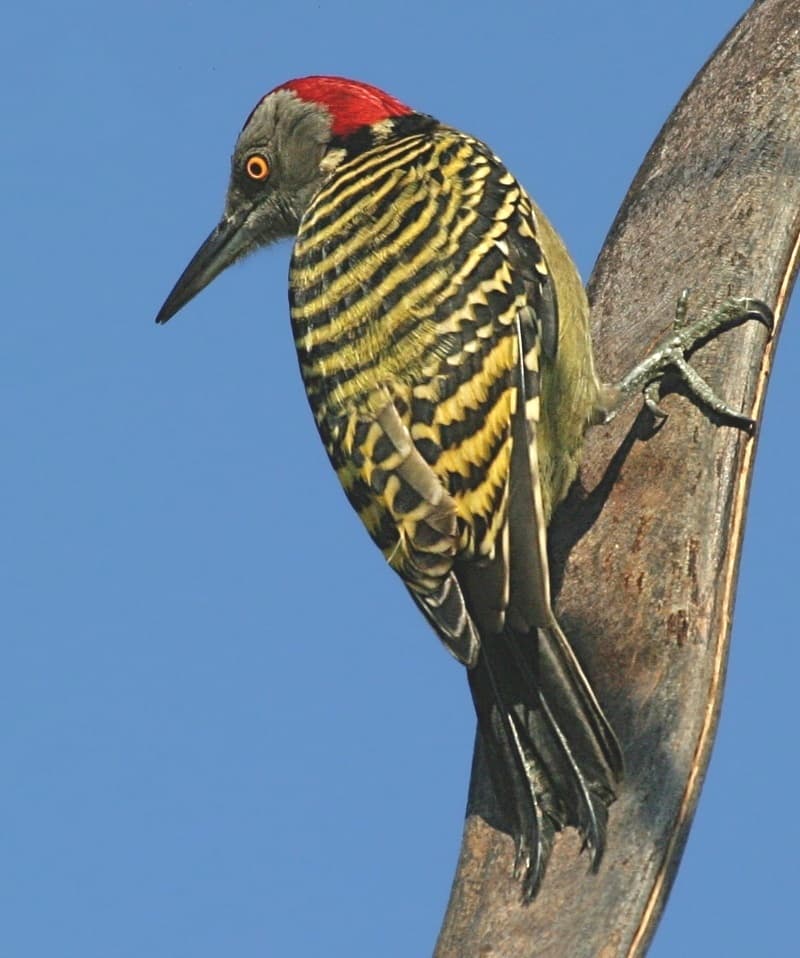
Hispaniolan woodpecker
The Hispaniolan woodpecker is a medium-sized, gold and black barred bird found exclusively on the island of Hispaniola. This species is known for its social behavior and distinctive vocalizations, inhabiting a variety of forest types, plantations, and even urban parks across both Haiti and the Dominican Republic.

Red-breasted sapsucker
The red-breasted sapsucker is a medium-sized woodpecker found along the west coast of North America, from Alaska down to California and even Baja California in winter. Distinctive for its red head and chest, this species primarily feeds on tree sap, drilling rows of holes into living trees, and also consumes insects attracted to the sap. They are cavity nesters, excavating their homes in dead deciduous trees.
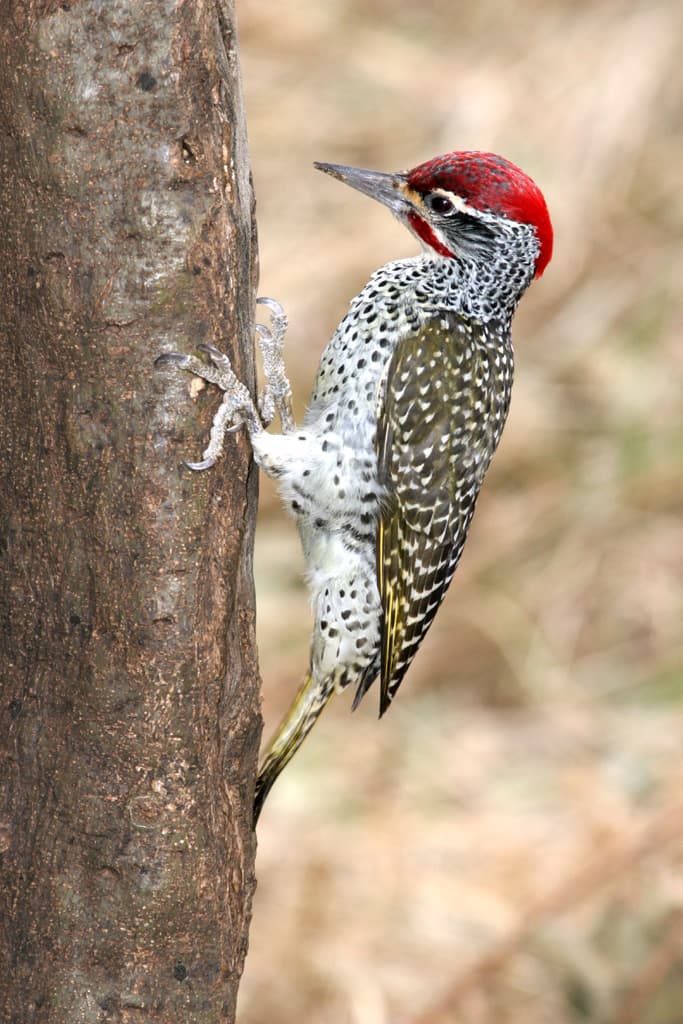
Nubian woodpecker
The Nubian woodpecker is a medium-sized bird found across Central and Eastern Africa, inhabiting open savannah woodlands and bushy areas. It is distinguished by its plumage, with males having a red crown and nape, while females have a black crown speckled with white. This species is common and its population is considered stable.