
Hispaniolan woodpecker
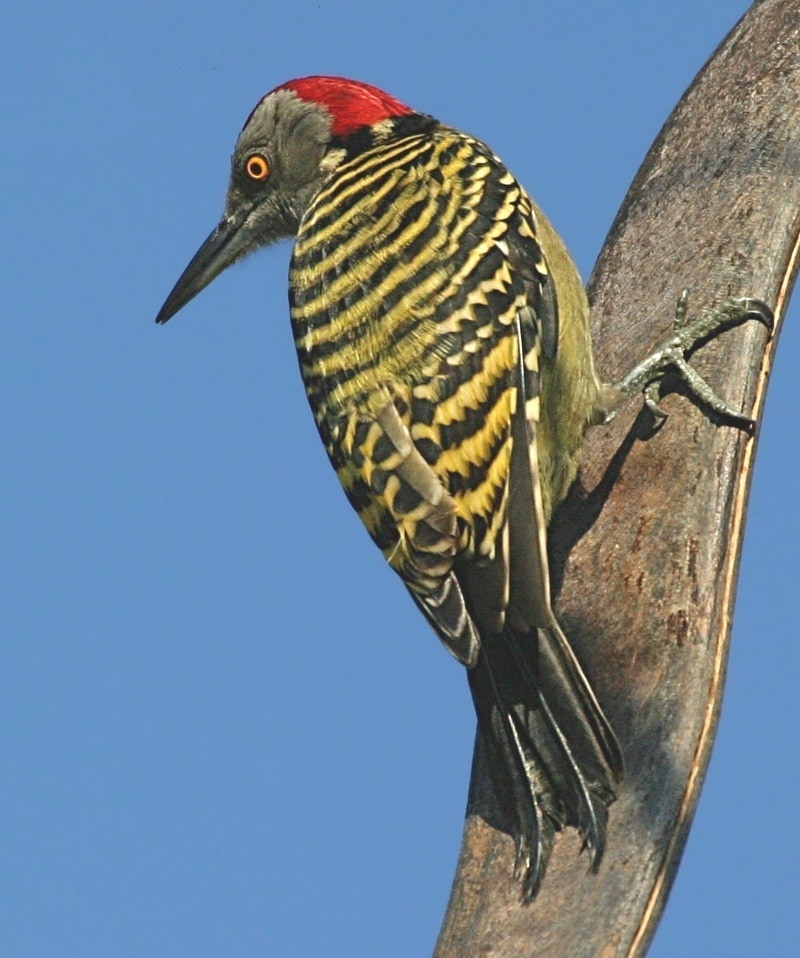
The Hispaniolan woodpecker is a medium-sized, gold and black barred bird found exclusively on the island of Hispaniola. This species is known for its social behavior and distinctive vocalizations, inhabiting a variety of forest types, plantations, and even urban parks across both Haiti and the Dominican Republic.
Key Facts
- ›Endemic to the island of Hispaniola, found in both Haiti and the Dominican Republic.
- ›Gold and black barred plumage, with males having a red crown and nape, and females a black crown and red nape.
- ›A social species, often nesting in colonies with up to 26 pairs in a single tree.
- ›Omnivorous diet including insects, spiders, scorpions, lizards, fruit, seeds, grain, and sap.
- ›Nests are excavated in tree trunks and branches, with discarded holes reused by other bird species.
- ›Distinctive visual displays include bill-oriented actions, body movements like 'swinging', and 'bowing' between mates.
Hispaniola
Wet Forests, Dry Forests, Broadleaf Forests, Coniferous Forests, Plantations, Cactus Scrub, Mangrove Areas, Swamps, Grasslands, Palm Groves, Wooded Agricultural Areas, Urban Parks
Gold and black barring on back and wings, Red crown and nape, Black crown and red nape, Red upper-tail coverts, Long, slender, grey beak
Insects, Spiders, Scorpions, Lizards, Fruit, Seeds, Grain, Sap, Berries
Forage in small noisy groups, Catch flying insects in flight, Bash larger food items on an 'anvil', Glean on small branches, Tap and probe, Forage on the sides of tree trunks
Excavated In Tree Trunks, Excavated In Tree Branches
Yapping, Squeaking, Rolling Calls, Nasal Calls
About Hispaniolan woodpecker
The Hispaniolan woodpecker (Melanerpes striatus) is a striking medium-sized bird characterized by its distinctive gold and black barred plumage. It is the only woodpecker species endemic to the Caribbean island of Hispaniola, inhabiting diverse environments across both the Dominican Republic and Haiti.
Description and Identification
Adult Hispaniolan woodpeckers typically measure between 22 and 28 cm in length. Males are distinguished by a red crown and nape, while females possess a black crown and a red nape. Their backs and wings are boldly striped with black and gold, complemented by a greenish-yellow rump and red upper-tail coverts. The underside of the wings is greyish-brown with pale spotting, and the underparts are buff, brown, or olive, often with dark streaking on the flanks. They have a long, slender grey beak and yellow irises.
Distribution and Habitat
This species is found throughout Hispaniola, adapting to a wide array of habitats. Its range extends through wet, dry, broadleaf, and coniferous forests, but it also thrives in less conventional environments such as plantations, cactus scrub, mangrove areas, swamps, grasslands, palm groves, wooded agricultural lands, and even urban parks.
Ecology and Behavior
Unlike many of its relatives, the Hispaniolan woodpecker is a notably social bird. They often forage in small, vocal groups and exhibit a unique communal nesting behavior. Colonies can comprise up to twenty pairs of birds, with several pairs nesting in the same tree. Their diet is omnivorous, including insects, spiders, scorpions, lizards, fruit, seeds, grain, and sap. They are also known to consume berries and plants, and have been observed to be a crop pest in the Dominican Republic for damaging fruit-producing trees.
Their nesting habits involve excavating holes in tree trunks and branches, and importantly, these discarded cavities are frequently reused by other bird species, such as Hispaniolan amazons and parakeets, highlighting their role in the ecosystem.
Foraging and Nesting
Foraging behavior shows some sexual dimorphism, with females tending to glean on small branches and males engaging more in tapping and probing. This difference is thought to be linked to variations in bill size and physiological structure. They rarely forage on the ground, preferring to seek food on the sides of tree trunks.
Breeding can occur throughout the year, though nesting typically commences in spring, with a defined season often lasting from March through August. Both male and female participate in nest excavation, incubation of the average clutch of four or five eggs, and feeding the young. While cooperative breeding has been observed, it appears to be rare, with usually only females incubating on a given nest site.
Source: Wikipedia ↗
Frequently Asked Questions
What is the Hispaniolan woodpecker's scientific name?
The scientific name for the Hispaniolan woodpecker is *Melanerpes striatus*. This binomial name is used to classify it within the scientific community.
What does the Hispaniolan woodpecker eat?
The Hispaniolan woodpecker has a varied diet that includes insects, spiders, scorpions, lizards, fruit, seeds, grain, and sap. They are also known to consume berries and plants, and can be considered a crop pest in some areas for damaging fruit-producing trees.
Where does the Hispaniolan woodpecker live?
This woodpecker is endemic to the Caribbean island of Hispaniola, which is shared by the Dominican Republic and Haiti. They inhabit a wide range of environments, from forests to grasslands and urban parks.
How do Hispaniolan woodpeckers nest?
Hispaniolan woodpeckers excavate their nests in tree trunks and branches. They are highly social, with many pairs nesting in the same tree, and both parents share incubation and feeding duties.
What are the physical characteristics of the Hispaniolan woodpecker?
The Hispaniolan woodpecker is a medium-sized bird, typically 22 to 28 cm long, with gold and black barring. Males have a red crown and nape, while females have a black crown and red nape. Their beak is long, slender, and grey, and they have yellow irises.
Is the Hispaniolan woodpecker a solitary or social bird?
Unlike most woodpeckers, the Hispaniolan woodpecker is a social species. They often forage in noisy groups and can nest in colonies with numerous pairs sharing the same tree.
Related Woodpecker species

Melancholy woodpecker
The melancholy woodpecker is a species of woodpecker found in West Africa, inhabiting forests, woodlands, and clearings. This bird, measuring 17-18 cm in length, is characterized by its bronzy-green upperparts and greenish-yellow underparts with brown streaks. It is known for its insectivorous diet, foraging in family groups within the forest canopy.

Cuban green woodpecker
The Cuban green woodpecker (Xiphidiopicus percussus), also known as carpintero verde, is the only species in its genus and is a widespread and common woodpecker found exclusively in Cuba. This medium-sized, colorful bird inhabits various forests and woodlands, and is characterized by its olive-green upperparts, yellow streaked underparts, and a distinctive red breast patch.

Hoffmann's woodpecker
Hoffmann's woodpecker is a bird species found from Honduras south to Costa Rica, inhabiting dry forests, open areas, and human-modified landscapes like shade coffee plantations. Adults are distinguished by their plumage, with males having a red crown and yellow nape, while females have a dull white crown and pale yellow nape. Their diet consists primarily of arthropods extracted from wood, supplemented by fruits, nectar, and occasionally bird eggs.