
Olive woodpecker
The olive woodpecker (Dendropicos griseocephalus) is a species of bird found in the forests and woodlands of southeastern Africa. It is characterized by a bright red rump, a bronze-colored upper body, and a greyish head, though males also feature a red nape and mid-crown. This insectivorous bird forages on ants and beetles in mossy trees and nests in cavities excavated in dead wood.
Key Facts
- ›Possesses a distinctive bright red rump and upper-tail coverts, often revealed in flight.
- ›Primarily insectivorous, feeding on ants and beetles found on tree bark.
- ›Males have a red nape and MID-crown, distinguishing them from the uniformly grey-headed females.
- ›Breeding season is variable, lasting from 1 to 8 months depending on the region.
- ›Nests are excavated in dead tree trunks or branches, with both parents sharing incubation and chick-rearing duties.
- ›Classified as a species of 'least concern' by the IUCN, indicating it is not globally threatened.
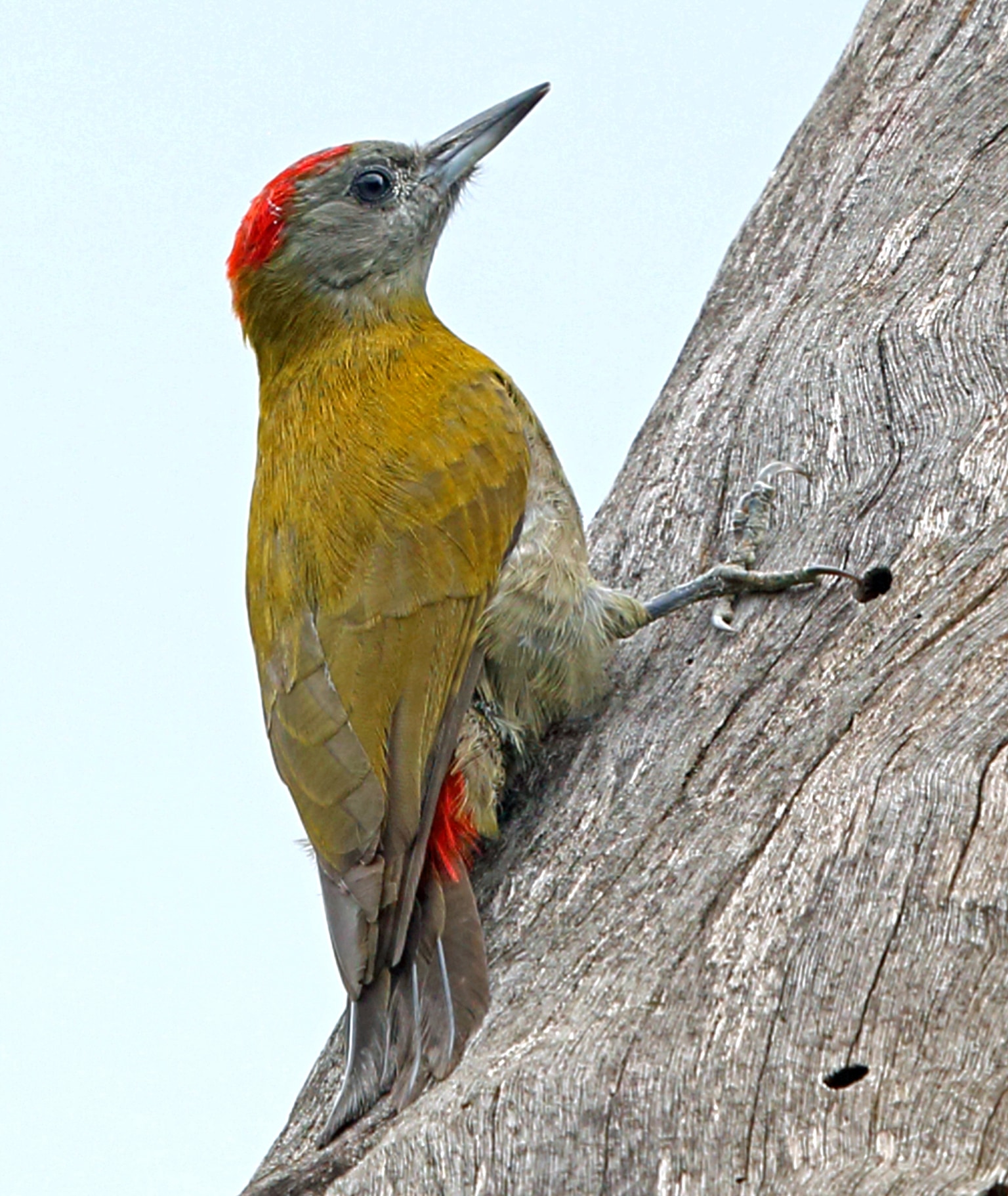
Grey-Headed Woodpecker
Africa
Dense Woodlands, Forested Habitats, Evergreen Thickets, Open Areas, Forest Patches
Bright Red Rump, Red Nape and Mid-Crown, Grey Head, No Barring On Tail, More Golden-Tinged Breast
Insects, Larvae, Ants, Beetles
Lateral pecking, Probing moss and lichen on tree bark, Foraging in small trees or small branches, Moving quickly through trees, Foraging in pairs or family groups
Dead Tree Trunks, Tree Branches
Short, Nasally 3-4 Note Whistle, Mocking Or Quivering Call, Squeaky Call, Conversational Notes, Alarm Calls, Take-Off Sound, Flight Sound, Close-Distance Communication, Nestling Calls, Rapid, Soft Drumming
About Olive woodpecker
The olive woodpecker, scientifically known as Dendropicos griseocephalus, is a species of bird belonging to the woodpecker family, Picidae. Native to southeastern Africa, this species is characterized by its distinctive bright red rump and upper-tail coverts, which become more apparent during flight. Its upper body displays bronze coloration, while its head is typically grey. Males exhibit further distinction with a red nape and mid-crown, contrasting with the uniformly grey heads of females.
Habitat and Distribution
This woodpecker thrives in a variety of densely wooded and forested environments, ranging from 450 to 3,700 meters in altitude. It prefers habitats such as woodlands, evergreen thickets bordering rivers and streams, and open areas like Hagenia-dominated forests. While generally found inland, it is also the only member of the Picidae family present in coastal South Africa. The olive woodpecker's range spans across central, east, and southern Africa, including countries like Angola, Tanzania, Zambia, and South Africa.
Diet and Foraging
As an insectivore, the olive woodpecker primarily feeds on ants and beetles, often foraging in pairs or family groups. It is strictly arboreal, using its bill to peck and probe moss and lichen on tree bark. Its foraging behavior involves moving quickly through trees, often preferring smaller branches or entire small trees for easier access to food.
Reproduction and Nesting
The breeding season for the olive woodpecker is variable, depending on the specific region and can last between one to eight months. Males are mainly responsible for excavating nest holes in dead tree trunks or branches. Both parents share incubation duties, which typically last 15-17 days, and are responsible for feeding the nestlings. Clutch sizes are small, usually consisting of two to three eggs. Fledglings remain under parental care for an extended period, often for three months or more.
Conservation Status
The olive woodpecker is classified as a species of 'least concern' by the International Union for Conservation of Nature (IUCN). This designation reflects its wide geographic distribution and considerable population size, which are not considered globally threatened. Although there has been a documented population decline in recent years, it is not rapid enough to meet the criteria for threatened status. The species is also found within several protected areas across its range.
Source: Wikipedia ↗
Frequently Asked Questions
What are the distinctive physical characteristics of the olive woodpecker?
The olive woodpecker is mainly plain, with a bright scarlet rump and upper-tail coverts. Its upper body is typically olive-colored with bronze and golden tones. Males are distinguished by a red nape and mid-crown, while females have uniformly grey heads.
What is the geographic range of the olive woodpecker?
This species is native to central, east, and southern Africa. Its range extends from the Ruwenzori Mountains to the Western Cape of South Africa, being found in countries like Angola, Tanzania, Zambia, and South Africa.
What kind of habitats does the olive woodpecker prefer?
Olive woodpeckers inhabit densely wooded and forested areas, including woodlands and evergreen thickets that border rivers and streams. They tend to favor open areas and separate forest patches over continuous forests.
What does the olive woodpecker eat and how does it find food?
The olive woodpecker is insectivorous, primarily feeding on ants and beetles. It forages arboreally, using its bill to peck and probe moss and lichen on tree bark, often in pairs or family groups.
How do olive woodpeckers reproduce?
The breeding season varies by location. Both parents share incubation duties, which last 15–17 days, and chick-rearing. Females typically lay 2-3 eggs, and fledglings remain under parental care for at least three months.
What is the conservation status of the olive woodpecker?
The olive woodpecker is classified as a species of 'least concern' by the IUCN. Despite a slight population decline, its large range and population size mean it is not considered globally threatened.
Related Woodpecker species
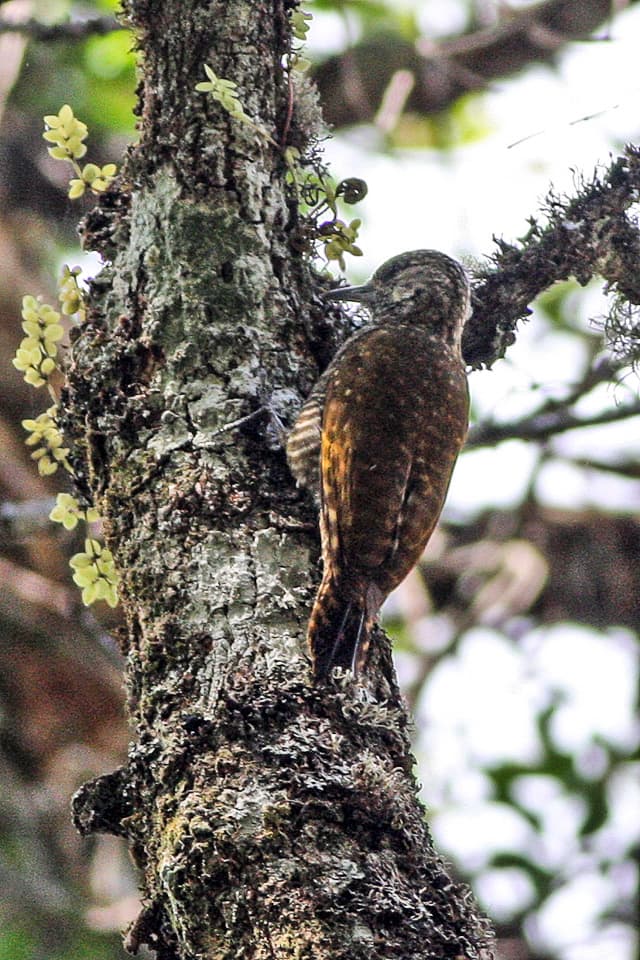
Dot-fronted woodpecker
The dot-fronted woodpecker (Veniliornis frontalis) is a species found in Argentina and Bolivia, inhabiting dry montane woodlands and humid forests. Measuring approximately 16 cm in length, it is characterized by its olive to gray-brown forehead with white spots, and males display red on their crown and nape.
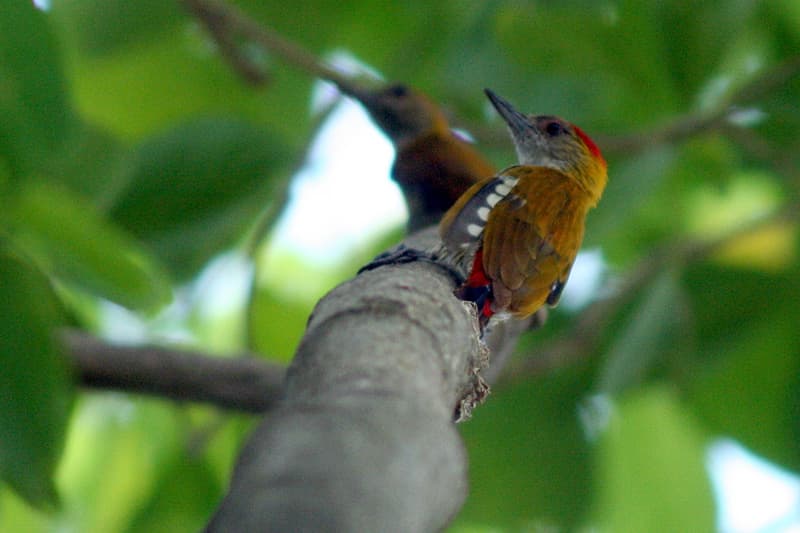
Red-rumped woodpecker
The red-rumped woodpecker is a bird species found in Central and South America, ranging from Costa Rica to Peru and Brazil. It is characterized by its olive-brown plumage with a crimson-red rump and uppertail coverts. This species inhabits a variety of forest types and savannas, and its diet primarily consists of insects.

Red-headed flameback
The red-headed flameback is a striking woodpecker species endemic to the Philippines, specifically found in the Palawan region. Characterized by its vibrant red head and a golden-yellow back, it inhabits moist lowland forests, including primary and secondary forests, plantations, and clearings with standing trees. This species faces threats primarily from habitat loss.