
Red-rumped woodpecker
The red-rumped woodpecker is a bird species found in Central and South America, ranging from Costa Rica to Peru and Brazil. It is characterized by its olive-brown plumage with a crimson-red rump and uppertail coverts. This species inhabits a variety of forest types and savannas, and its diet primarily consists of insects.
Key Facts
- ›Found from Costa Rica south to Peru and east to Brazil, Guyana, and Trinidad and Tobago.
- ›Measures approximately 15 to 16 cm in length and weighs 30 to 42 grams.
- ›Males have a red crown and nape, while females have a dark brown crown.
- ›Inhabits diverse environments including wet forests, savannas, and plantations.
- ›Diet includes adults and larvae of wood-boring beetles and other insects.
- ›Nests are excavated in living trees or palms, typically 3 to 8 meters above ground.
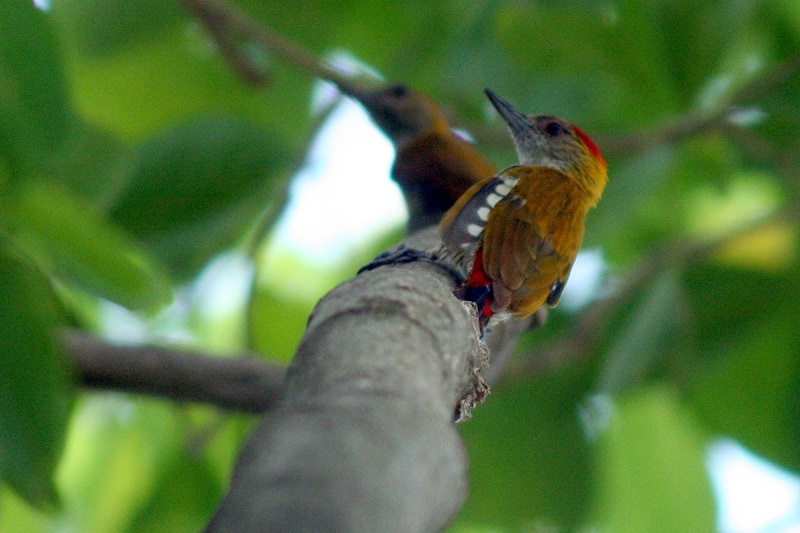
Kirk's Woodpecker
Central America, South America
Wet Forests, Secondary Forests, Mangrove Edges, Gallery Forests, Dry Scrublands, Deciduous Forests, Savannas With Scattered Trees, Coconut Plantations
Olive-Brown, Whitish, Crimson-Red, Golden, Greenish-Olive, Dark Brown, Yellow
Crimson-Red Rump and Uppertail Coverts, Males Have A Red Crown and Nape, Females Have A Dark Brown Crown, Barred Underparts
Wood-Boring Beetles, Other Insects
Pecking, Steady Hammering, Forages On Small Branches To Trunks, Hunts In Thick Growth
Living Tree Cavities, Palm Cavities
- Slow series of nasal and emphatic calls, 'KéNh Kenh Kenh Kenh'
- Nasal 'Keer'
- Mewing 'Wih' or 'Kwee' in ventriloquial series
- Repeated 'Kee-Yik Kee-Yik'
- Rapid, noisy, often prolonged drumming
About Red-rumped woodpecker
The red-rumped woodpecker (Veniliornis kirkii) is a species of bird belonging to the woodpecker family, Picidae. It is distributed across a wide range in Central and South America, extending from Costa Rica down to Peru, and eastward to Brazil, Guyana, and Trinidad and Tobago. This species is notable for its distinctive crimson-red rump and uppertail coverts, which contrast with its generally olive-brown plumage.
Description and Identification
Adult red-rumped woodpeckers typically measure between 15 to 16 cm in length and weigh between 30 to 42 grams. While males and females share similar plumage, they differ in head coloration. Males possess a red crown and nape, whereas females have a dark brown crown tinged with green. Both sexes display olive-brown faces with whitish streaks, and their underparts are barred with dark brown and whitish. The iris is dark brown to red-brown, the beak is blackish with a paler mandible, and the legs are grayish with a greenish to blue tinge. Juveniles resemble adults but have some red on the crown, more so in males than females.
Distribution and Habitat
The red-rumped woodpecker inhabits a diverse array of mostly open lowland and foothill environments. These habitats include wet and secondary forests, the edges of mangroves, gallery forests, dry scrublands, deciduous forests, savannas with scattered trees, and even coconut plantations. Its altitudinal range varies by region, reaching up to 1,750 meters in the tepui region.
Behavior and Ecology
This species is a year-round resident throughout its extensive range. Red-rumped woodpeckers primarily forage from the mid-level to the canopy of forests, descending lower at forest edges. They employ pecking and steady hammering techniques on small branches to trunks, often within dense vegetation. They are usually observed foraging alone, in pairs, or in small groups, and may join mixed-species feeding flocks. Their diet consists mainly of adult and larval wood-boring beetles and other insects.
Reproduction
The breeding season for the red-rumped woodpecker varies geographically. It excavates nest cavities in living trees or palms, typically positioned between 3 and 8 meters above the ground. A clutch usually consists of two or three eggs. Details regarding the incubation period, time to fledging, and parental care are not well-documented.
Vocalizations
The characteristic vocalizations of the red-rumped woodpecker include a series of nasal and emphatic calls, often described as 'kénh kenh kenh kenh'. Other sounds include a nasal 'keer', mewing 'wih' or 'kwee' calls, and a repeated 'kee-yik kee-yik'. Their drumming is characterized as rapid, noisy, and often prolonged.
Conservation Status
The International Union for Conservation of Nature (IUCN) has assessed the red-rumped woodpecker as Least Concern. The species possesses an extremely large range and an estimated population of at least half a million mature individuals. However, this population is believed to be decreasing. No immediate threats have been identified, and the bird is found in several national parks and preserves, being considered uncommon to fairly common across its range. Its presence is often revealed by the sound of its frequent pecking and hammering.
Source: Wikipedia ↗
Frequently Asked Questions
What is the scientific name of the red-rumped woodpecker?
The scientific name of the red-rumped woodpecker is Veniliornis kirkii. However, some taxonomic systems have moved this species into the genus Dryobates.
What does the red-rumped woodpecker look like?
Adults are mostly olive-brown with whitish streaks on their faces and barred underparts. They are distinguished by their crimson-red rump and uppertail coverts. Males have a red crown and nape, while females have a dark brown crown.
Where does the red-rumped woodpecker live?
This species is found from Costa Rica south to Peru and east to Brazil, Guyana, and Trinidad and Tobago. It inhabits a wide variety of mostly open lowland and foothill landscapes.
What does the red-rumped woodpecker eat?
Its diet primarily consists of adults and larvae of wood-boring beetles and other insects. It forages by pecking and hammering on branches and trunks.
How does the red-rumped woodpecker reproduce?
It excavates a nest cavity in a living tree or palm, typically between 3 and 8 meters above the ground. The clutch size is usually two or three eggs.
What is the conservation status of the red-rumped woodpecker?
The IUCN has assessed the red-rumped woodpecker as being of Least Concern. Despite a large range and population, the population is believed to be decreasing.
Related Woodpecker species
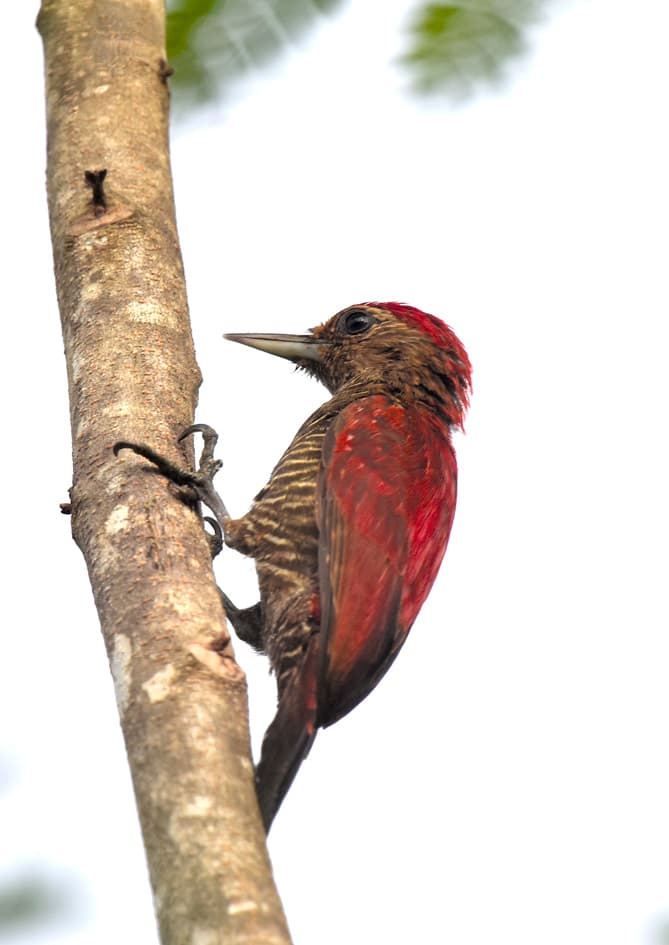
Blood-colored woodpecker
The blood-colored woodpecker is a small bird found in Guyana and Suriname, inhabiting coastal lowlands like mangroves and swamp forests. It is characterized by its crimson-red upperparts and distinctive head plumage, with males having a crimson crown and females a brown crown with white tips. This species is a year-round resident, known for its varied diet and unique nesting habits.

Jamaican woodpecker
The Jamaican woodpecker is a striking bird endemic to Jamaica, distinguishable by its black and white barred plumage and red accents. This species inhabits a wide array of wooded environments across the island, from sea level to high mountains. Its diet is a mix of insects and fruits, and it is a year-round resident known for its distinctive calls and drumming.
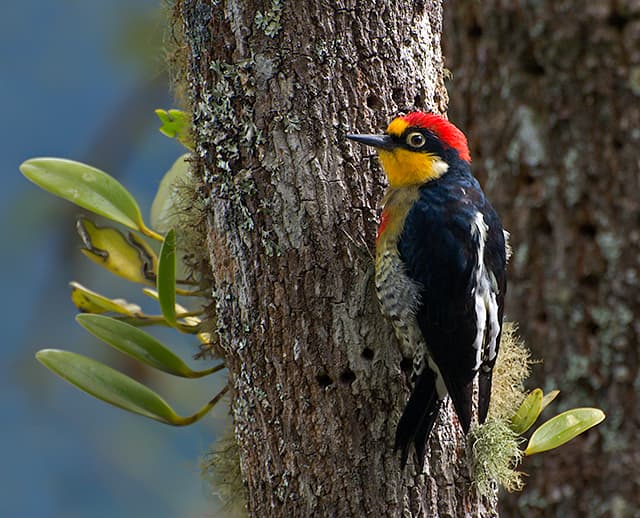
Yellow-fronted woodpecker
The yellow-fronted woodpecker is a colorful bird found in eastern South America, specifically in Brazil, Paraguay, and northeastern Argentina. It inhabits subtropical and tropical lowland forests, as well as degraded former forest areas. This species is characterized by its distinctive yellow fore-crown and throat, with males having a red crown and nape.