
Orinoco piculet
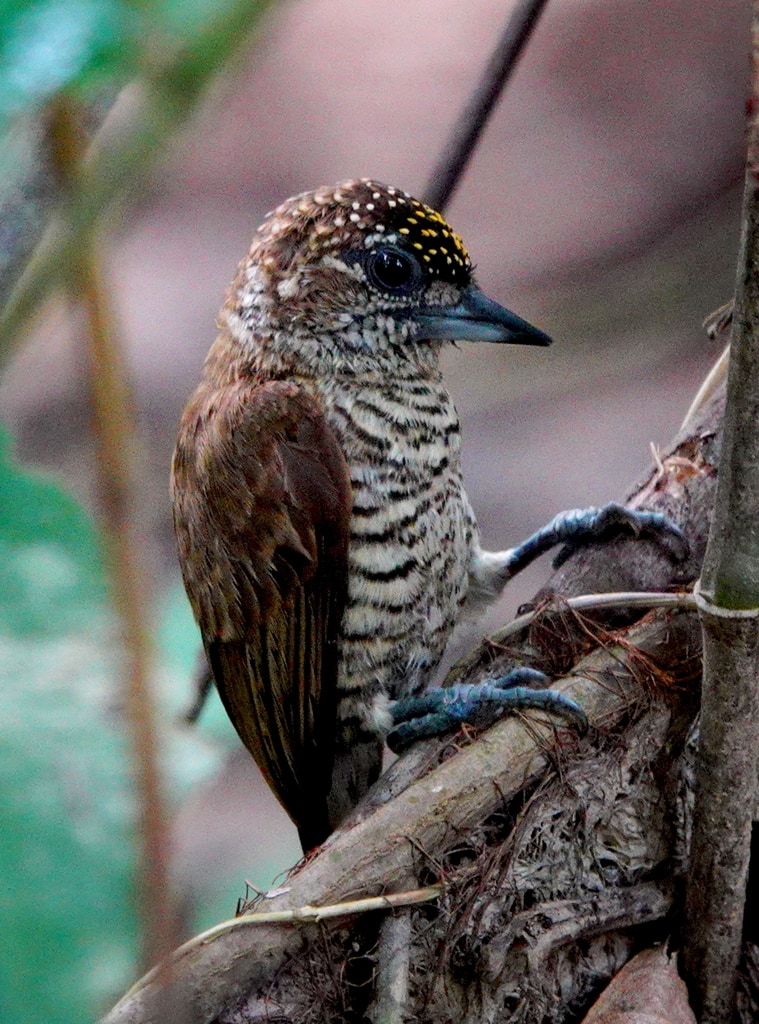
The Orinoco piculet (Picumnus pumilus) is a small bird found in parts of Brazil, Colombia, and potentially Venezuela. It is characterized by its brownish-green upperparts, yellowish to buffy white underparts with dark brown bars, and distinctive spotting on its cap and face.
Key Facts
- ›Approximately 9 cm (3.5 inches) in length and weighing 9-10 grams.
- ›Adult males have spotted brown caps and blackish faces with white spots.
- ›Adult females have whitish spots on their entire crown.
- ›Inhabits forest edges and dense thickets, typically up to 300 meters elevation.
- ›Assumed diet consists of ants and other small insects.
- ›Considered Least Concern by the IUCN, though its population is believed to be decreasing.
Brazil, Colombia, Venezuela
Edges of Humid Mature Forest, Edges of Gallery Forest, Dense Thickets
Yellow Spots On Forehead, Whiter Spots On Rest of Crown, Blackish Face With White Spots, Bare Gray-Blue Skin Around the Eye, Pale Stripe Behind the Eye, Whitish Spots On Entire Crown, Dark Brown Bars On Underparts
Ants, Small Insects
- Forages from forest's lower strata to the canopy
About Orinoco piculet
The Orinoco piculet, scientifically known as Picumnus pumilus, is a small bird belonging to the woodpecker family Picidae. This species is found in the forested regions of Brazil and Colombia, with possible occurrences in Venezuela. It is recognized for its diminutive size, typically measuring around 9 cm (3.5 inches) in length.
Physical Characteristics
The Orinoco piculet exhibits distinct plumage. Adult males possess a dark brown cap adorned with yellow spots on the forehead and whiter spots elsewhere. Their faces are blackish with white speckling, bordered by bare gray-blue skin around the eyes, and a pale stripe extends behind the eye. The upperparts are a brownish-green hue, with primaries and secondaries being brown edged with green. The tail is black on the upper side, with specific feather pairs featuring white markings. The chin, throat, and underparts are a pale yellowish to buffy white, marked by dark brown bars, except for the center of the belly. Adult females are similar but distinguished by whitish spots across their entire crown. Juveniles are generally duller and greener above, with less consistent barring below.
Distribution and Habitat
The species primarily inhabits eastern Colombia, northwestern Brazil, and adjacent southern Venezuela. It prefers the edges of humid mature forests, gallery forests, and dense thickets. While it mostly ranges up to 300 meters (980 feet) in elevation, it has been observed locally as high as 500 meters (1,600 feet).
Behavior and Ecology
As far as is currently known, the Orinoco piculet is a resident bird throughout its range, meaning it does not undertake seasonal migrations. Its foraging behavior spans from the lower strata of the forest up to the canopy. The diet is presumed to consist of ants and other small insects, though specific details are not widely documented. The breeding season is thought to encompass November and December, but little else is known about its reproductive biology. Vocalizations of the Orinoco piculet have not been transcribed in available records.
Conservation Status
The International Union for Conservation of Nature (IUCN) has assessed the Orinoco piculet as Least Concern. Despite this classification, the species has a restricted range, and its population size is unknown and believed to be decreasing. No immediate threats have been identified, and it is described as poorly known and probably uncommon.
Source: Wikipedia ↗
Frequently Asked Questions
What is the scientific name of the Orinoco piculet?
The scientific name of the Orinoco piculet is Picumnus pumilus. It belongs to the woodpecker family, Picidae.
Where is the Orinoco piculet found?
The Orinoco piculet is found in eastern Colombia, northwestern Brazil, and historically in adjacent southern Venezuela. It inhabits the edges of humid mature forests, gallery forests, and dense thickets.
What does the Orinoco piculet look like?
This small woodpecker is about 9 cm long. Males have dark brown caps with yellow spots and blackish faces with white spots, while females have whitish spots on their entire crown. Both sexes have brownish-green upperparts and barred underparts.
What is the conservation status of the Orinoco piculet?
The Orinoco piculet is currently assessed as Least Concern by the IUCN. However, its population is believed to be decreasing, and it is considered poorly known and probably uncommon.
What does the Orinoco piculet eat?
While its diet has not been detailed, the Orinoco piculet is assumed to feed on ants and other small insects. It forages from the lower strata of the forest up to the canopy.
Related Woodpecker species

Golden-collared woodpecker
The golden-collared woodpecker (Veniliornis cassini) is a species of bird found in Brazil, the Guianas, and Venezuela. It typically measures around 16 cm in length and inhabits rainforests, clearings, and open landscapes with trees and shrubs.

Elliot's woodpecker
Elliot's woodpecker is a medium-sized bird found in dense primary forests across several African countries. It is characterized by its buff face, green upper parts, and yellowish or whitish underparts streaked with olive. While generally uncommon, its vast range and lack of established threats have led to a "least concern" conservation status.
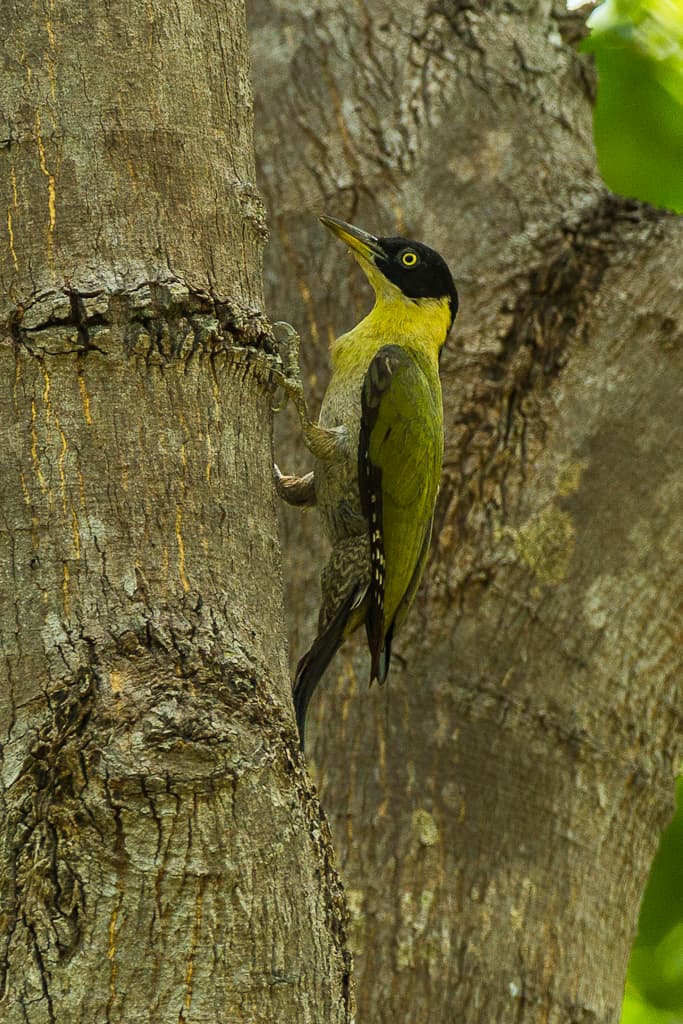
Black-headed woodpecker
The black-headed woodpecker is a medium-sized bird found in Cambodia, Laos, Myanmar, Thailand, and Vietnam, inhabiting deciduous and coniferous forests. It is characterized by its distinct plumage, including a black face, yellow throat, green wings, and a red lower back, with males possessing a red crown and females a black one. This species is insectivorous, primarily feeding on termites and ants, and is known for its loud, yelping vocalizations.