
Elliot's woodpecker
Elliot's woodpecker is a medium-sized bird found in dense primary forests across several African countries. It is characterized by its buff face, green upper parts, and yellowish or whitish underparts streaked with olive. While generally uncommon, its vast range and lack of established threats have led to a "least concern" conservation status.
Key Facts
- ›Grows to a length of between 20 and 22 cm (8 and 9 in).
- ›Found in dense primary forests and mature secondary growth in various African nations.
- ›Feeds primarily on insects, particularly beetle larvae, by pecking and probing into mosses and epiphytes.
- ›Males have a red rear crown and nape, while females have black in these areas.
- ›Its conservation status is rated as "least concern" by the IUCN.
- ›Typically seen alone or in pairs, but may join mixed-species flocks.

Africa
Dense Primary Forest, Mature Secondary Growth, Mossy Montane Forest
- Buff face
- Black forehead and front part of the crown
- White neck and throat narrowly streaked with olive
- Male has red rear crown and nape
- Female has black crown and nape
- Plain green upper parts with a bronze or brownish tinge
- Brown wings and upper tail
- Yellowish or whitish breast and belly streaked with olive
- Flanks barred with olive
Insects, Beetle Larvae
- Pecking
- Probing deeply into mosses and other epiphytes
- Exploring trees briefly before flitting to others
About Elliot's woodpecker
Elliot's woodpecker, scientifically known as Dendropicos elliotii, is a bird species belonging to the family Picidae. It is recognized as a medium-sized woodpecker, typically measuring between 20 and 22 centimeters (8 to 9 inches) in length. Its plumage features a buff-colored face, a black forehead and front crown, and a white neck and throat that are finely streaked with olive. The upper parts are generally plain green with a bronze or brownish tint, while the wings and upper tail are brown with green edges. The breast and belly are yellowish or whitish, streaked with olive, and the flanks display olive barring. Sexual dimorphism is evident, with males sporting a red rear crown and nape, which are black in females.
Distribution and Habitat
This species boasts an extremely wide geographical range across Africa, being found in countries such as Angola, Cameroon, Central African Republic, Republic of the Congo, Democratic Republic of the Congo, Equatorial Guinea, Gabon, Nigeria, Rwanda, and Uganda. Its preferred habitat is dense primary forest, but it can also be observed in mature secondary growth. While generally considered a lowland species, Elliot's woodpecker has been recorded at altitudes of up to 2,320 meters (7,600 feet) in thick, mossy montane forests.
Ecology and Behavior
Elliot's woodpeckers are typically encountered alone or in pairs, though they may occasionally join small mixed-species foraging groups. Their foraging behavior involves actively pecking and probing deeply into mosses and other epiphytes, often in the forest canopy and lower storeys. They tend to explore trees briefly before moving on to others. The diet is primarily composed of insects, with a notable consumption of beetle larvae.
Conservation Status
Despite being described as an uncommon species, no specific threats to Elliot's woodpecker have been identified. Consequently, the International Union for Conservation of Nature (IUCN) has classified its conservation status as "least concern," reflecting a stable population trend across its extensive distribution.
Source: Wikipedia ↗
Frequently Asked Questions
What is the size of Elliot's woodpecker?
Elliot's woodpecker is a medium-sized species, typically growing to a length of between 20 and 22 centimeters (8 to 9 inches).
Where can Elliot's woodpecker be found?
This species is distributed across several African countries, including Angola, Cameroon, Central African Republic, Republic of the Congo, Democratic Republic of the Congo, Equatorial Guinea, Gabon, Nigeria, Rwanda, and Uganda.
What is the typical habitat of Elliot's woodpecker?
Its preferred habitat is dense primary forest, though it can also be found in mature secondary growth. It may inhabit mossy montane forests at higher altitudes.
What does Elliot's woodpecker eat?
The primary diet of Elliot's woodpecker consists of insects, with a particular fondness for beetle larvae. They forage by pecking and probing into mosses and other epiphytes.
What is the conservation status of Elliot's woodpecker?
The International Union for Conservation of Nature (IUCN) has assessed Elliot's woodpecker as "least concern," indicating no immediate threats to its population.
How can you distinguish between male and female Elliot's woodpeckers?
Males possess a red rear part of the crown and a red nape, while females lack these red markings, instead having black in those areas.
Related Woodpecker species
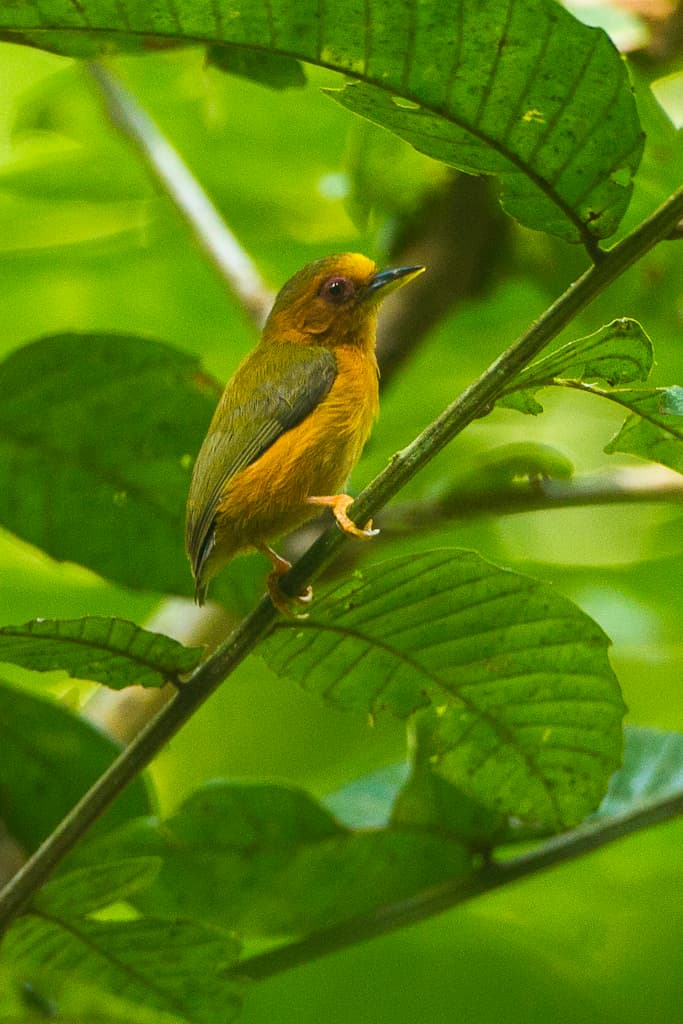
Rufous piculet
The rufous piculet is one of the world's smallest woodpeckers, native to the lowland and montane forests of Southeast Asia. This distinctive bird is characterized by its rufous underparts, green-bronze upperparts, and a unique three-toed foot. It is a resident species, typically found foraging in the lower strata of dense, humid forests.
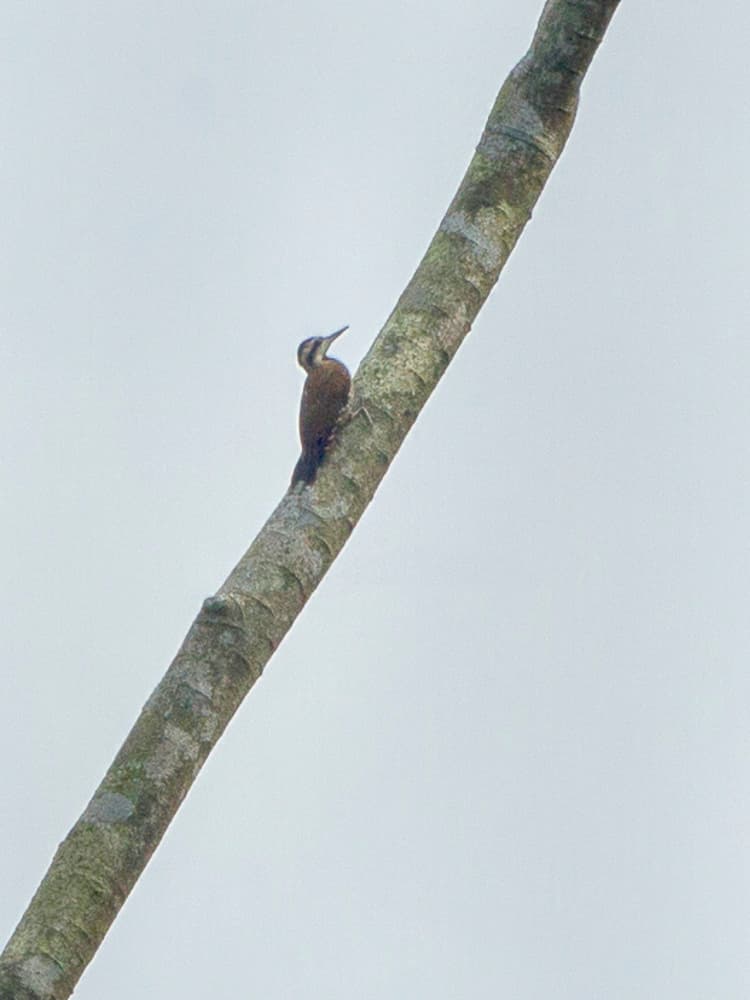
Fire-bellied woodpecker
The fire-bellied woodpecker is a bird species found across tropical West Africa, inhabiting various wooded environments from primary rainforest edges to savannahs. It is characterized by its olive-bronze upperparts, crimson rump, and a striking scarlet belly, with males displaying a red crown and females a black one. This species is common and its population is considered stable or increasing, leading to a 'least concern' conservation status.

Golden-olive woodpecker
The golden-olive woodpecker is a widespread bird species found from Mexico through South America, excluding Chile, Paraguay, and Uruguay. It inhabits a diverse range of wooded environments, from dry thornscrubs to humid rainforests. This species is characterized by its green upperparts with a bronze tinge and buffy yellow underparts with blackish bars, with males and females differing in head plumage.