
Striped woodpecker
The striped woodpecker is a bird species found in Argentina, Bolivia, and Chile, inhabiting semi-open to open forests, woodlands, and even gardens. It is characterized by its black and white striped plumage, with males and females differing slightly in head coloration, particularly the nape. This species primarily feeds on insects and excavates nest cavities in trees or cacti.
Key Facts
- ›Inhabits semi-open to open forests, woodlands, and areas with cacti and scattered trees.
- ›Males and females have similar plumage except for head markings, with males having a red nape and females a black one.
- ›Diet consists of adult and larval insects, primarily obtained by gleaning and probing.
- ›Nests are excavated in tree trunks or cacti, typically between 2 and 12 meters above the ground.
- ›Vocalizations include a loud "peek" and a "trill" used as a long-distance call.
- ›Assessed as 'Least Concern' by the IUCN with a believed stable population.

Picus Lignarius
South America
Semi-Open Forests, Open Forests, Woodlands, Cacti and Scattered Trees, Moist To Humid Forests, Polylepis Woodland, Dry Areas, Mature Wet Forest With Watercourses, Lightly Treed Pastures, Orchards, Plantations, Gardens
Black, White, Brownish Black, Red, Orange-Red, Yellow, Buff
- Black forehead and crown
- Blackish hindneck
- White face with blackish stripe back and down from the eye
- Black malar stripe
- White scallops on northern birds' upperparts
- Narrow white bars on southern birds' upperparts
- Barred black and white flight feathers
- Dark brownish black tail with narrow white or buff-white bars
- Black streaks on breast and belly
- Black bars on flanks and undertail coverts
- Males have red to orange-red nape
- Females have black nape
- Males have some streaks or spots on the crown
- Females' crown usually solid black
- Juveniles are duller and browner with irregular bars on upperparts and heavy streaks and bars on underparts
- Juvenile males have red crown
- Juvenile females have small red patch on crown
Insects, Adult Insects, Larval Insects
Gleaning, Probing, Pecking, Hammering
Tree Cavities, Cactus Cavities
Loud "Peek", "Trill" As A Long-Distance Call
About Striped woodpecker
Striped Woodpecker (Veniliornis lignarius)
The striped woodpecker is a species of bird belonging to the woodpecker family, Picidae, and is found in South America. Its scientific name, Veniliornis lignarius, reflects its classification, though it has been placed in various genera throughout taxonomic history, including Picus, Dyctiopicus, Dendrocopos, Picoides, and most recently, Veniliornis.
Distribution and Habitat
This species occupies two distinct regions within South America. One population resides in west-central and southern Bolivia and the extreme northern part of Argentina. The other population is found in central and southern Chile and southwestern Argentina. The striped woodpecker thrives in a variety of semi-open to open forest environments. Its habitat includes moist to humid forests characterized by Nothofagus or Podocarpus trees, Polylepis woodlands, and drier areas supporting cacti and scattered trees. It can also be found in the interior of mature wet forests with watercourses, and in lightly treed pastures, orchards, plantations, and gardens. Elevations range from 1,600 to 4,000 meters in Bolivia, and up to 1,800 meters in Chile and 2,700 meters in Argentina.
Description and Behavior
The striped woodpecker measures between 15 and 16 centimeters in length and weighs between 35 and 39 grams. Adult males and females exhibit similar plumage, with key differences on their heads. Both sexes have a black forehead and crown, a blackish hindneck, and a generally white face marked by a blackish stripe extending from the eye and a black malar stripe. A significant distinction is the male's red to orange-red nape, contrasted with the female's black nape. The crown of the male often displays streaks or spots, while the female's crown is typically solid black. Their upperparts are brownish-black, featuring white scallops in northern populations and narrow white bars in southern ones. Flight feathers are barred black and white, and the tail is dark brownish-black with fine white or buff-white bars. The underparts are white with a yellow or buff tinge, streaked with black on the breast and belly, and barred with black on the flanks and undertail coverts. Juveniles are duller and browner, with irregular upperpart bars and more prominent underpart markings.
Striped woodpeckers are year-round residents, with some minor elevational movements between seasons. They usually forage alone but may join mixed-species feeding flocks. Their diet primarily consists of adult and larval insects, which they acquire by gleaning and probing, supplemented by pecking and hammering to access food beneath the surface.
Breeding and Vocalization
Nesting is believed to occur between June and September in Bolivia, and from October to January in Chile and Argentina. They excavate nest cavities in trees or cacti, typically situated between 2 and 12 meters above the ground. A clutch usually contains three to five eggs, though incubation periods and fledging times are not precisely documented. Both parents participate in provisioning the nestlings.
The striped woodpecker's vocalizations include a loud "peek" call and a "trill" used for long-distance communication.
Conservation Status
The International Union for Conservation of Nature (IUCN) has assessed the striped woodpecker as 'Least Concern'. The species possesses a large range, and although its exact population size is unknown, it is presumed to be stable. No immediate threats have been identified, and it is present in several national parks in Chile and Argentina. However, the species remains poorly understood and requires further study.
Source: Wikipedia ↗
Frequently Asked Questions
What is the scientific name of the striped woodpecker?
The scientific name of the striped woodpecker is Veniliornis lignarius. This binomial nomenclature is used for its scientific classification within the avian world.
Where is the striped woodpecker found?
The striped woodpecker has a disjunct distribution, found in west-central and southern Bolivia, extreme northern Argentina, central and southern Chile, and southwestern Argentina.
What does the striped woodpecker eat?
The striped woodpecker's diet is known to include adult and larval insects. It obtains its food mainly through gleaning and probing, and also by pecking and hammering into substrates.
How does the striped woodpecker build its nest?
Striped woodpeckers excavate nest cavities in trees or cacti. These nests are typically located between 2 and 12 meters above the ground.
What is the conservation status of the striped woodpecker?
The striped woodpecker is listed as 'Least Concern' by the IUCN. Its population is believed to be stable, and no immediate threats have been identified.
What are the main differences between male and female striped woodpeckers?
Males and females share similar plumage except on their heads. The most notable difference is that males have a red to orange-red nape, while the female's nape is black. Males also tend to have some streaks or spots on their crown, whereas the female's crown is usually solid black.
Related Woodpecker species

Ochraceous piculet
The Ochraceous piculet is a small woodpecker species found in northeastern Brazil, inhabiting various forest types and even urban parks. It is characterized by its distinct plumage, with males having a black cap featuring red tips and white spots, while females lack the red on their forehead. This species is a year-round resident and excavates its nest holes in trees or fence posts.
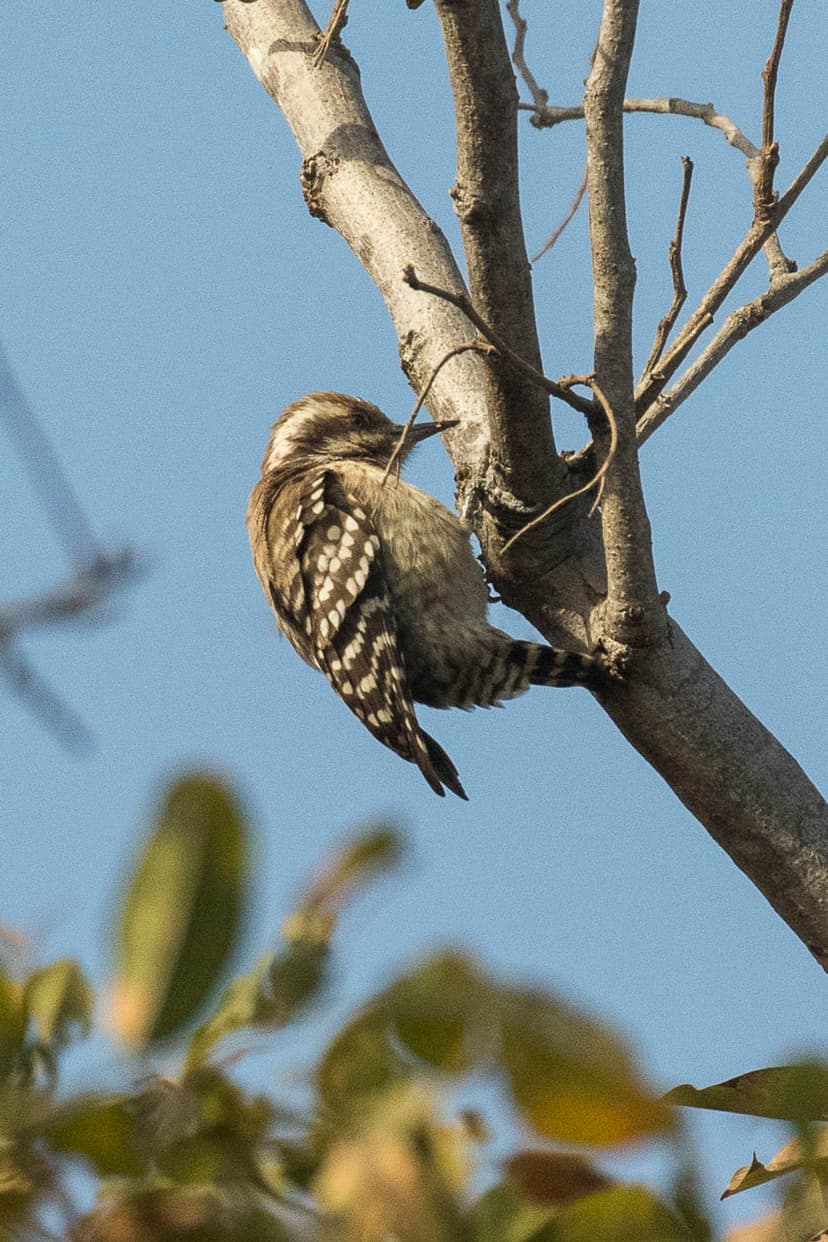
Brown-backed woodpecker
The brown-backed woodpecker is a small bird found across the savannah regions of sub-Saharan Africa. It is characterized by its brown plumage with white barring and a distinctive white supercilium and moustache. This species inhabits a variety of open, dry environments, from scrubland to suburban gardens.
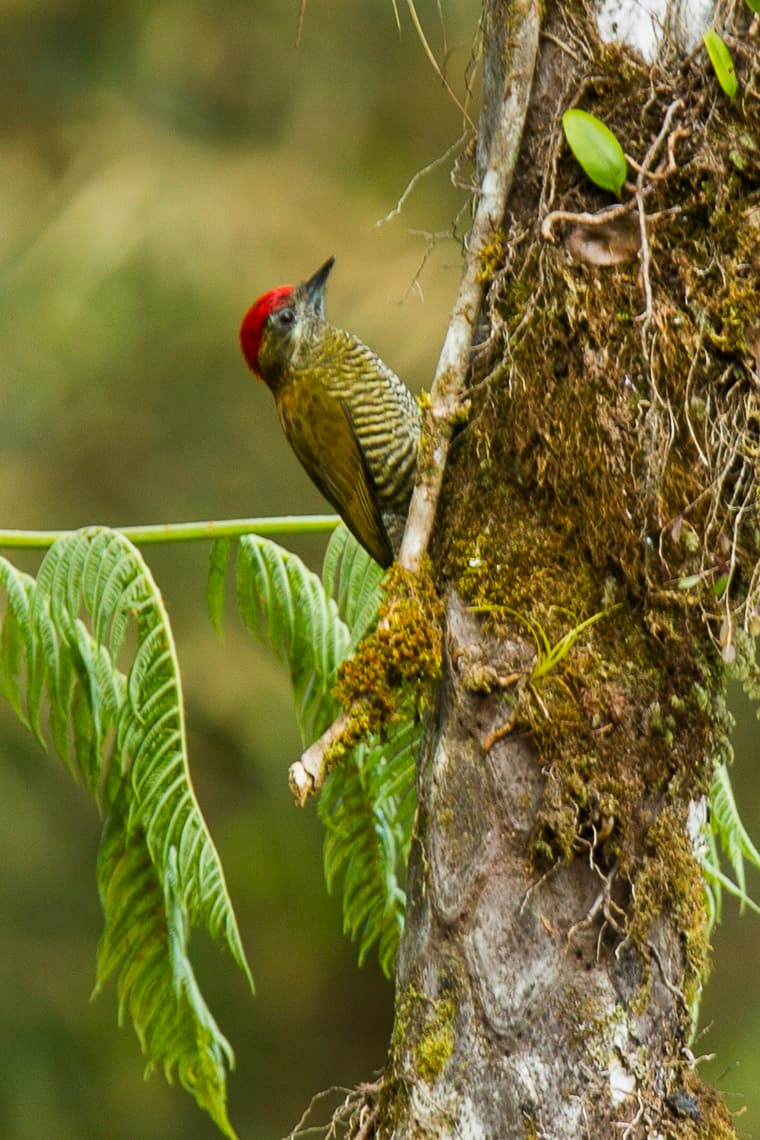
Bar-bellied woodpecker
The bar-bellied woodpecker (Veniliornis nigriceps) is a species of bird found in the montane forests of Bolivia, Colombia, Ecuador, and Peru. This species is characterized by its olive-brown plumage with distinctive dark olive bars on its underparts, and differences in head coloration between males and females. It inhabits humid to wet forests, often favoring areas with dense undergrowth and bamboo.