
Brown-backed woodpecker
The brown-backed woodpecker is a small bird found across the savannah regions of sub-Saharan Africa. It is characterized by its brown plumage with white barring and a distinctive white supercilium and moustache. This species inhabits a variety of open, dry environments, from scrubland to suburban gardens.
Key Facts
- ›Found across sub-Saharan Africa from Senegal to Tanzania.
- ›Small woodpecker, measuring 13-16 cm in length.
- ›Plumage is primarily brown with white barring on wings and tail.
- ›Males have a red hind crown and nape, absent in females.
- ›Inhabits open, dry areas such as savannah, scrubland, and woodland edges.
- ›Nests are excavated in trees, with clutches of typically 2 eggs.
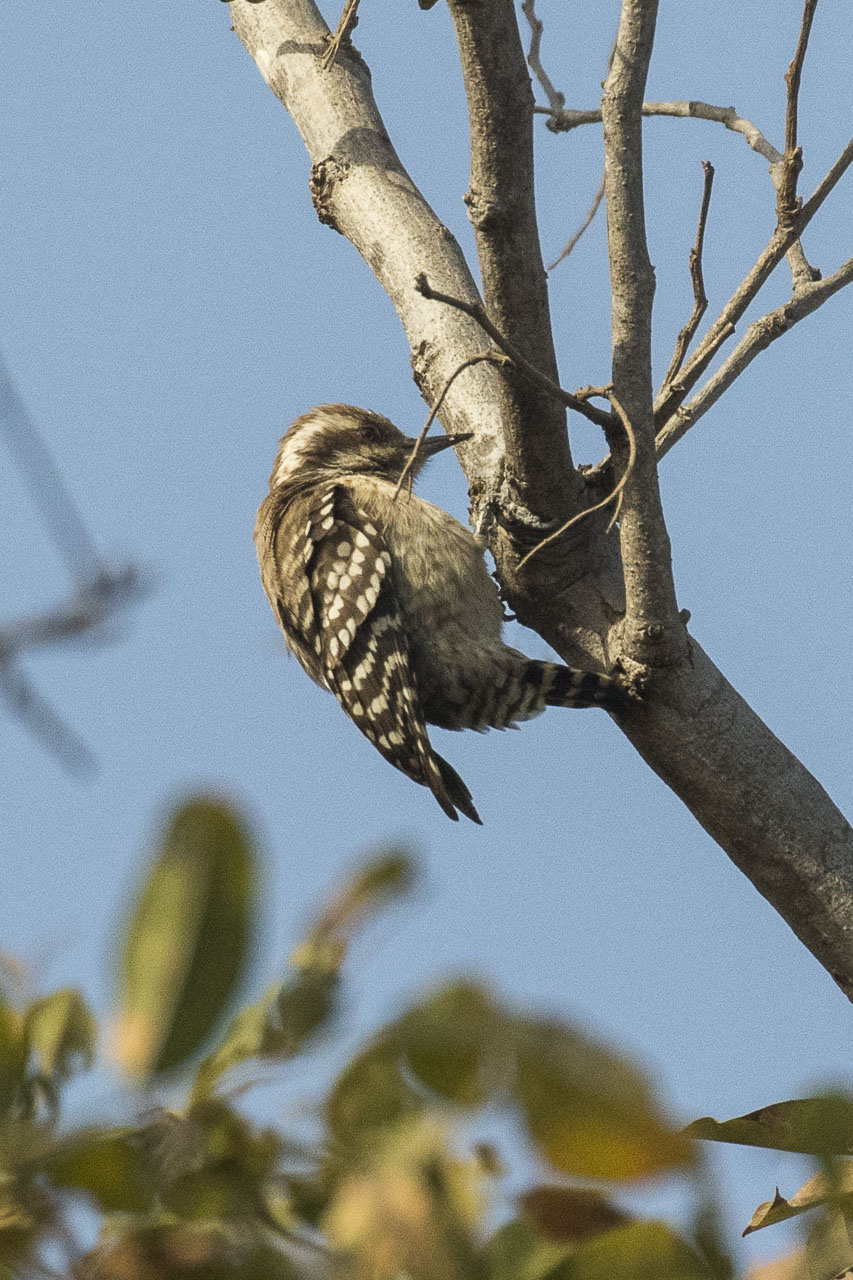
Brown-Backed Woodpecker
Sub-Saharan Africa, West Africa, East Africa
Savannah, Scrubland, Woodland Edges, Suburban Gardens, Dry Areas
White Supercilium, White Moustache, Red Hind Crown and Nape
Excavated In Dead Or Living Trees
About Brown-backed woodpecker
The brown-backed woodpecker (Dendropicos obsoletus) is a species of bird belonging to the woodpecker family, Picidae. It is recognized for its relatively small size, typically measuring between 13 and 16 centimeters in length. The species is distributed across a wide belt of sub-Saharan Africa, stretching from Senegal in the west to Ethiopia, Kenya, and Tanzania in the east.
Description and Identification
This woodpecker is characterized by its predominantly brown plumage, which features white barring on the wings and tail. Its underparts are whitish, often with variable dark streaking. A notable facial marking includes a white supercilium (eyebrow stripe) and a white moustache, contrasting with dark ear coverts. Adult males possess a distinctive red hind crown and nape, a feature absent in females. When its feathers are worn, the bird can appear pale and might be confused with the little grey woodpecker.
Distribution and Habitat
The brown-backed woodpecker's range encompasses the entire Sudan region and the southern part of the Sahel. It favors open, dry environments, including scrubland, the fringes of woodlands such as Combretum and Hagenia forests, and savannah landscapes dotted with trees. It has also adapted to suburban gardens. Its habitat extends from sea level up to approximately 2,300 meters, and even higher on Mount Kenya.
Behavior and Ecology
Breeding activities for the brown-backed woodpecker typically occur between February and June. Nests are constructed by excavating holes in dead or living trees, usually situated between 1.5 and 6 meters above the ground. These nesting trees may be located at the edge of wooded areas or as isolated perches. Both adult birds share the responsibilities of incubating the clutch of two eggs and feeding the young.
Conservation Status
The brown-backed woodpecker is generally considered uncommon throughout its range. However, due to its very large distribution and a seemingly steady population trend, the International Union for Conservation of Nature has classified its conservation status as 'Least Concern'.
Source: Wikipedia ↗
Frequently Asked Questions
What is the scientific name of the brown-backed woodpecker?
The scientific name of the brown-backed woodpecker is Dendropicos obsoletus. It was originally described by Johann Georg Wagler in 1829 under the binomial name Picus obsoletus.
Where is the brown-backed woodpecker found?
The brown-backed woodpecker is found in a broad belt across the savannah region of sub-Saharan Africa. Its range extends from Senegal in the west to Ethiopia, Kenya, and Tanzania in the east.
What does the brown-backed woodpecker look like?
This is a small woodpecker, typically measuring between 13 and 16 cm. It has brown plumage with white barring on its wings and tail, whitish underparts with dark streaking, and a brown head with a white supercilium and moustache. Males are distinguished by a red hind crown and nape.
What kind of habitat does the brown-backed woodpecker prefer?
The brown-backed woodpecker prefers open, dry areas. This includes scrubland, the edges of woodlands like Combretum woodland, Hagenia forest, savannah with scattered trees, and even suburban gardens.
When does the brown-backed woodpecker breed?
The breeding season for the brown-backed woodpecker occurs between February and June. Both adults participate in incubating the clutch of 2 eggs and feeding the young.
Related Woodpecker species

Golden-naped woodpecker
The golden-naped woodpecker is a bird species found in Costa Rica and western Panama, inhabiting subtropical or tropical moist lowland forests and degraded former forest areas. It is closely related to the beautiful woodpecker and is characterized by its yellow nape and distinctive markings on its crown, with males and females exhibiting slight differences. This species is currently listed as "least concern" by the IUCN.

Striped woodpecker
The striped woodpecker is a bird species found in Argentina, Bolivia, and Chile, inhabiting semi-open to open forests, woodlands, and even gardens. It is characterized by its black and white striped plumage, with males and females differing slightly in head coloration, particularly the nape. This species primarily feeds on insects and excavates nest cavities in trees or cacti.
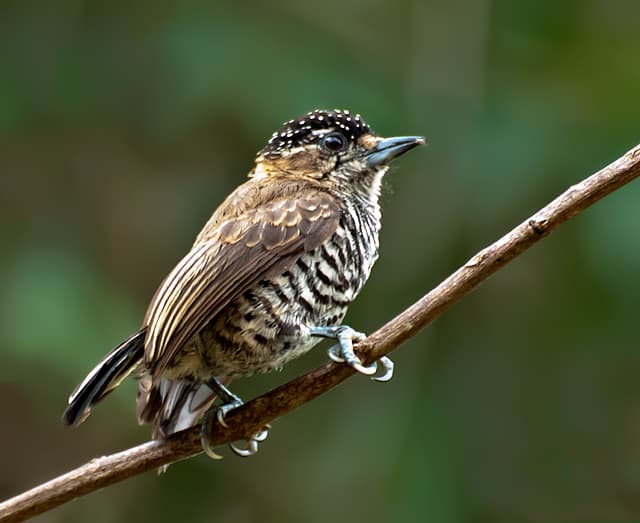
White-barred piculet
The White-barred Piculet is a small bird found across various South American countries, including Argentina, Brazil, and Paraguay. This species is characterized by its distinctive barring on its underparts and a black cap with white spots in males. It inhabits a range of woodland and forest edge environments, feeding primarily on insects and ant larvae.