
Varzea piculet
The varzea piculet is a small woodpecker species endemic to Brazil's Amazon basin, specifically inhabiting seasonally flooded forests along the Amazon River. This Near Threatened bird is characterized by its olive-brown upperparts and spotted head, with males displaying a distinctive red patch on their forehead. Its range is limited, and threats from habitat loss due to cattle grazing and potential hydroelectric dams are of concern.
Key Facts
- ›Endemic to the Amazon basin in Brazil.
- ›Inhabits dense undergrowth in seasonally flooded Várzea forests.
- ›Males have a black cap with a red forehead patch and white spots.
- ›Females lack the red forehead patch.
- ›Its population size is unknown and believed to be decreasing.
- ›Threatened by forest clearance for cattle grazing.

Varzea Piculet
Brazil
Seasonally Flooded Forests, Forest Undergrowth, Grasslands, River Islands
Red Patch On Forehead, White Spots On Hindcrown and Nape, Spotted Underparts
- Song Not Transcribed, Few Recordings Available.
About Varzea piculet
The varzea piculet (Picumnus varzeae) is a small bird species belonging to the woodpecker family, Picidae. This particular species is endemic to Brazil, found exclusively within the Amazon basin. Its specific habitat is the várzea, which are seasonally flooded forest areas situated close to the Amazon River, characterized by dense undergrowth, grasslands, and river islands. The species' range is notably confined, stretching approximately 850 km along the river and up to 275 km inland.
Description and Identification
Measuring between 8 and 9 cm in length, the varzea piculet exhibits distinct plumage. Adult males are identifiable by a black cap, a prominent red patch on the forehead, and white spots adorning the hindcrown and nape. Their upperparts are generally a dark olive-brown to greenish-brown, sometimes showing faint black barring. The flight feathers are dark brown with pale edges, and the tail features white on the inner webs of the innermost feathers and narrow white bands near the tips of the outer pairs. Underparts can vary but are typically brown or greenish-brown, marked with rows of black and white feather tips. Adult females share similar plumage but lack the distinctive red patch on the head. Juveniles tend to have more barring on their underparts.
Behavior and Ecology
The varzea piculet is considered a year-round resident within its established range. However, much about its behavior remains poorly understood. Information regarding its foraging techniques and diet is scarce, with no specific food sources or feeding methods being well-documented. Similarly, its breeding biology is largely unknown. While the breeding season may potentially span from June to December, with young birds observed in September, further details on nesting habits and reproductive strategies are lacking. Vocalizations are also not well-described, with very few recordings available and the song yet to be transcribed.
Conservation and Threats
Assessed by the IUCN, the varzea piculet's conservation status is currently Near Threatened. This designation reflects its limited geographic range and an unknown, but believed to be decreasing, population size. The primary immediate threat to the species is the ongoing clearance of its várzea forest habitat, largely driven by conversion for cattle grazing. Looking ahead, potential longer-term threats include the construction of two hydroelectric dams upstream of its range, which could significantly alter the downstream hydrology crucial for the várzea ecosystem. Brazilian authorities officially classify the species as Endangered, highlighting the urgent need for more data on its ecology and breeding biology to inform conservation efforts.
Source: Wikipedia ↗
Frequently Asked Questions
What is the scientific name of the varzea piculet?
The scientific name of the varzea piculet is Picumnus varzeae. It belongs to the woodpecker family Picidae.
Where is the varzea piculet found?
The varzea piculet is found along the Amazon River in Brazil, from the Rio Negro in Amazonas state to the Rio Tapajós in western Pará. It is endemic to this region.
What kind of habitat does the varzea piculet prefer?
This species inhabits dense undergrowth within várzea, which are seasonally flooded forest areas found near the Amazon River. These areas also include grasslands and river islands.
What are the physical characteristics of the varzea piculet?
The varzea piculet is small, measuring 8 to 9 cm in length. Adult males have a black cap with a red forehead patch and white spots, while females lack the red on their head. Their upperparts are olive-brown, and underparts are variable brown with spotted tips.
What is the conservation status of the varzea piculet?
The varzea piculet is currently listed as Near Threatened by the IUCN. It was previously assessed as Endangered.
What are the main threats to the varzea piculet?
The primary threat to the varzea piculet is the clearance of its várzea forest habitat for cattle grazing. Potential future threats include two hydroelectric dams that could alter downstream water levels.
What is known about the diet and behavior of the varzea piculet?
Very little is known about the varzea piculet's specific foraging techniques or diet. Similarly, details about its breeding biology beyond a potential season and the recording of young birds are not well-documented.
Related Woodpecker species

Green-barred woodpecker
The Green-barred woodpecker is a species of bird found across South America, inhabiting diverse environments from dry scrub to humid forests. It is characterized by its predominantly greenish upperparts with dark barring and spotted underparts, with significant variation among its five subspecies. Primarily feeding on ants, it also consumes fruits and other insects, playing a role in seed dispersal.
Hispaniolan woodpecker
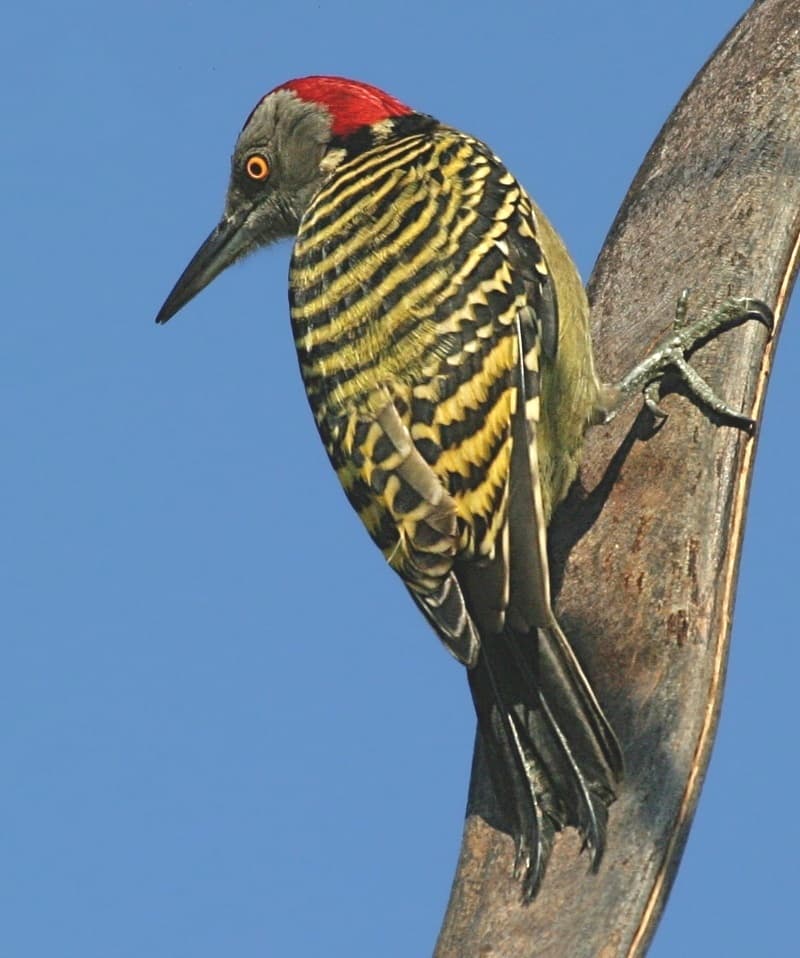
The Hispaniolan woodpecker is a medium-sized, gold and black barred bird found exclusively on the island of Hispaniola. This species is known for its social behavior and distinctive vocalizations, inhabiting a variety of forest types, plantations, and even urban parks across both Haiti and the Dominican Republic.

Campo flicker
The campo flicker is a medium-sized woodpecker found across South America, inhabiting a variety of open and semi-open landscapes. It is known for its terrestrial foraging habits, primarily feeding on ants and termites, and exhibits a complex breeding system.