
West Indian woodpecker
The West Indian woodpecker (Melanerpes superciliaris) is a medium-sized woodpecker found across the Bahamas, Cayman Islands, and Cuba. It exhibits distinct male and female plumage differences, particularly on the head, and has a varied diet of arthropods, small vertebrates, seeds, and fruit. This species is a year-round resident in its habitat and is known for its territorial behavior and characteristic vocalizations.
Key Facts
- ›Found in the Bahamas, Cayman Islands, and Cuba.
- ›Males have a red crown and nape, while females have a whitish crown and a distinct black supercilium separating the crown from the red nape.
- ›Diet includes insects, spiders, frogs, lizards, seeds, and fruits.
- ›Forages by gleaning, pecking, and probing at all levels of vegetation and on the ground.
- ›Nests are excavated in dead trees, often palms, or utility poles.
- ›Conservation status is Least Concern, though populations on some small islands are vulnerable.

West Indian Woodpecker
Bahamas, Cayman Islands, Cuba
Wooded Landscapes, Coppice of Dense Broadleaf Vegetation, Forest On Limestone Areas, Residential Areas, Areas With Royal Palms, Areas With Sabal Palms
- Red Crown and Nape
- Whitish Crown and Distinct Black Supercilium
- Barred Black and Buffy/Yellowish White Upperparts
- Red To Orange-Red Belly Patch
Arthropods, Insects, Spiders, Frogs, Lizards, Seeds, Fruit
Gleaning, Pecking, Probing, Foraging On the Ground, Foraging At All Levels of Vegetation
Dead Palm Trees, Other Dead Trees, Utility Poles
"Kwirr" Or "Churr" Call, "Kra-Kra-Kra" Call, Rapid Tapping Drumming, Slow, Soft Rapping Sound
About West Indian woodpecker
The West Indian woodpecker, scientifically known as Melanerpes superciliaris, is a notable species within the woodpecker family, Picidae. This bird is primarily found inhabiting the islands of the Bahamas, the Cayman Islands, and Cuba, where it has adapted to a variety of wooded environments.
Description and Characteristics
Adult West Indian woodpeckers typically measure between 27 to 32 centimeters in length and weigh between 48 and 126 grams. A striking sexual dimorphism is evident in their plumage, particularly on the head. Males display a prominent red crown and nape, complemented by a black supercilium that extends to the red. In contrast, females possess a whitish crown, with the black supercilium framing it and separating it from a red nape. The rest of the head for both sexes is white to buffy white. Their upperparts are characterized by barring of black and buffy or yellowish white, while the underparts are grayish with a buffy brown to pale yellow-olive tinge on the breast and a distinct red to orange-red patch on the belly. Juveniles are generally duller than adults, with less defined barring and often a reddish hue on their upperparts.
Distribution and Habitat
The West Indian woodpecker inhabits a range of wooded landscapes across its distribution. On mainland Cuba and Isla de la Juventud, they are found in varied wooded areas, often favoring those with abundant royal palms. On San Salvador Island in the Bahamas, they are largely restricted to dense broadleaf vegetation with dead sabal palms. On Grand Cayman, they inhabit most wooded areas, particularly forests on limestone soils with sparse vegetation, and tend to avoid mangroves and residential areas. In contrast, subspecies on the Abaco islands are more adaptable and common in residential areas.
Behavior and Ecology
All subspecies of the West Indian woodpecker are year-round residents within their respective territories. Their diet is varied, including arthropods, small vertebrates like frogs and lizards, seeds, and fruits. They employ diverse foraging techniques, gleaning food from surfaces, pecking into wood, and probing into crevices, and can be observed foraging on the ground as well as at all levels of the vegetation.
Breeding and Vocalizations
The breeding season for the West Indian woodpecker generally spans from February to August, with the possibility of producing two broods annually. The species typically maintains paired relationships year-round and exhibits territorial behavior outside the nesting season. Both sexes actively participate in excavating nest holes, usually in dead trees or utility poles, at heights ranging from 5 to 30 meters above the ground. A clutch usually consists of five or six eggs, with incubation averaging 12 days. Both parents share incubation duties and the provisioning of nestlings and fledglings.
Their vocalizations include a distinctive 'kwirr' or 'churr' call, described as loud and rolling with a screaming quality, as well as a 'kra-kra-kra' sound. Their drumming on resonant surfaces like dead trees or utility poles is rapid, producing a steady roll at approximately 17 strokes per second. A slower, softer rapping sound is also made with the bill, typically as part of courtship rituals.
Conservation Status
Assessed by the IUCN as Least Concern, the West Indian woodpecker has a broad range, though its total population size is unknown and believed to be declining. While no immediate threats are identified, populations on certain smaller islands are considered vulnerable. The species has shown resilience to hurricanes in the past, but the increasing frequency and intensity of storms due to climate change pose a potential threat to their long-term survival. Habitat protection is considered the most crucial priority for safeguarding vulnerable populations of this woodpecker.
Source: Wikipedia ↗
Frequently Asked Questions
What are the main distinguishing features of the West Indian woodpecker?
Adult males have a red crown and nape, with a black supercilium. Adult females share the red nape but have a whitish crown bordered by the black supercilium. Both sexes have barred black and buffy upperparts and a red to orange-red patch on the belly.
Where is the West Indian woodpecker found?
This species is distributed across the Bahamas, the Cayman Islands, and Cuba. Different subspecies inhabit specific islands within these archipelagos.
What does the West Indian woodpecker eat?
Its diet is diverse, comprising arthropods like insects and spiders, small vertebrates such as frogs and lizards, as well as seeds and fruits from various plants.
How does the West Indian woodpecker forage for food?
They forage on the ground and at all levels within the vegetation. Their methods include gleaning food items from surfaces, pecking into wood or bark, and probing into crevices.
What are the nesting habits of the West Indian woodpecker?
Both male and female West Indian woodpeckers excavate nest holes, typically in dead palm trees or other dead trees, and occasionally in utility poles. Nests are usually situated between 5 and 30 meters above the ground.
What is the conservation status of the West Indian woodpecker?
The West Indian woodpecker is listed as Least Concern by the IUCN. However, populations on some smaller islands are considered vulnerable, and their resilience to increasingly intense hurricanes due to climate change is a concern.
Related Woodpecker species
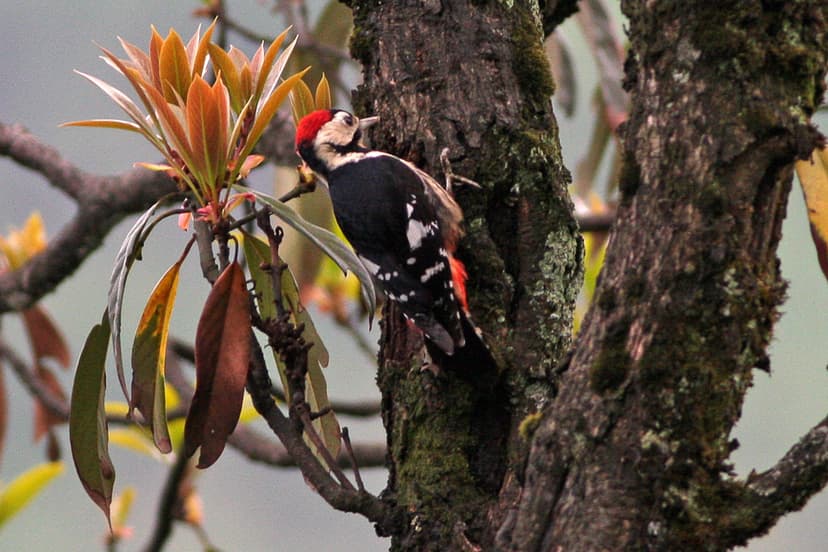
Necklaced woodpecker
The necklaced woodpecker is a small, stout, black-and-white bird found in lowland and montane forests across Southeast Asia and China. It is characterized by buffy underparts, with males displaying a distinctive fiery orange neck patch and a crimson red crown.

Ochraceous piculet
The Ochraceous piculet is a small woodpecker species found in northeastern Brazil, inhabiting various forest types and even urban parks. It is characterized by its distinct plumage, with males having a black cap featuring red tips and white spots, while females lack the red on their forehead. This species is a year-round resident and excavates its nest holes in trees or fence posts.
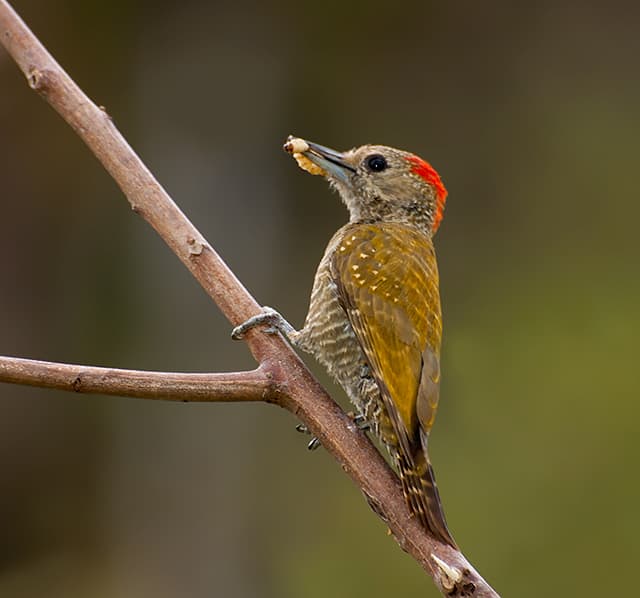
Little woodpecker
The little woodpecker (Veniliornis passerinus) is a small South American bird found in a wide variety of wooded habitats, generally avoiding dense forest interiors. Males and females share similar plumage, with males displaying red on their heads. This adaptable species is widespread across the continent and is currently listed as Least Concern.