
Necklaced woodpecker
Dryobates pernyii·Picidae·19-21
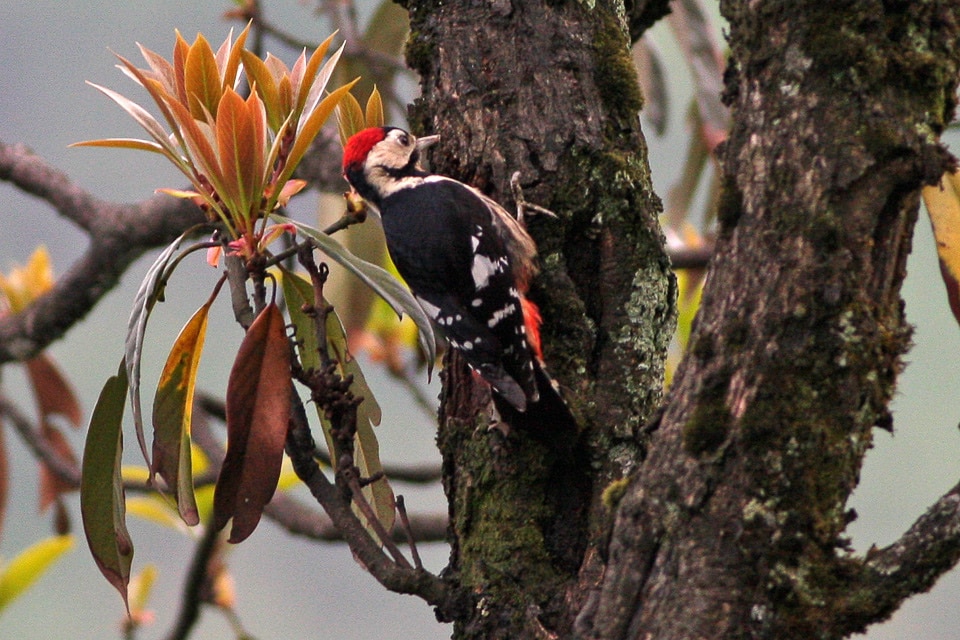
The necklaced woodpecker is a small, stout, black-and-white bird found in lowland and montane forests across Southeast Asia and China. It is characterized by buffy underparts, with males displaying a distinctive fiery orange neck patch and a crimson red crown.
Key Facts
- ›Small woodpecker measuring 19-21 cm in length.
- ›Distinctive black-and-white plumage with buffy underparts.
- ›Males feature a fiery orange neck patch and a crimson red crown.
- ›Inhabits subtropical and tropical moist lowland and montane forests.
- ›Found in Bangladesh, China, Laos, Myanmar, Thailand, and Vietnam.
Perny's Woodpecker
Asia
Black, White, Buffy, Orange, Crimson Red
Fiery orange neck patch, Crimson red crown, Muted orange vent, Red breast patch bordered with a black stripe, Pale orange neck and breast patch
About Necklaced woodpecker
The necklaced woodpecker, scientifically known as Dryobates pernyii and sometimes referred to as Perny's woodpecker, is a small avian species inhabiting forests across a significant portion of Asia. This stout bird is characterized by its striking black-and-white plumage, offset by buffy underparts. The species is found in countries including Bangladesh, China, Laos, Myanmar, Thailand, and Vietnam, favoring both subtropical and tropical moist lowland and montane forest environments.
Description and Identification
Measuring between 19 and 21 cm in length, the necklaced woodpecker presents a distinctive appearance. Males are particularly notable for a vibrant fiery orange patch on their neck and a bright crimson red crown. They also exhibit a muted orange vent and a red breast patch that is bordered by a black stripe. Females, while sharing the general black-and-white coloration and buffy underparts, are typically duller. They may occasionally display a pale orange patch on their neck and breast, but generally lack the vivid head and neck markings of the males.
Taxonomy and Relatives
The necklaced woodpecker belongs to the genus Dryobates. It was previously considered to be the same species as the crimson-naped woodpecker (Dryobates cathpharius), though differences in coloration on the head and breast, as well as size, now distinguish them. The species is divided into three subspecies: D. p. tenebrosus, found from northern and eastern Myanmar into northern Laos, northwestern Vietnam, and southern China; D. p. pernyii, native to central China; and D. p. innixus, which inhabits north-central and east-central China. Despite superficial resemblances, the necklaced woodpecker is not closely related to species like the Darjeeling woodpecker (Dendrocopos darjellensis) or the great spotted woodpecker (Dendrocopos major).
Source: Wikipedia ↗
Frequently Asked Questions
What are the key physical characteristics of the necklaced woodpecker?
The necklaced woodpecker is a stout bird, measuring between 19 and 21 cm. It has predominantly black-and-white plumage, with buffy underparts. Males are notable for a fiery orange neck patch and a crimson red crown.
Where is the necklaced woodpecker geographically distributed?
This species is found in several countries in Southeast Asia and China. Its range includes Bangladesh, China, Laos, Myanmar, Thailand, and Vietnam.
What types of habitats does the necklaced woodpecker prefer?
The necklaced woodpecker primarily inhabits subtropical or tropical moist lowland forests and subtropical or tropical moist montane forests.
How does the female necklaced woodpecker differ from the male?
Females are generally duller than males. While they can sometimes exhibit a pale orange neck and breast patch, they lack the vibrant fiery orange neck patch and crimson red crown seen in males.
Are there any other woodpecker species that resemble the necklaced woodpecker?
The necklaced woodpecker bears a resemblance to a miniature Darjeeling woodpecker and the great spotted woodpecker. However, it is not closely related to either of these species and belongs to a different genus.
Related Woodpecker species
Rufous-bellied woodpecker
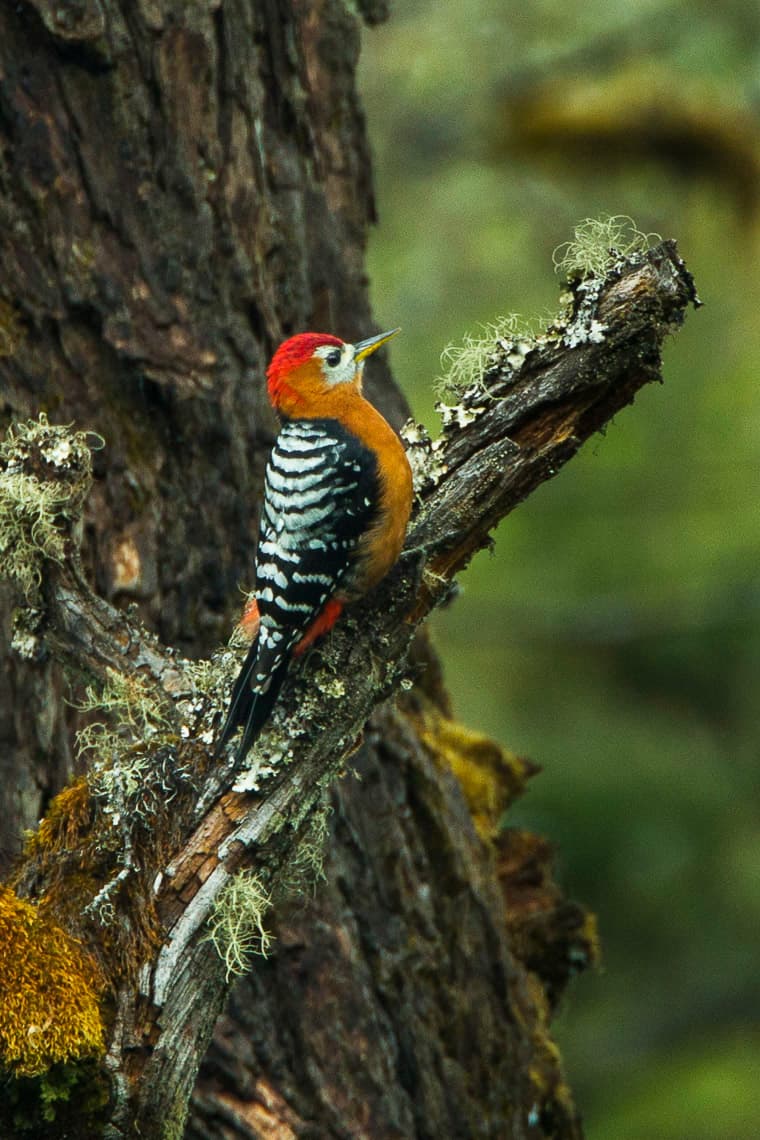
The rufous-bellied woodpecker, also known as the rufous-bellied sapsucker, is a bird species found across the Himalayas and parts of Southeast Asia, inhabiting subtropical and tropical moist forests. It is characterized by its distinctive pitting of tree bark to feed on sap, and its plumage includes a black mantle and back with white barring on the wings and tail, contrasted by a rufous or cinnamon underside.

Checker-throated woodpecker
The checker-throated woodpecker, also known as the checker-throated yellownape or Javan yellownape, is a species of bird native to Southeast Asia. It inhabits subtropical and tropical moist forests, and its population is declining due to deforestation.

West Indian woodpecker
The West Indian woodpecker (Melanerpes superciliaris) is a medium-sized woodpecker found across the Bahamas, Cayman Islands, and Cuba. It exhibits distinct male and female plumage differences, particularly on the head, and has a varied diet of arthropods, small vertebrates, seeds, and fruit. This species is a year-round resident in its habitat and is known for its territorial behavior and characteristic vocalizations.