
Cairns
Cairns is a major regional city located on the tropical northeast coast of Far North Queensland, Australia. Founded in 1876, it has grown from a gold-mining port to a significant international tourism hub, renowned for its proximity to two UNESCO World Heritage sites: the Great Barrier Reef and the Daintree Rainforest. The city's economy is largely driven by tourism, alongside healthcare, education, and marine industries.
Key Facts
- ›Founded in 1876 and named after Governor William Cairns.
- ›Located on the tropical northeast coast of Far North Queensland, Australia.
- ›Serves as a gateway to the Great Barrier Reef and the Daintree Rainforest.
- ›A major international tourism destination, with tourism as its primary economic driver.
- ›Has a gross regional product of approximately $12.2 billion as of 2024.
- ›Experienced significant development as a staging ground for Allied Forces during World War II.

About Cairns
Cairns, known in the Yidiny language as Gimuy, is a significant regional city situated on the tropical northeast coast of Far North Queensland, Australia. Established in 1876, its origins are tied to the discovery of gold in the Hodgkinson River, leading to its development as a port. Initially a settlement on mangrove swamps and sand ridges, Cairns was named in honor of Sir William Cairns, the then Governor of Queensland. The city's history is also marked by the contributions of Chinese immigrants who played a vital role in developing its agricultural industry from the late 19th century.
During World War II, Cairns became a strategic staging ground for Allied Forces in the Pacific theater, hosting numerous military operations. By the late 20th century, the city had transformed into a prominent center for international tourism, a role it continues to hold today. This growth was further bolstered by the opening of Cairns International Airport in 1984, attracting significant international visitors, particularly from the Japanese market.
The economy of Cairns is predominantly driven by tourism, capitalizing on its unique geographical location. The city serves as a crucial gateway to two UNESCO World Heritage sites: the Great Barrier Reef, one of the world's natural wonders, and the Daintree Rainforest, part of the Wet Tropics of Queensland. Beyond tourism, Cairns also boasts substantial capacities in healthcare, education, aviation, and marine industries, contributing to its status as a major commercial hub for Far North Queensland and the Cape York Peninsula.
Source: Wikipedia ↗
Frequently Asked Questions
When was Cairns founded?
Cairns was founded in 1876. The city's establishment was spurred by the need to export gold discovered in the Hodgkinson goldfields and was named in honor of Sir William Wellington Cairns, the then Governor of Queensland.
What is Cairns known for?
Cairns is internationally recognized as a major tourist destination, primarily due to its proximity to two UNESCO World Heritage sites: the Great Barrier Reef and the Daintree Rainforest. It also has a thriving economy based on tourism, healthcare, and education.
What is the population of Cairns?
According to the 2021 census, Cairns had a population of 169,312. The urban area population was recorded at 153,181 in the same census.
What are the main industries in Cairns?
The economy of Cairns is primarily based on tourism. Other significant sectors include healthcare, education, and major capacities in aviation, marine, and defence industries.
What major natural attractions are near Cairns?
Cairns provides access to two UNESCO World Heritage sites: the Daintree Rainforest, which is part of the Wet Tropics of Queensland, and the Great Barrier Reef, recognized as one of the seven natural wonders of the world.
What was Cairns' role during World War II?
During World War II, Cairns served as a crucial staging ground for Allied Forces in the Pacific. It hosted operational bases for the United States Army Air Forces and Royal Australian Air Force, a major military seaplane base, and naval bases, supporting operations like the Battle of the Coral Sea.
Related Zoos
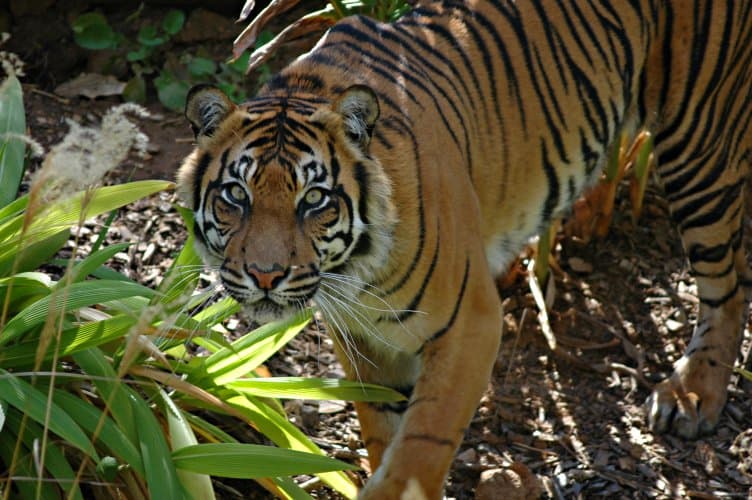
Adelaide Zoo
Adelaide Zoo, established in 1883, is Australia's second-oldest zoo and operates on a non-profit basis. Situated north of Adelaide's city center, it is managed by the Royal Zoological Society of South Australia and is a key institution for wildlife conservation and public education in the region.

Country Life Farm
Dunsborough is a popular coastal tourist destination in Western Australia, situated on the shores of Geographe Bay and serving as a gateway to the Margaret River Wine Region. It is recognized for its beaches, proximity to natural attractions, and vibrant local culture, attracting both families and annual school leavers.

Ipswich Nature Centre
Queens Park is a significant heritage-listed botanic garden and park located in Ipswich, Queensland, Australia, with a history dating back to its establishment as a public recreation and botanic garden reserve in 1858. It has evolved over time, incorporating scientific and recreational purposes, and now houses the Ipswich Nature Centre, showcasing native Australian wildlife.