
Mannheim Luisenpark
Germany·Municipal Park·19th century
The Luisenpark is a large municipal park in Mannheim, Germany, renowned for its diverse attractions and historical significance. Originally established with a bequest for a new park, it has evolved into a major leisure and cultural destination, featuring historic gardens, modern greenhouses, and a significant Chinese garden.
Key Facts
- ›Covers an area of 42 hectares.
- ›Construction began in 1892 and concluded in 1903.
- ›Named after Princess Luise Marie Elizabeth of Prussia.
- ›Includes attractions such as a Chinese garden, greenhouses, and gondoletta boats.
- ›Operated as a non-profit by Stadtpark Mannheim GmbH.
- ›The park was expanded to its current size by incorporating a former racecourse for the 1975 Bundesgartenschau.

Chinese Garden, Pflanzenschauhaus, Butterfly House, Aquariums, Gondoletta Boats, Open-Air Stage, Arboretum, Rose Garden
About Mannheim Luisenpark
The Luisenpark, located in Mannheim, Baden-Württemberg, Germany, is a significant municipal park renowned for its extensive grounds and diverse attractions. Situated on the left bank of the Neckar river, the park spans 42 hectares and is divided into the historic lower section and the more attraction-filled upper section.
History and Development
Construction of the Luisenpark commenced in 1892 and concluded in 1903, initiated with a bequest from scientist Carl William Casimir Fox. While his contribution provided a starting point, it was insufficient for the total cost of development. The landscape design was undertaken by the Siesmayer brothers from Frankfurt. A pivotal moment for the park's supraregional importance was the Mannheim local council's resolution on November 18, 1969, to develop both Luisenpark and Herzogenriedpark for the Bundesgartenschau 1975. This period saw the park expand to its current 42 hectares by incorporating a former racecourse.
The success of the 1975 event, evidenced by 8.1 million visitors and the sale of 186,000 season tickets, along with the decision to remove the park's fence, led the city council to adopt a model with an entrance fee. This was formalized on October 21, 1975, with initial trial years proving successful, convincing the council to maintain the park as a city park with paid admission.
Naming and Legacy
The park derives its name from Princess Luise Marie Elizabeth of Prussia, a notable figure connected to several German emperors. Her father was William I, her brother Frederick III, and her nephew William II. In 1856, at eighteen years old, she married Prince Regent Frederick I of Baden, later Grand Duke of Baden. Princess Luise was a pioneer in welfare work in Baden. Her life story includes a notable escape from marauding soldiers during wartime.
Attractions and Features
The Luisenpark offers a wide array of amenities and gardens. These include a Chinese garden, a rose garden, an arboretum, and greenhouses designed for display and cultivation of tree ferns. The Kutzerweiher, a 40,000 m² lake, is a central feature, offering a tow boat ride on a 1,840-meter looped course. Since 2006, an open-air stage with approximately 1,000 seats has hosted concerts, operas, and plays.
The Chinese garden, known as the "garden of the many views" (Duojingyuan), was created in cooperation with Mannheim's Chinese twin city, Zhenjiang. Its construction and tea house were made possible by a significant donation from the estate of Georg Schmuck.
The Pflanzenschauhaus, a greenhouse and exhibition garden covering 2,700 m², stands on the site of a former palm house destroyed during World War II. It houses a butterfly house, bird exhibits, and both salt and fresh water aquariums. The park also features a 205-meter telecommunication tower with a rotating restaurant. For recreation, a large playground and leisure meadow, the Spielwiese, borders a model farm with domestic animal enclosures. The Heinrich-Vetter-Weg is a trail adorned with over 20 sculptures by various artists.
Source: Wikipedia ↗
Frequently Asked Questions
What is the history behind the name Luisenpark?
The park is named in honor of Princess Luise Marie Elizabeth of Prussia. She was a close relative of several German emperors, including Kaiser Wilhelm I, Frederick III, and Kaiser Wilhelm II. She married Prince Regent Frederick I of Baden in 1856.
What are the main attractions within the Luisenpark?
Luisenpark features a variety of attractions including a Chinese garden, rose garden, arboretum, and greenhouses. Visitors can also enjoy gondoletta boat rides on the Kutzerweiher lake, an open-air stage, and bird and domestic animal enclosures.
What is the significance of the Chinese garden?
The Chinese garden, named 'garden of the many views' (Duojingyuan), was built in collaboration with Mannheim's twin city Zhenjiang. It was financially supported by a significant donation and includes a tea house.
Does the Luisenpark have an aquarium?
Yes, the Pflanzenschauhaus, which is a greenhouse and exhibition garden, contains salt and fresh water aquariums as part of its exhibits.
How was the Luisenpark funded initially?
The park's establishment began with a bequest of 20,000 Deutsche Marks from scientist Carl William Casimir Fox. While this amount was not sufficient for full financing, it provided a foundational start for the project.
What led to the decision to charge an entrance fee?
The sale of 186,000 season tickets and 8.1 million visitors during the Bundesgartenschau, along with the removal of the park's fence, convinced the city council to implement an entrance fee. The success of over 38,000 annual tickets sold during a trial period solidified this decision.
Related Zoos

Rostock Zoo
Rostock Zoo, established in 1899, is the largest zoo on Germany's east coast, housing approximately 4,500 animals from 320 species across 56 hectares. It plays a significant role in wildlife conservation, notably serving as the studbook keeper for polar bears within the European Endangered Species Programme. The zoo features the expansive Darwineum, a modern exhibition dedicated to biodiversity and evolution.
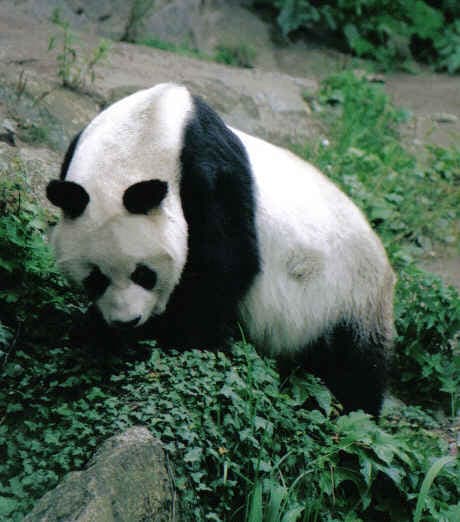
Berlin Zoological Garden
The Berlin Zoological Garden, established in 1844, is Germany's oldest and most renowned zoo. It boasts one of the world's most extensive species collections, housing over 20,200 animals across approximately 1,380 species. The zoo is a significant European tourist attraction, drawing millions of visitors annually and playing a vital role in international conservation efforts through breeding programs and species reintroduction.

Cologne Zoological Garden
The Cologne Zoological Garden is a historic zoo in Cologne, Germany, founded in 1860. It is one of Germany's oldest zoos, housing over 10,000 animals from more than 850 species across 20 hectares, and is notable for its active participation in conservation breeding programs for endangered species and in-situ conservation efforts.