
Ménagerie du Jardin des Plantes
The Ménagerie du Jardin des Plantes is a historic zoo located in Paris, France, within the botanical garden of the Jardin des Plantes. Established in 1794, it is the second oldest zoological garden globally and was largely formed from animals transferred from the dissolved royal menagerie at Versailles. Today, it houses a diverse collection of rare smaller and medium-sized mammals, alongside various birds and reptiles, and plays a role in public education and scientific study.
Key Facts
- ›Founded in 1794, making it the second oldest zoo in the world.
- ›Located in Paris, France, within the Jardin des Plantes.
- ›Largely established with animals from the former royal menagerie of the Palace of Versailles.
- ›Played a significant role in the scientific study of animals through its association with the Muséum National D'Histoire Naturelle.
- ›Houses rare smaller and medium-sized mammals, birds, and reptiles.
- ›Its structures are listed buildings, making new construction challenging.
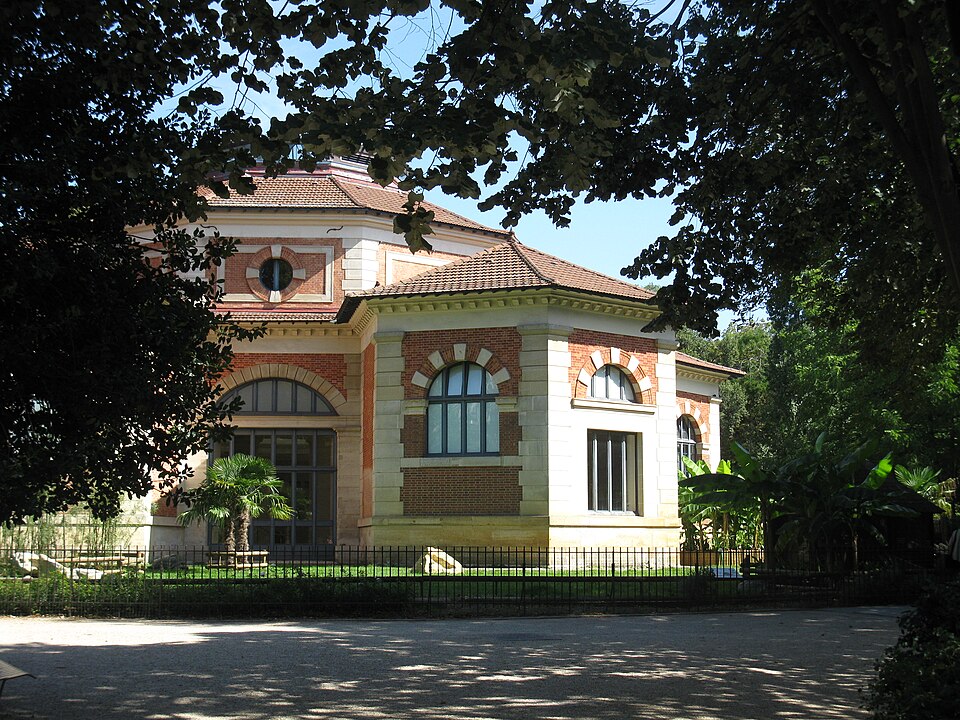
Rotonde, Bear Ditch, Fauverie, Volieren, Semicircular Birdhouse For Pheasants, Reptile House
Castor and Pollux, Zarafa
About Ménagerie du Jardin des Plantes
The Ménagerie du Jardin des Plantes, located in Paris, France, is a historic zoological garden that traces its origins back to 1794. It is recognized as the second oldest zoo in the world, established largely with animals transferred from the former royal menagerie at the Palace of Versailles following the French Revolution. Situated within the renowned botanical garden, the Jardin des Plantes, the menagerie occupies a significant portion of its grounds and is positioned directly by the Seine River in the heart of the city.
History and Foundation
The origins of the Jardin des Plantes itself date back to 1626 as a botanical garden, but the menagerie was formally founded in 1794. This establishment was part of a broader initiative following the French Revolution to rehouse exotic animals from private collections and royal establishments. Jacques-Henri Bernardin de Saint-Pierre is credited as the founder, advocating for the ethical treatment of animals, their scientific study, and public access for educational purposes. The Jardin des Plantes became part of the Muséum National d'Histoire Naturelle in 1793, facilitating academic research.
Scientific and Zoological Development
Under scientific leadership, including figures like Étienne Geoffroy Saint-Hilaire and Frédéric Cuvier, the menagerie grew significantly in the 19th century, becoming one of Europe's largest exotic animal collections. The zoo's association with the National Natural History Museum enabled extensive academic study of its inhabitants, focusing on systematics, morphology, and anatomy. Research into animal behavior was also conducted, contributing to foundational works on exotic animal biology.
Architectural and Species Growth
Throughout its history, the Ménagerie has seen the construction of various enclosures designed to house different animal groups. Notable additions include the Rotonde for large mammals, a bear enclosure, predator enclosures (Fauverie), and specialized birdhouses (Volieren). While many of these structures are functional and architecturally significant, they are now listed buildings, posing challenges for the creation of modern facilities. Despite these constraints, the zoo continues to house a collection of rare smaller and medium-sized mammals, alongside a variety of birds and reptiles, maintaining its historical significance as a center for public education and zoological study.
Source: Wikipedia ↗
Frequently Asked Questions
When was the Ménagerie du Jardin des Plantes founded?
The Ménagerie du Jardin des Plantes was formally established in 1794. This founding date makes it the second oldest zoological garden in the world, following Tiergarten Schönbrunn.
Where is the Ménagerie du Jardin des Plantes located?
The zoo is situated in Paris, France, directly by the Seine river in the center of the city. It occupies approximately one-third of the area of the Jardin des Plantes.
What is the history behind the animals at the Ménagerie?
Many of the initial animals were brought from the royal zoo of the Palace of Versailles, which was dissolved during the French Revolution. Additionally, exotic animals from private hands were transferred to the Jardin des Plantes.
What types of animals can be found at the Ménagerie today?
The zoo currently contains many rare smaller and medium-sized mammals. It also features a variety of birds and reptiles.
What was the role of the Ménagerie in scientific research?
The incorporation of the menagerie within the National Natural History Museum facilitated academic study by doctors and zoologists. Research was conducted on systematics, morphology, anatomy, and animal behavior, with notable publications like 'Histoire des Mammifières'.
What notable structures were built for the animals?
Over time, various enclosures were added, including the Rotonde for large animals (1804), a bear ditch (1805), a predator enclosure called the Fauverie (1821), and birdhouses for birds of prey and pheasants (1825 and 1827). A reptile house was added in 1870.
Related Zoos

Tiergarten Schönbrunn
Tiergarten Schönbrunn, also known as Vienna Zoo, is the world's oldest zoo still in operation, established in 1752 within the Schönbrunn Palace gardens. It is a UNESCO World Heritage Site and a prominent European zoo, recognized for its extensive species collection and significant conservation efforts. The zoo attracts over two million visitors annually and is celebrated for its successful breeding programs, most notably with giant pandas.

Ogród Zoobotaniczny w Toruniu
The Ogród Zoobotaniczny w Toruniu, located in Toruń, Poland, is a zoological and botanical garden with roots dating back to 1797, making it one of Poland's oldest botanical gardens. It merged with a newly established zoo in 1965 and is a member of the European Association of Zoos and Aquaria (EAZA). The garden features a diverse collection of animals and notable protected plant species, serving as a significant educational and recreational facility.

Citadel of Besançon
The Citadel of Besançon is a 17th-century fortress in France, renowned as a masterpiece of military architecture designed by Sébastien Le Prestre de Vauban. It is a significant historical monument and a major tourist attraction, housing several museums and a zoo, and was recognized as a UNESCO World Heritage Site in 2008.