
Wexford
Wexford is the historic county town of County Wexford, located on the south side of Wexford Harbour in southeastern Ireland. Founded by Vikings around 800 AD, it has a rich history as a Viking settlement, an Old English town, and a center of significant historical events including the 1798 rebellion. Today, Wexford is known for its cultural offerings, particularly the Wexford Opera Festival, and its role as a modern administrative and economic hub.
Key Facts
- ›Founded by Vikings in approximately 800 AD.
- ›Its Irish name, Loch Garman, is derived from a legend of a man named Garman mac Bomma Licce.
- ›Became an Old English settlement after the Norman invasion in 1169.
- ›The Yola dialect of Middle English was spoken in the area until the MID-19th century.
- ›Received its first charter in 1318.
- ›Was a center of the 1798 rebellion against British rule.

About Wexford
Wexford: A Historic Irish Town
Wexford, known in Irish as Loch Garman and historically as Weiseforthe in the Yola dialect, is the county town of County Wexford, situated on the south side of Wexford Harbour in the southeastern corner of Ireland. Its origins trace back to approximately 800 AD when it was founded by Vikings, who named it Veisafjǫrðr, meaning "inlet of the mudflats." The town's Irish name, Loch Garman, is linked to a legend involving Garman mac Bomma Licce, who was said to have drowned at the river mouth.
History and Development
For several centuries, from the 9th to the early 12th century, Wexford functioned as a Viking town and city-state, maintaining a degree of independence. The Norman invasion in May 1169 marked a significant shift, with Dermot MacMurrough and Robert Fitz-Stephen besieging the town. Following a period of resistance, the Norse inhabitants accepted a settlement, and Wexford became an Old English settlement throughout the medieval period.
A unique linguistic heritage is associated with Wexford, as the Anglo-Frisian language known as Yola was spoken there from the Norman invasion until its decline in the mid-19th century. Unlike some other parts of Ireland, the Irish language saw less widespread use in the baronies of Forth and Bargy due to the settlement of Norse, Norman, and continental Europeans. However, Leinster Irish was spoken in the northern baronies until its decline in the 17th century.
Following the Crusades, the Knights Templar established a presence in Wexford, commemorated today by the old Knights' Templars' chapel yard of St. John's Cemetery. The town received its first charter in 1318. During the 1640s, Wexford supported Confederate Ireland, with a fleet of privateers based in the town. This led to Wexford being sacked by English Parliamentarians in 1649 during the Cromwellian conquest, resulting in significant destruction and loss of life.
The town's architectural fabric reflects its history, with Dutch Billy houses evident from the 18th century. County Wexford was a focal point of the 1798 rebellion against British rule, and Wexford town was held by the United Irishmen. This period saw notable events, including the Scullabogue massacre and executions at Wexford Bridge.
Cultural and Economic Significance
Wexford is renowned for its cultural contributions, most notably hosting the Wexford Opera Festival each October, an event that began in 1951. The town boasts several music and drama venues, including the National Opera House, Dun Mhuire Theatre, and Wexford Arts Centre, and is home to various theatre groups. In 2024, it hosted the Fleadh Cheoil festival.
Economically, Wexford's role as a seaport diminished in the 20th century due to challenges with Wexford Harbour's shifting sands. By 1968, the port closed to larger shipping, with operations shifting to the deepwater Rosslare Harbour. While the port is now primarily used by fishing and leisure vessels, the quays have been redeveloped as an amenity.
Notable Features and Places of Interest
Key places of interest near Wexford include Curracloe Beach, a location used in the opening scenes of "Saving Private Ryan." The Irish National Heritage Park at Ferrycarrig offers a journey through 9,000 years of Irish history with recreations of ancient dwellings. The Wexford Wildfowl Reserve, a Ramsar site, is a vital stopover for migratory birds, particularly the Greenland white-fronted geese.
Transport and Administration
Wexford is connected by national primary routes and the national rail network, with Wexford O'Hanrahan railway station serving the town. Bus services also provide links to Dublin, Carlow, and Waterford. Rosslare Europort, located south of the town, offers car ferry services to the UK and France. Administratively, Wexford has evolved from a historic borough to an urban district and is now amalgamated with Wexford County Council, with the town retaining its borough status and a mayor.
Notable People and Twinning
Several figures are associated with Wexford, including the Redmond family, prominent in Irish politics. The town is twinned with Annapolis, Maryland, USA; Couëron, France; and Lugo, Italy.
Source: Wikipedia ↗
Frequently Asked Questions
What is the origin of Wexford's Irish name, Loch Garman?
The Irish name Loch Garman, meaning 'lake of Garman', is said to originate from a legend. According to this story, a man named Garman mac Bomma Licce was drowned at the river mouth after stealing the queen's crown from Temair during the feast of Samhain.
When was Wexford founded and by whom?
Wexford was founded by the Vikings in approximately 800 AD. They named the settlement Veisafjǫrðr, which translates to 'inlet of the mudflats'.
What historical significance does Wexford hold regarding language?
For centuries, the Yola dialect of Middle English was commonly spoken in south Wexford from the time of the Norman invasion until the mid-19th century. Although Yola is now extinct, some words, phrases, and place names from it are still used in the locality.
What role did Wexford play in the 1798 rebellion?
County Wexford was a central location for the 1798 rebellion against British rule. Wexford town itself was held by the United Irishmen during the Wexford Rebellion, and events such as executions and reprisals occurred at Wexford Bridge.
What is the Wexford Opera Festival?
The Wexford Opera Festival is an annual cultural event held every October. It was started in 1951 by Dr. Tom Walsh and has since grown to become a significant event, sometimes including a fireworks display.
What led to the decline of Wexford's port?
Wexford's success as a seaport declined in the first half of the 20th century due to the constantly shifting sands of Wexford Harbour. By 1968, it became unprofitable to maintain a channel for larger ships, leading to the port's closure for major shipping.
Related Zoos
Waterford
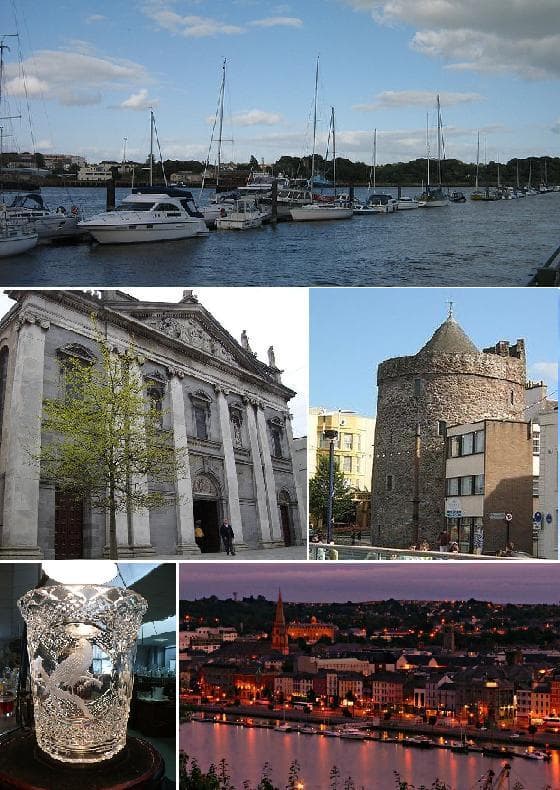
Waterford is a historic city in Ireland, recognized as the country's oldest and a significant Viking settlement. It is renowned for its well-preserved medieval walls and its legacy in the glassmaking industry, particularly Waterford Crystal. The city continues to be a vibrant cultural center with a rich maritime history and a strong sense of identity.
Achill
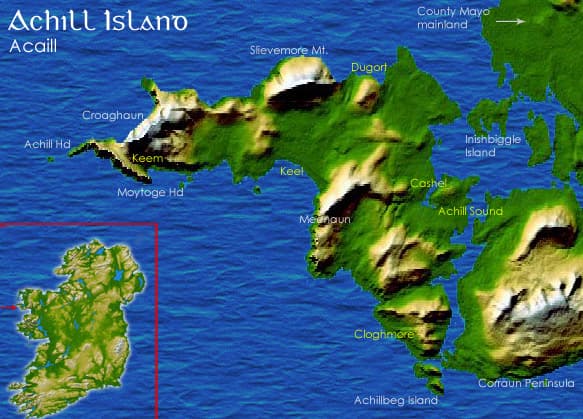
Achill Island is the largest of Ireland's islands, situated off the west coast of County Mayo. It is a historically rich area with evidence of settlement dating back to the Neolithic period, and it played a significant role in various historical events, including the O'Malley clan's maritime influence and the controversial Achill Mission.

Dingle
Dingle is a historic town located on the Atlantic coast of County Kerry in the southwest of Ireland. Known for its tourism, fishing, and agriculture, it is the only town on the Dingle Peninsula and sits within a Gaeltacht region. Historically a significant trading port and a departure point for pilgrims, Dingle's identity has also been shaped by debates over its official name, balancing its English heritage with its Irish language roots.