
Whipsnade Zoo
England·Wildlife Conservation Park·20th Century
Whipsnade Zoo, formerly known as ZSL Whipsnade Zoo and Whipsnade Wild Animal Park, is a large wildlife conservation park located in Whipsnade, near Dunstable, England. Owned by the Zoological Society of London (ZSL), it is the UK's largest zoo and one of Europe's largest wildlife conservation parks, dedicated to the worldwide conservation of animals and their habitats.
Key Facts
- ›Covers 600 acres (240 hectares) of land.
- ›Opened on May 23, 1931, making it the first open zoo in Europe.
- ›Home to 3,626 animals, many of which are endangered.
- ›Visitors can drive or walk between enclosures, or utilize the 'Jumbo Express' train.
- ›Features a unique hill figure of a white lion carved into the Dunstable Downs.
- ›Houses a diverse range of animals, including Asian elephants, rhinos, lions, and cheetahs.

In With the Lemurs, Aquarium and Butterfly House, Passage Through Asia, Lions of the Serengeti, Elephant Herd, Rhinos of Nepal, Cheetah Rock, Hullabazoo Farm, Wild Wild Whipsnade
Ming, Sung, and Tang, Boxer, William Windsor, Anna, Karishma, George
- European Endangered Species Programme (for Asian elephants)
About Whipsnade Zoo
Whipsnade Zoo, also known historically as ZSL Whipsnade Zoo and Whipsnade Wild Animal Park, is a prominent zoological institution situated in Whipsnade, near Dunstable, Bedfordshire, England. It is operated by the Zoological Society of London (ZSL), a charitable organization dedicated to the global conservation of animals and their natural habitats. As the United Kingdom's largest zoo and one of Europe's most significant wildlife conservation parks, Whipsnade Zoo plays a crucial role in animal welfare, education, and conservation efforts.
History and Development
The establishment of Whipsnade Zoo was conceived by Sir Peter Chalmers Mitchell, Secretary of the Zoological Society of London, who was inspired by a visit to the Bronx Zoo in the United States. The Zoological Society of London acquired Hall Farm, a derelict farm on the Dunstable Downs, in 1926. The park officially opened to the public on May 23, 1931, becoming Europe's first open zoo easily accessible to visitors. Its early years saw the arrival of various animals, and the collection was further expanded in 1932 with animals from a defunct travelling menagerie.
During World War II, Whipsnade Zoo served as a refuge for animals evacuated from London Zoo. While the park sustained some bomb damage, resulting in the formation of some ponds, key structures remained largely intact. Notable incidents included the death of a spur-winged goose and a giraffe named Boxer due to the stress of bombings.
Recent developments have seen the addition of numerous new exhibits and facilities. In 1996, a new elephant house and paddock were constructed, replacing the original 1935 structure. The early 2000s brought exhibits such as "Lions of the Serengeti," a walk-through lemur enclosure, "Rhinos of Nepal," "Cheetah Rock," and "Wild Wild Whipsnade." The zoo also welcomed William Windsor, a retired goat mascot of the British Army's Royal Welsh regiment, in 2009. In April 2024, the "Monkey Forest" habitat was opened.
Exhibits and Features
Whipsnade Zoo spans an impressive 600 acres (240 hectares), allowing for expansive enclosures and a unique visitor experience. Visitors can traverse the park by walking, driving their own vehicles, or utilizing the narrow-gauge "Jumbo Express" train service. Some areas, designated as 'Asian' zones, permit animals such as Patagonian maras and red-necked wallabies to roam freely around visitor vehicles.
The zoo features a variety of dedicated exhibits, including "In with the Lemurs," a walkthrough habitat for ring-tailed lemurs. The "Aquarium and Butterfly House," opened in 2016, hosts diverse butterfly species, dwarf crocodiles, and aquatic life including stingrays and elephantnose fish. "Passage Through Asia" is a large paddock accessible only by car or train, housing herds of Bactrian camels, yaks, and various deer species. Other significant exhibits include "Lions of the Serengeti," the "Elephant herd" residing in the Centre for Elephant Care, "Rhinos of Nepal," "Cheetah Rock," and "Hullabazoo Farm," an area designed for children featuring domesticated livestock.
The "Wild Wild Whipsnade" exhibit showcases species that once inhabited Britain centuries ago, such as Eurasian brown bears and wolverines. The zoo's collection also includes animals not part of themed exhibits, such as Amur tigers, red pandas, giraffes, and chimpanzees.
Conservation and Operations
Whipsnade Zoo is home to 3,626 animals, with a significant proportion being endangered species. The park receives no government funding and relies on entrance fees, memberships, and corporate sponsorships, also benefiting from the Gift Aid charity donation scheme. The zoo's conservation focus is evident in its participation in programs like the European Endangered Species Programme for Asian elephants. Educational programs and daily talks, such as lemur talks and penguin feeding, are conducted during the summer season, alongside the "Birds of the World" demonstration show.
Incidents and Criticism
The zoo has experienced notable incidents, including the death of an elephant named Anna in 2002 following an allegation of unnecessary surgery, which the zoo attributed to infection. In 2021, two European brown bears were euthanized after escaping their enclosure and attacking a wild boar, drawing criticism from animal welfare groups. A chimpanzee escape in 2007 resulted in one chimpanzee, Jonnie, being shot due to public safety concerns, with the zoo explaining that tranquilizers were not a viable option in that specific situation.
Filming and Media
Whipsnade Zoo has served as a filming location for various television programs, including ITV's "Primeval," BBC's "Super Vets," and CBBC's "Brum." It has also been featured in advertising campaigns and BBC One's "Merlin."
Source: Wikipedia ↗
Frequently Asked Questions
What is Whipsnade Zoo?
Whipsnade Zoo is a large wildlife conservation park in England, owned by the Zoological Society of London (ZSL). It is the UK's largest zoo and one of Europe's largest wildlife conservation parks, dedicated to animal conservation and education.
When was Whipsnade Zoo founded?
Whipsnade Zoo was founded by the Zoological Society of London and officially opened its doors to the public on May 23, 1931. The land for the park was purchased in 1926.
How large is Whipsnade Zoo?
The park covers an extensive 600 acres (240 hectares). Its size allows for large enclosures and free-roaming animals in certain areas.
What are some notable features of Whipsnade Zoo?
Notable features include its vast size, the iconic white lion hill figure on the Dunstable Downs, and the 'Jumbo Express' train service for visitors. Many animals roam freely within the park.
What kind of animals can be seen at Whipsnade Zoo?
Whipsnade Zoo is home to a wide variety of animals, including Asian elephants, Indian rhinoceroses, African lions, cheetahs, Amur tigers, and many endangered species. Some animals, like wallabies and peafowls, roam freely around the park.
Does Whipsnade Zoo have any conservation programs?
Yes, Whipsnade Zoo is owned by the Zoological Society of London (ZSL), a charity devoted to the worldwide conservation of animals and their habitats. The zoo houses many endangered animals and participates in conservation efforts, such as the European Endangered Species Programme for Asian elephants.
Related Zoos
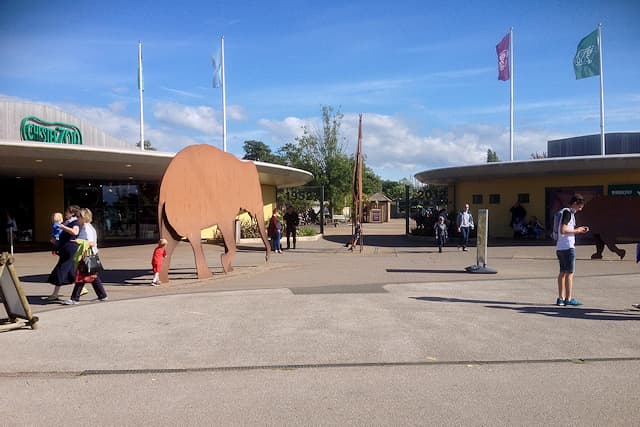
Chester Zoo
Chester Zoo, operated by the North of England Zoological Society, is a prominent wildlife attraction in Upton-by-Chester, England, and is recognized as one of the UK's largest zoos. It is a registered charity that receives no government funding and is celebrated for its extensive animal collection and significant conservation efforts, making it a highly visited and esteemed global zoo.

Lakeland Wildlife Oasis
Lakeland Wildlife Oasis is a zoological collection near Milnthorpe, Cumbria, England, with a distinct science and evolution theme. Operated by the registered charity Lakeland Trust for Natural Sciences since 2012, it aims to guide visitors through an evolutionary journey from marine life to mammals. The zoo is notable for its conservation efforts, particularly with endangered species like snow leopards.

The Deep
The Deep is a public aquarium and a landmark centre for marine research located in Kingston upon Hull, England. It opened in March 2002 and is dedicated to increasing public enjoyment and understanding of the world's oceans through a combination of interactive displays and living exhibits. The aquarium is a charitable organization funded by membership, ticket, and retail sales, with a portion of its financing coming from the UK National Lottery's Millennium Commission project.