
White Tiger Safari & Zoo
Maharaja Martand Singh Judeo White Tiger Safari and Zoo, also known as Mukundpur White Tiger Safari, is a zoological park located in Mukundpur, India. It is distinguished as the World's First White Tiger Safari, offering visitors the unique opportunity to observe white tigers. The zoo plays a significant role in wildlife conservation, housing numerous endangered and non-endangered species.
Key Facts
- ›Houses the World's First White Tiger Safari.
- ›Established in June 2015 and opened to the public in April 2016.
- ›Covers an area of 100 hectares.
- ›Home to 40 different endangered species.
- ›Features over 60 species of non-endangered animals.
- ›Located in Mukundpur, Maihar district, Rewa division, India.

White Tiger Safari
White Tigers
About White Tiger Safari & Zoo
Maharaja Martand Singh Judeo White Tiger Safari and Zoo
The Maharaja Martand Singh Judeo White Tiger Safari and Zoo, also recognized as Mukundpur White Tiger Safari, is a significant zoological park situated in Mukundpur, within the Maihar district of the Rewa division in India. Its primary distinction lies in hosting the World's First White Tiger Safari, offering visitors an unparalleled opportunity to observe these rare and majestic creatures. The establishment of this safari park marks a pivotal moment in the conservation and public display of white tigers.
History and Founding
The zoo was established in June 2015 and opened to the public in April 2016. Its location in Mukundpur is geographically significant, as this region is where the world's first white tiger, named Mohan, was discovered and captured in 1951. This discovery by His Highness Maharaja Martand Singh Judeo of Rewa was a monumental event, as nearly all white tigers in captivity globally today are descendants of Mohan. The zoo's naming honors Maharaja Martand Singh Judeo, acknowledging his pioneering role in wildlife conservation and the discovery of this unique tiger variant.
Location and Habitat
Geographically, the White Tiger Safari & Zoo is strategically located in Mukundpur, a region known for its natural beauty and historical connection to white tigers. The park spans an area of 100 hectares, featuring undulating topography. The habitat is designed to be conducive to its inhabitants, incorporating tall trees, shrubs, grasses, and bushes, with a mosaic of woodland and grassland environments. A natural stream flows through the middle of the zoo, and the perennial Beehad river runs parallel to its northern boundary, contributing to the naturalistic setting.
Exhibits and Species
The zoo is home to a diverse collection of wildlife, with a strong emphasis on conservation. It houses 40 different endangered species and more than 60 species of non-endangered animals. The animal collection includes a variety of mammals such as Jungle Cats, Rhesus Macaques, and various mongoose and civet species. The reptile collection is extensive, featuring crocodiles, numerous species of turtles and geckos, various lizards, monitor lizards, and a wide array of snakes including pythons, boas, rat snakes, and venomous species like the Spectacled Cobra and Russell's Viper. The star attraction, however, remains the white tigers, a testament to the region's unique heritage.
Conservation Focus
As the site of the World's First White Tiger Safari, the zoo inherently places a significant emphasis on wildlife conservation. The presence of numerous endangered species highlights its commitment to protecting vulnerable populations. The legacy of Mohan, the first white tiger, underscores the importance of this conservation effort, aiming to preserve the lineage and ensure the future of white tigers and other wildlife housed within its premises.
Source: Wikipedia ↗
Frequently Asked Questions
What is the main attraction at the White Tiger Safari & Zoo?
The primary attraction is the World's First White Tiger Safari, where visitors can see white tigers. The zoo also houses a diverse collection of endangered and non-endangered species.
When was the White Tiger Safari & Zoo established?
The zoo was established in June 2015 and subsequently opened its gates to the public in April 2016.
What is the geographical significance of the zoo's location?
The zoo is situated in Mukundpur, an area geographically significant as it is one of the unique regions where the white tiger was originally found. The habitat includes woodland and grassland.
What type of animals can be found at the zoo?
The zoo houses a variety of mammals and reptiles, including endangered species. It features 40 different endangered species and over 60 non-endangered species.
Who is the zoo named after and why?
The zoo is named after His Highness Maharaja Martand Singh Judeo of Rewa. He was instrumental in discovering and capturing the world's first famous white tiger, Mohan, in 1951.
Related Zoos

Etawah Safari Park
Etawah Safari Park is a drive-through safari park located in Etawah, Uttar Pradesh, India. Opened to the public in November 2019, it features multiple distinct safari experiences, including areas for lions, deer, antelopes, bears, and leopards. The park also houses an Asiatic lion breeding center and a visitor center with educational facilities, aiming to provide an immersive wildlife experience.

Dubai Safari Park
Dubai Safari Park is an eco-friendly safari park located in Dubai, United Arab Emirates, designed to provide a safe and healthy environment for a diverse range of animals. It replaced the older Dubai Zoo with a focus on a more modern, open habitat and aims to educate visitors about wildlife welfare and conservation.
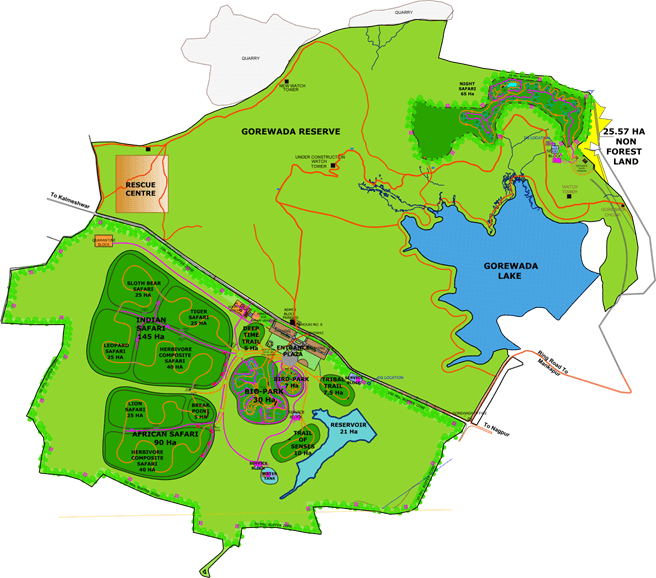
Gorewada Zoo
Balasaheb Thackeray Gorewada International Zoological Park, formerly known as Gorewada Zoo, is a significant zoological park located in the Nagpur district of Maharashtra, India. Upon full development, it is projected to become one of India's largest captive zoo safaris, situated on extensive land adjacent to Gorewada Lake and recognized as a top attraction in Nagpur.