
Cabassous
Mammal, Cingulata·Primarily found in South and Central American regions.·Typically includes insects and small invertebrates.
Cabassous is a genus of South and Central American armadillos, known for their distinctive leathery armor shell and digging behaviors. The genus name is derived from the Kalini word for 'armadillo'.
Key Facts
- ›Cabassous is a genus of armadillos found in South and Central America.
- ›The genus name originates from the Kalini word for armadillo.
- ›It is one of the surviving families within the order Cingulata.
- ›Armadillos are placental mammals characterized by their protective leathery shells.

Possess A Distinctive Leathery Armor Shell.
Characterized By Their Digging Behaviors.
Armadillo
About Cabassous
What is Cabassous?
Cabassous is a genus of armadillos native to both South and Central America. These mammals are part of the order Cingulata and are distinguished by their prominent leathery armor shells. The genus name itself is derived from the Kalini indigenous word for 'armadillo', highlighting the deep historical connection between these animals and the cultures of the regions they inhabit.
Habitat and Behavior
Cabassous armadillos are found across a wide range of environments within South and Central America. A defining characteristic of these animals is their active digging behavior, which they employ for foraging and shelter. While specific details about their diet are not extensively documented, armadillos generally consume insects and small invertebrates.
Source: Wikipedia ↗
Frequently Asked Questions
What is Cabassous?
Cabassous is a genus of armadillos native to South and Central America. These mammals are recognized by their unique leathery armor shells and their habit of digging.
Where are Cabassous armadillos found?
Cabassous armadillos inhabit regions across South and Central America. Their distribution spans a wide geographical area within these continents.
What does the name Cabassous mean?
The genus name 'Cabassous' is a Latinized version of the Kalini word that translates to 'armadillo'. This reflects the indigenous naming conventions for these animals.
Related Armadillos

Chlamyphorus
The pink fairy armadillo (Chlamyphorus truncatus) is the smallest known species of armadillo, distinguished by its leathery yet flexible armor shell and silky fur. It is a solitary, nocturnal mammal endemic to the deserts and scrublands of central Argentina, known for its remarkable ability to rapidly burrow into sandy soils. This elusive creature faces conservation concerns due to habitat loss, predation, and its sensitivity to environmental changes.
Dasypus
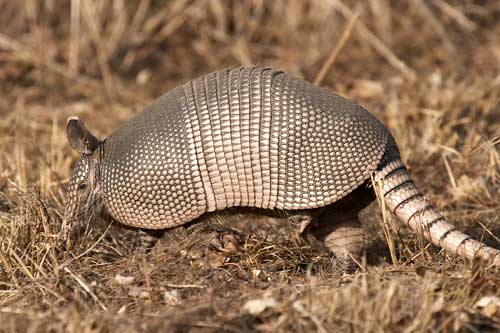
Armadillos are a group of New World placental mammals, the only surviving family (Chlamyphoridae and Dasypodidae) of the order Cingulata. They are known for their distinctive leathery armor shell and their characteristic digging behaviors, primarily found in Central and South America. The genus Dasypus, known as long-nosed or naked-tailed armadillos, is the only extant genus in the family Dasypodidae. They are found in South, Central, and North America, as well as on the Caribbean islands of Grenada, Trinidad and Tobago.

Priodontes
The giant armadillo (Priodontes maximus) is the largest living species of armadillo, distinguished by its leathery armor and impressive digging abilities. Primarily found in South America, it is characterized by its dark brown body, yellowish side band, and a pale head. This species is currently classified as vulnerable due to various threats, including hunting and habitat loss.