
Chlamyphorus
Mammal, Cingulata·Deserts, scrublands, sandy plains, dunes, and scrubby grasslands with sufficient amounts of compact sand and hiding places.·Primarily an insectivore, feeding on ants, larvae, worms, and snails. Also consumes various plant parts, such as leaves and roots, as a secondary food source.·Data Deficient (IUCN Red List)
The pink fairy armadillo (Chlamyphorus truncatus) is the smallest known species of armadillo, distinguished by its leathery yet flexible armor shell and silky fur. It is a solitary, nocturnal mammal endemic to the deserts and scrublands of central Argentina, known for its remarkable ability to rapidly burrow into sandy soils. This elusive creature faces conservation concerns due to habitat loss, predation, and its sensitivity to environmental changes.
Key Facts
- ›The smallest known species of armadillo, measuring 90–115 mm (3.5–4.5 in) in length.
- ›Native to the deserts and scrublands of central Argentina.
- ›Possesses a flexible, leathery dorsal shell attached by a thin membrane, and silky yellowish-white fur.
- ›Known for its exceptional burrowing ability, capable of burying itself in seconds.
- ›Feeds primarily on insects, worms, snails, and various plant parts.
- ›Its conservation status is listed as Data Deficient by the IUCN.

- Smallest Living Armadillo Species.
- Length: 90–115 mm .
- Weight: Approximately 120 g .
- Silky Yellowish-White Fur.
- Flexible, Leathery Dorsal Shell Attached By A Thin Dorsal Membrane.
- Reduced Eyes.
- Large Digging Claws On Front and Hind Limbs.
- Torpedo-Shaped Body.
- Thick, Hairless Tail Used For Balance.
- Shell Has 24 Bands Allowing It To Curl Into A Ball.
- Solitary and Nocturnal Habits.
- Exceptional Burrowing Ability .
- Relies On Smell, Touch, and Hearing For Navigation and Prey Detection.
- Highly Sensitive To Environmental Changes and Stress.
- Can Curl Into A Protective Ball.
Pink Fairy Armadillo
Domestic Dogs, Domestic Cats, Wild Boars
- Habitat Loss Due To Farming Activities
- Pesticide Usage On Farmlands
- Overhunting
- Climate Change
- Predation
- Drowning and Hypothermia From Storms
- Stress From Environmental Changes and Captivity
About Chlamyphorus
What is the Pink Fairy Armadillo?
The pink fairy armadillo (Chlamyphorus truncatus) is the smallest known species of armadillo, first described in 1825. This fascinating mammal is distinguished by its unique leathery, yet flexible, dorsal shell and its silky, yellowish-white fur. It is a solitary and strictly nocturnal creature, making it exceptionally elusive and difficult to observe in its natural habitat.
Range and Habitat
This species is endemic to the arid environments of central Argentina, inhabiting deserts, scrublands, sandy plains, and dunes. They require undisturbed areas with sufficient compact sand for burrowing, which is crucial for their survival and thermoregulation. Their restricted geographic range makes them particularly vulnerable to environmental changes.
Physical Characteristics and Behavior
Measuring between 90–115 mm (3.5–4.5 inches) in length and weighing around 120 grams (4.2 ounces), the pink fairy armadillo possesses large digging claws on its limbs, enabling it to burrow with remarkable speed, earning it the nickname 'sand-swimmer.' Its shell, composed of approximately 24 bands, can fold to allow the animal to curl into a protective ball. They have greatly reduced eyes and rely heavily on their senses of smell, touch, and hearing to navigate and find food.
Diet
The pink fairy armadillo is a generalist insectivore. Its primary food sources include ants and larvae, supplemented by worms, snails, and other insects. When these invertebrates are scarce, they also consume various plant parts, such as leaves and roots.
Conservation Status and Threats
The pink fairy armadillo is listed as Data Deficient by the IUCN Red List due to a lack of comprehensive data on its population. Significant threats to its survival include habitat loss driven by agricultural expansion, predation by domestic animals like dogs and cats, and the detrimental effects of pesticide use on their insect prey. Their extreme sensitivity to stress and environmental changes also makes them poorly suited to captivity, with very low survival rates when removed from their natural environment. Conservation efforts are considered urgent due to their rarity and the ongoing pressures they face.
Source: Wikipedia ↗
Frequently Asked Questions
What is the size and weight of the pink fairy armadillo?
The pink fairy armadillo is quite small, measuring between 90–115 mm (3.5–4.5 inches) in length. It typically weighs around 120 grams (4.2 ounces).
Where does the pink fairy armadillo live?
This species is endemic to the arid environments of central Argentina. It inhabits scrubby grasslands, sandy plains, and dunes, typically found south of Mendoza province and north of Rio Negro and Buenos Aires.
What does the pink fairy armadillo eat?
The pink fairy armadillo is primarily an insectivore. Its diet consists mainly of ants and larvae, but it also consumes worms, snails, and various insects. Plant parts can serve as a secondary food source.
What are the main threats to the pink fairy armadillo?
Major threats include habitat loss due to farming activities, predation by domestic dogs and cats, and the use of pesticides which contaminate their insect prey. They are also highly susceptible to environmental changes.
Can the pink fairy armadillo roll into a ball?
Yes, the pink fairy armadillo can curl up to protect its vulnerable underside. Its armored shell has bands that allow it to curl into a protective ball.
What is the conservation status of the pink fairy armadillo?
The pink fairy armadillo is listed as Data Deficient by the IUCN Red List of Threatened Species. This status reflects a lack of comprehensive scientific information on its population dynamics and natural history.
Related Armadillos
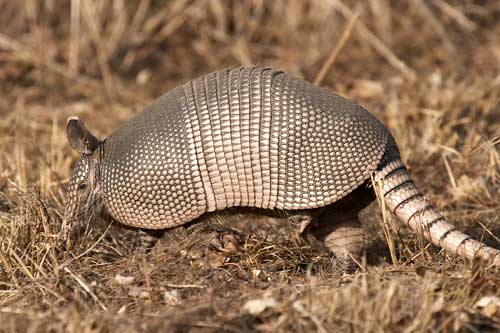
Dasypus
Armadillos are a group of New World placental mammals, the only surviving family (Chlamyphoridae and Dasypodidae) of the order Cingulata. They are known for their distinctive leathery armor shell and their characteristic digging behaviors, primarily found in Central and South America. The genus Dasypus, known as long-nosed or naked-tailed armadillos, is the only extant genus in the family Dasypodidae. They are found in South, Central, and North America, as well as on the Caribbean islands of Grenada, Trinidad and Tobago.

Priodontes
The giant armadillo (Priodontes maximus) is the largest living species of armadillo, distinguished by its leathery armor and impressive digging abilities. Primarily found in South America, it is characterized by its dark brown body, yellowish side band, and a pale head. This species is currently classified as vulnerable due to various threats, including hunting and habitat loss.

Zaedyus
The pichi (Zaedyus pichiy), also known as the dwarf armadillo or pygmy armadillo, is a small armadillo species native to Argentina and Chile. It is the sole surviving member of the genus Zaedyus and is unique among armadillos for its ability to hibernate. Fossil evidence suggests the species has existed since the late Miocene epoch.