
Zaedyus
Mammal, Cingulata·Arid or semiarid steppe grasslands with sandy soils suitable for burrowing.·Omnivorous, primarily consisting of invertebrates like beetles, ants, and scorpions, but also includes small mammals, lizards, plant material, and fungi.·Near-threatened
The pichi (Zaedyus pichiy), also known as the dwarf armadillo or pygmy armadillo, is a small armadillo species native to Argentina and Chile. It is the sole surviving member of the genus Zaedyus and is unique among armadillos for its ability to hibernate. Fossil evidence suggests the species has existed since the late Miocene epoch.
Key Facts
- ›The pichi is the only armadillo known to hibernate.
- ›It is found in arid and semi-arid steppe grasslands of Argentina and Chile.
- ›Adult pichis measure approximately 27 cm in length and weigh between 700 and 1,500 grams.
- ›Their diet consists mainly of invertebrates, but also includes small mammals, plant material, and fungi.
- ›Pichis are solitary and diurnal animals that dig burrows for shelter.
- ›Their conservation status is rated as near-threatened by the IUCN.

- Small Size, Approximately 27 cm Long With An 11 cm Tail.
- Adult Weight Ranges From 700 To 1,500 Grams.
- Carapace Varies From Light Yellow To Near-Black, With Heavy Scapular and Pelvic Shields.
- Six To Eight Movable Bands Separate the Shields, With An Additional Nuchal Band.
- Triangular Shield On the Head and Osteoderms Along the Tail.
- Underside Covered In Tan-Colored Hair, Thicker In Winter.
- Well-Developed Claws On All Four Feet.
- Short Ears and Dark, Relatively Small Eyes.
- Eight Teeth On Each Side of the Upper Jaw and Nine On the Lower.
- Solitary Animals, Outside of the Mating Season.
- Diurnal Activity Patterns.
- Dig Burrows For Shelter, With Dome-Shaped Entrances and Single Passages.
- Dig New Burrows Frequently, Sometimes Daily.
- When Threatened, They Wedge Into Burrows Or Lie Flat To Protect Their Belly.
- Can Make Purring Sounds and Loud Grunts Or Screams.
Dwarf Armadillo, Pygmy Armadillo
Crowned Eagles, Buzzard-Eagles, Foxes, Cougars
Hunting For Subsistence and Sport, Habitat Loss Due To Cattle Ranching, Unknown Disease Impacting Some Populations
Purring Sounds, Loud Grunt Or Scream
About Zaedyus
The Pichi (Zaedyus pichiy)
The pichi, scientifically known as Zaedyus pichiy and also referred to as the dwarf armadillo or pygmy armadillo, is a unique species of armadillo native to the arid and semi-arid regions of Argentina and Chile. It stands out as the only living member of its genus, Zaedyus, and holds the distinction of being the sole armadillo species known to hibernate.
Description and Characteristics
Pichis are relatively small mammals, typically measuring around 27 cm (11 inches) in length, with an additional 11 cm (4.3 inches) for their tail. Adult individuals weigh between 700 and 1,500 grams (25 to 53 ounces), with males sometimes being slightly larger than females. Their carapace, or shell, varies in color from light yellow to nearly black. This protective armor is composed of heavy scapular and pelvic shields made of rectangular osteoderms, connected by six to eight movable bands. A distinct nuchal band is present in front of the scapular shield, and a triangular shield covers the head, with further osteoderms found along the tail. The underside of the pichi is covered in tan-colored hair that becomes thicker and longer during the winter months. They possess well-developed claws on all four feet, short ears, and dark, relatively small eyes.
Distribution and Habitat
The natural range of the pichi extends across central and southern Argentina, including Patagonia, and westward into the Andean grasslands of Chile, reaching as far south as the Strait of Magellan. Their preferred habitat is arid or semi-arid steppe grasslands, particularly areas with sandy soils that are ideal for burrowing. While they commonly inhabit these environments, they may be found in other settings if suitable burrowing conditions are met.
Biology and Behavior
Pichis are omnivorous, with their diet primarily consisting of invertebrates such as beetles, ants, and scorpions. They will also supplement their diet with small mammals, lizards, plant material, and fungi. Despite living in arid environments, they are not believed to drink water in the wild. One of the most remarkable biological traits of the pichi is its ability to hibernate. Like other hibernating animals, they accumulate significant fat reserves before entering their winter burrows, where they remain dormant from May to August. During hibernation, their body temperature can drop from a normal level of about 35°C (95°F) to as low as 14°C (57°F). In addition to true hibernation, they also experience daily torpor for up to four hours each night, during which their body temperature can fall to around 24°C (75°F).
The breeding season occurs from spring to early summer, with the specific timing dependent on latitude. Females may be induced ovulators, giving birth to one or two young after a gestation period of 58 to 60 days, typically between October and January. Newborn pichis have soft, pink skin with small osteoderms that begin to harden and yellow after approximately two weeks. Young pichis weigh about 50 grams at birth and gain an average of 9 grams per day until weaning concludes around 40 days, after which they emerge from the burrow for the first time.
Behaviorally, pichis are solitary and diurnal. They excavate burrows in sandy soil, which serve as their shelters from extreme weather. These burrows typically feature a dome-shaped entrance and a single passage that can extend several meters, ending in a resting chamber. Pichis do not inhabit their burrows for extended periods, often digging new ones every few weeks or even daily. During winter, their burrows may be deeper, reaching depths of up to 1.5 meters (4 feet 11 inches) below ground.
Conservation Status
The International Union for Conservation of Nature (IUCN) has classified the pichi's conservation status as near-threatened. Despite being legally protected in both Argentina and Chile, the species is hunted for subsistence and sport, with its meat consumed and its shell used in local handicrafts. Habitat loss, primarily due to cattle ranching, poses a significant threat. Furthermore, some populations have been negatively impacted by an unidentified disease.
Source: Wikipedia ↗
Frequently Asked Questions
What is a pichi?
A pichi, scientifically known as Zaedyus pichiy, is a small species of armadillo found in Argentina and Chile. It is also commonly referred to as the dwarf armadillo or pygmy armadillo.
Where do pichis live?
Pichis are native to central and southern Argentina, extending west to the Andean grasslands of Chile, and as far south as the Strait of Magellan. They primarily inhabit arid or semi-arid steppe grasslands with sandy soils suitable for burrowing.
What do pichis eat?
Pichis are omnivorous. Their diet largely consists of invertebrates such as beetles, ants, and scorpions. They also consume small mammals, lizards, plant material, and fungi.
Are pichis nocturnal or diurnal?
Pichis are diurnal, meaning they are active during the day. They dig burrows in sandy soil to use for shelter from extreme weather conditions.
What is unusual about pichi hibernation?
Pichis are the only known armadillos to hibernate. They build up fat reserves and enter their winter burrows from May to August, during which their body temperature drops significantly. They also experience daily torpor.
What are the predators and threats to pichis?
Common predators of pichis include crowned eagles, buzzard-eagles, foxes, and cougars. Threats to their survival include hunting for subsistence and sport, habitat loss due to cattle ranching, and impacts from an unknown disease.
Related Armadillos

Chlamyphorus
The pink fairy armadillo (Chlamyphorus truncatus) is the smallest known species of armadillo, distinguished by its leathery yet flexible armor shell and silky fur. It is a solitary, nocturnal mammal endemic to the deserts and scrublands of central Argentina, known for its remarkable ability to rapidly burrow into sandy soils. This elusive creature faces conservation concerns due to habitat loss, predation, and its sensitivity to environmental changes.
Dasypus
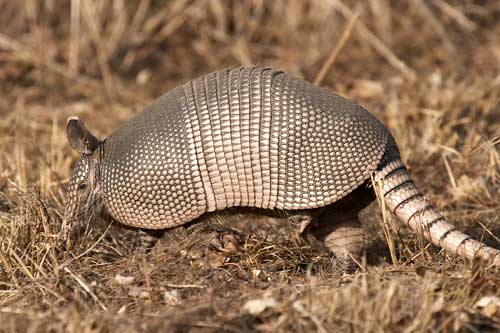
Armadillos are a group of New World placental mammals, the only surviving family (Chlamyphoridae and Dasypodidae) of the order Cingulata. They are known for their distinctive leathery armor shell and their characteristic digging behaviors, primarily found in Central and South America. The genus Dasypus, known as long-nosed or naked-tailed armadillos, is the only extant genus in the family Dasypodidae. They are found in South, Central, and North America, as well as on the Caribbean islands of Grenada, Trinidad and Tobago.

Priodontes
The giant armadillo (Priodontes maximus) is the largest living species of armadillo, distinguished by its leathery armor and impressive digging abilities. Primarily found in South America, it is characterized by its dark brown body, yellowish side band, and a pale head. This species is currently classified as vulnerable due to various threats, including hunting and habitat loss.