
Aepycamelus
Aepycamelus was an extinct genus of camelids that lived in North America during the Miocene epoch. Named "high camel" due to its exceptionally long neck and legs, it possessed padded feet similar to modern camels and walked on its toes. This highly specialized animal likely inhabited dry grasslands with trees, browsing on high foliage.
Key Facts
- ›Lived during the Miocene epoch in North America.
- ›Possessed a long neck and stilt-like legs, reaching about 3 meters (9.8 ft) in height.
- ›Walked on its toes and had cushioned pads on its feet.
- ›Likely inhabited dry grasslands with scattered trees.
- ›Presumed to have been solitary or moved in small groups, browsing on high branches.

High Camel
Dry Grasslands With Trees
North America
- Small Head Relative To Body Size.
- Long Neck Due To Elongated Cervical Vertebrae.
- Long, Stilt-Like Legs With Elbow and Knee Joints On the Same Level.
- Height At the Top of the Head Approximately 3 Meters .
- Walked On Toes.
- Possessed Cushioned Pads Like Modern Camels.
High Foliage From Trees
About Aepycamelus
What is Aepycamelus?
Aepycamelus is an extinct genus of camelids that roamed North America during the Miocene epoch, existing for approximately 15.7 million years from about 20.6 to 4.9 million years ago. Its name, derived from Greek, translates to "high camel," a fitting description for its remarkable physique. The genus was formerly known as Alticamelus, a name now considered a "nomen dubium" (doubtful name), with Aepycamelus being erected for species previously assigned to it.
Morphology and Lifestyle
This was a highly specialized animal, adapted to a life in dry grasslands interspersed with trees. Aepycamelus possessed an exceptionally long neck, a result of greatly elongated cervical vertebrae, and long, stilt-like legs. Its elbow and knee joints were situated on the same level, contributing to a towering stature. The top of its head could reach about 3 meters (9.8 ft) above the ground. Unlike earlier camelids, Aepycamelus walked only on its toes and featured cushioned pads on its feet, similar to modern camels. This unique body structure suggests it browsed on high branches in trees, a niche where it likely had no competitors.
Fossil Distribution and Extinction
Fossils of Aepycamelus have been found widely distributed across North America, from Montana and Oregon to California and Florida. It is believed that Aepycamelus inhabited these regions singly or in small groups, mirroring the social behavior observed in present-day giraffes. The genus survived for a significant portion of the Miocene but eventually died out before the start of the Pliocene, possibly due to climatic changes that altered its grassland habitat.
Source: Wikipedia ↗
Frequently Asked Questions
What does the name Aepycamelus mean?
The name Aepycamelus is derived from the Greek words "aipus," meaning 'high and steep,' and 'kamelos,' meaning 'camel.' Thus, it translates to 'high camel.' In Latin, it was also referred to as Alticamelus.
When did Aepycamelus live?
Aepycamelus existed during the Miocene epoch, approximately 20.6 to 4.9 million years ago, surviving for about 15.7 million years.
What was the physical appearance of Aepycamelus?
Aepycamelus was characterized by a relatively small head, an exceptionally long neck formed by elongated cervical vertebrae, and long, stilt-like legs. Its total height at the top of its head could reach about 3 meters (9.8 ft).
What type of environment did Aepycamelus inhabit?
Fossil evidence suggests Aepycamelus inhabited dry grasslands that contained scattered groups of trees. This environment likely supported its browsing habits.
How did Aepycamelus move?
Aepycamelus walked on its toes only, a distinct feature from earlier camelids. It also possessed cushioned pads on its feet, similar to those found on modern camels.
What is known about the social behavior of Aepycamelus?
It is presumed that Aepycamelus moved about singly or in small groups, much like modern giraffes. This behavior is inferred from its specialized feeding habits.
Where have fossils of Aepycamelus been found?
Fossils of Aepycamelus have been discovered across a wide area of North America, including states like Colorado, Oregon, Montana, and California, as well as Florida.
Related Artiodactyl species
Arabitragus
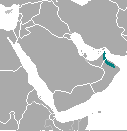
The Arabian tahr, formerly classified under the genus Hemitragus, is now recognized in its own monotypic genus, Arabitragus. This stocky, reddish-brown ungulate is the smallest of the tahr species and is distinguished by its backward-arching horns and impressive manes on males. It inhabits the steep, rocky slopes of the Hajar Mountains in Oman and the United Arab Emirates.
Ammotragus
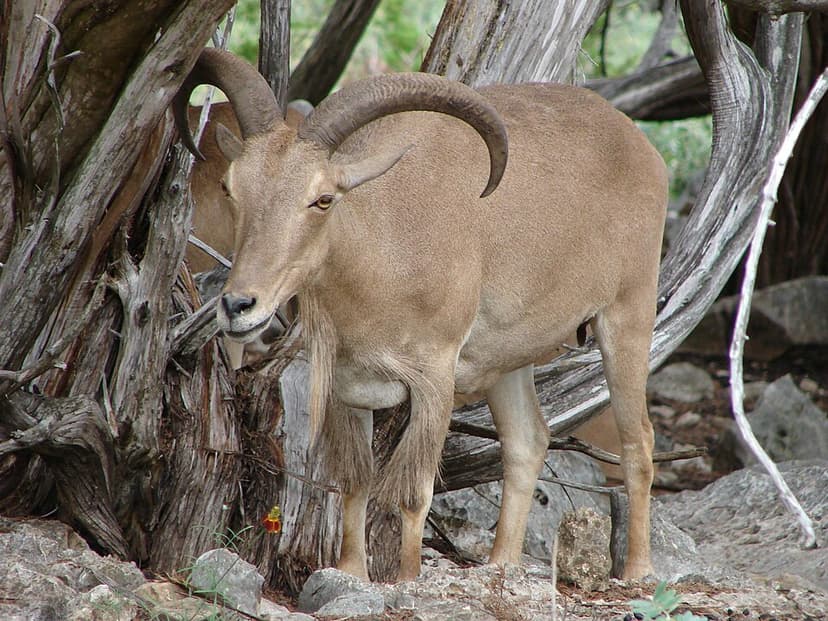
The Barbary sheep, scientifically named Ammotragus lervia and also known as aoudad, is a species of caprine native to the rocky mountains of North Africa and parts of West Africa. Characterized by its sandy-brown coat, shaggy throat hair, and distinctive curved horns, it is well-adapted to arid, mountainous terrain. Despite being rare in its native range due to hunting and habitat destruction, it has been successfully introduced to other continents as a game species.

Antidorcas
Antidorcas is a genus of antelope that includes the living springbok and several extinct species. Primarily known for the springbok, this genus is part of the Antilopini tribe and has been studied for its phylogenetic relationships with other antelopes.