
Ammotragus
Artiodactyla·Herbivore·Nomadic, travel constantly via mountain ranges.·Ammotragus
The Barbary sheep, scientifically named Ammotragus lervia and also known as aoudad, is a species of caprine native to the rocky mountains of North Africa and parts of West Africa. Characterized by its sandy-brown coat, shaggy throat hair, and distinctive curved horns, it is well-adapted to arid, mountainous terrain. Despite being rare in its native range due to hunting and habitat destruction, it has been successfully introduced to other continents as a game species.
Key Facts
- ›Native to rocky mountains in North Africa and parts of West Africa.
- ›Characterized by a sandy-brown coat, shaggy throat hair, and outward-curving horns.
- ›Adapted to arid, mountainous environments where they graze and browse.
- ›Possesses excellent agility and can perform impressive standing jumps.
- ›Its binomial name, Ammotragus lervia, derives from Greek words for 'sand' and 'goat'.
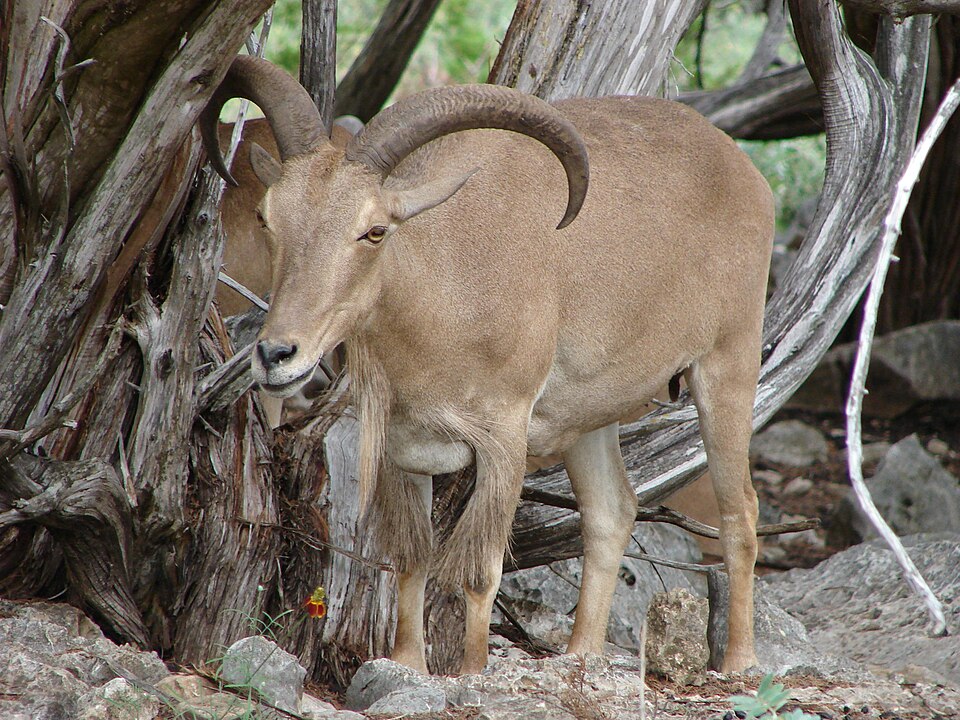
Aoudad, Waddan, Arwi, Mouflon, Arruis
Arid Mountainous Areas, Steep, Rocky Mountains, Canyons
North Africa, West Africa, Southeastern Spain, Southwestern United States, Croatia, Canary Islands
- Stand 75 To 110 cm Tall At the Shoulder.
- Length Around 1.5 m.
- Weight 30 To 145 kg.
- Sandy-Brown Coat, Darkening With Age.
- Slightly Lighter Underbelly and A Darker Line Along the Back.
- Upper Parts and Outer Legs Are Reddish- Or Grayish-Brown.
- Shaggy Hair On the Throat, Extending To the Chest In Males, With A Sparse Mane.
- Horns Have A Triangular Cross-Section and Curve Outward, Backward, Then Inward, Exceeding 76 cm In Length.
- Horns Are Fairly Smooth With Slight Wrinkles At the Base.
Grasses, Bushes, Lichens
Barbary Leopard, Barbary Lion, Caracal, Humans, Feral Dogs
About Ammotragus
Ammotragus (Barbary Sheep)
The Barbary sheep, scientifically designated as Ammotragus lervia and commonly known as the aoudad, is a species of caprine uniquely adapted to the challenging, rocky mountain environments of North Africa and parts of West Africa. Its sandy-brown coat, which darkens with age, and distinctive horns that curve outwards, backwards, and then inwards, are defining characteristics. The species is also recognized by its shaggy throat hair, a feature more pronounced in males.
Habitat and Adaptation
Barbary sheep inhabit arid mountainous regions, frequently found in steep, rocky terrains and canyons. They are adept grazers and browsers, consuming grasses, bushes, and lichens, and possess the remarkable ability to derive all their necessary metabolic water from their diet. While they will drink and wallow if liquid water is available, they are well-suited to arid conditions. Their physical agility is notable, enabling them to perform impressive standing jumps and navigate their challenging habitat with ease. They are typically crepuscular, most active in the early morning and late afternoon, resting during the heat of the day.
Range and Distribution
The natural range of the Barbary sheep is primarily across Northern Africa, particularly in areas surrounding the Sahara Desert, including countries like Algeria, Chad, Egypt, Libya, Mali, Mauritania, Morocco, Niger, Tunisia, and Sudan. Historically, populations within this native range have faced declines due to hunting and habitat destruction. In contrast, the Barbary sheep has also been introduced to other parts of the world, including southeastern Spain and the Southwestern United States, where it has established populations, often as a game species. Its adaptability has allowed it to colonize new areas, sometimes posing a threat to native ungulates and vegetation.
Taxonomy and Nomenclature
Ammotragus lervia is the sole species within the genus Ammotragus. The binomial name itself reflects its characteristics, with Ammotragus derived from the Greek words for 'sand' and 'goat,' referencing its habitat and general form. The specific epithet, lervia, originates from historical descriptions of wild sheep from North Africa. The species is known by various common names, with 'aoudad' being widely used, derived from Berber languages, where it is also known as 'waddan' or 'arwi.' In Spanish-speaking regions, it is called 'arruis'.
Source: Wikipedia ↗
Frequently Asked Questions
What is the Barbary sheep also known as?
The Barbary sheep is also widely known as the aoudad. In Berber languages, it is called waddan or arwi, and in former French territories, it is referred to as mouflon.
Where is the natural habitat of the Barbary sheep?
Barbary sheep are endemic to arid mountainous regions primarily surrounding the barren center of the Sahara Desert in North Africa. They inhabit steep, rocky mountains and canyons.
What do Barbary sheep eat?
Barbary sheep graze and browse on grasses, bushes, and lichens. They are adapted to obtain all their metabolic water from their food.
How large do Barbary sheep get?
Barbary sheep stand between 75 to 110 cm tall at the shoulder and can reach a length of about 1.5 meters. Their weight typically ranges from 30 to 145 kg.
What are the distinctive physical features of Barbary sheep?
They have a sandy-brown coat that darkens with age, a lighter underbelly, and a darker line along the back. Males have shaggy hair on their throat that extends to the chest, and both sexes possess horns that curve outward, backward, then inward.
Have Barbary sheep been introduced to other regions?
Yes, Barbary sheep have been introduced to southeastern Spain and the Southwestern United States, where they have established populations, primarily as a game species.
What is the conservation status of Barbary sheep?
Several subspecies of the Barbary sheep are listed as vulnerable. Populations within their native range have been decreasing due to hunting and habitat destruction.
Related Artiodactyl species
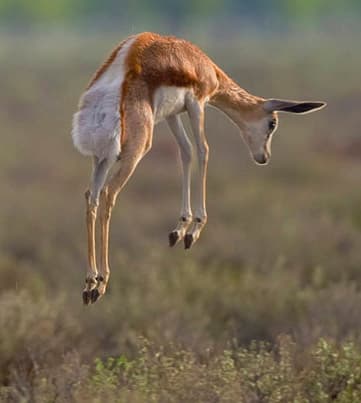
Antidorcas
Antidorcas is a genus of antelope that includes the living springbok and several extinct species. Primarily known for the springbok, this genus is part of the Antilopini tribe and has been studied for its phylogenetic relationships with other antelopes.

Antilope
Antilope is a genus of bovids characterized by twisted horns, currently comprising a single living species, the blackbuck, native to South Asia. Historically, the genus included numerous fossil species, many of which have since been reclassified into their own distinct genera.

Alcelaphus
The hartebeest (Alcelaphus buselaphus) is a large African antelope known for its distinctively elongated forehead, oddly-shaped horns, and sloping back. These gregarious herbivores primarily inhabit dry savannas and wooded grasslands across Africa. Despite their alert nature, hartebeest are generally non-aggressive and form herds, though populations have declined significantly due to human activities.