
Antidorcas
Antidorcas is a genus of antelope that includes the living springbok and several extinct species. Primarily known for the springbok, this genus is part of the Antilopini tribe and has been studied for its phylogenetic relationships with other antelopes.
Key Facts
- ›The genus Antidorcas contains the living springbok and several fossil species.
- ›Phylogenetic studies indicate that the springbok forms a clade with the gerenuk and saiga.
- ›The springbok (Antidorcas marsupialis) is the most well-known species within this genus.
- ›Fossil species include Antidorcas australis, Antidorcas bondi, and Antidorcas recki.
- ›Research in 2013 revised the phylogeny of the tribe Antilopini, including Antidorcas.
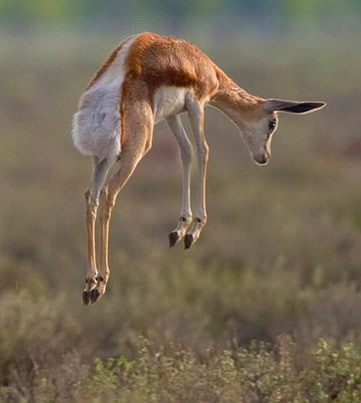
Springbok
About Antidorcas
What is Antidorcas?
Antidorcas is a genus of antelope that is recognized for containing the living springbok, along with several extinct species. This genus belongs to the tribe Antilopini, a group of gazelles and their close relatives within the Bovidae family.
Taxonomy and Evolution
Modern research, particularly a 2013 study by Eva Verena Bärmann and colleagues using nuclear and mitochondrial data, has revised the understanding of the phylogeny within the Antilopini tribe. These studies have indicated that the springbok (Antidorcas marsupialis) forms a distinct clade with the gerenuk (Litocranius walleri), with the saiga (Saiga tatarica) as their sister taxon. Some earlier research even suggested that the saiga and springbok together constitute a clade sister to the gerenuk.
Species within Antidorcas
The most prominent species within the Antidorcas genus is the springbok (Antidorcas marsupialis). In addition to the living species, the genus also includes several fossil species that shed light on the evolutionary history of these antelopes, such as Antidorcas australis, Antidorcas bondi, and Antidorcas recki.
Source: Wikipedia ↗
Frequently Asked Questions
What species are included in the genus Antidorcas?
The genus Antidorcas includes the living springbok, scientifically known as Antidorcas marsupialis. It also encompasses several fossil species such as Antidorcas australis, Antidorcas bondi, and Antidorcas recki.
What are the closest relatives to the springbok?
Phylogenetic studies suggest that the springbok and the gerenuk form a clade, with the saiga as their sister taxon. This indicates a close evolutionary relationship between these antelope species.
When was the phylogeny of Antidorcas and related antelopes studied?
A significant revision of the phylogeny of the tribe Antilopini, which includes Antidorcas, was undertaken in 2013 by Eva Verena Bärmann and colleagues. Previous studies in 2007 also explored these relationships.
Related Artiodactyl species

Aepyceros
Aepyceros is a genus of African antelope, uniquely defined as the sole living member of the tribe Aepycerotini. Its single extant species is the impala (Aepyceros melampus), an animal distinguished by its elegant build and impressive horns. The genus name itself, derived from Greek, highlights the prominent, high horns characteristic of these antelopes.
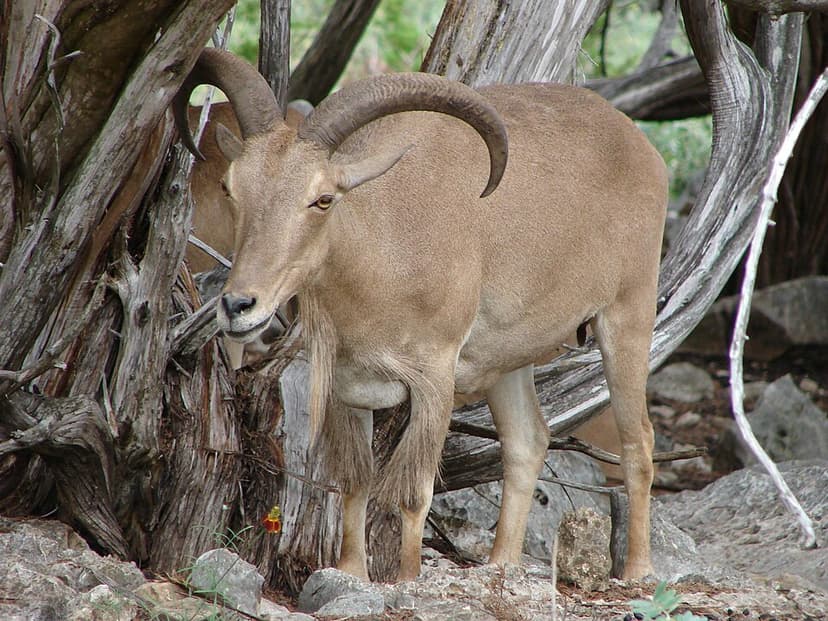
Ammotragus
The Barbary sheep, scientifically named Ammotragus lervia and also known as aoudad, is a species of caprine native to the rocky mountains of North Africa and parts of West Africa. Characterized by its sandy-brown coat, shaggy throat hair, and distinctive curved horns, it is well-adapted to arid, mountainous terrain. Despite being rare in its native range due to hunting and habitat destruction, it has been successfully introduced to other continents as a game species.

Antilope
Antilope is a genus of bovids characterized by twisted horns, currently comprising a single living species, the blackbuck, native to South Asia. Historically, the genus included numerous fossil species, many of which have since been reclassified into their own distinct genera.