
Antarctic minke whale
Artiodactyla·Herbivore·More gregarious than common and dwarf minke whales; observed in groups of varying sizes, from singles to aggregations of up to 60 individuals.·Balaenoptera
The Antarctic minke whale (Balaenoptera bonaerensis) is a species of baleen whale found primarily in the Southern Hemisphere. It is the second smallest rorqual and was not recognized as a distinct species until the 1990s. Despite its small size, it has maintained a large population and is now a significant focus of the whaling industry.
Key Facts
- ›The Antarctic minke whale is the second smallest rorqual and the third smallest baleen whale.
- ›It was scientifically described in the MID-19th century but only recognized as a distinct species in the 1990s.
- ›This species is primarily found in the Southern Hemisphere, with vagrants reported in the North Atlantic.
- ›Antarctic minke whales feed almost exclusively on euphausiids, particularly Antarctic krill.
- ›They are the main prey item for Type a killer whales in the Southern Ocean.
- ›Their population is estimated to be around 515,000 individuals in the Southern Ocean.

Southern Minke Whale
- Southern Ocean
- Temperate and Subtropical Waters of the Southern Hemisphere
Southern Hemisphere, Southern Ocean, North Atlantic
- Robust For Its Genus, With A Narrow, Pointed, Triangular Rostrum.
- Prominent, Upright, Falcate Dorsal Fin, Often More Curved and Pointed Than In Common Minkes.
- Dark Gray Dorsally and Clean White Ventrally.
- Lower Jaw Projects Beyond the Upper Jaw.
- Lack the Light Gray Rostral Saddle Present In Common and Dwarf Forms.
- Pale, Thin Blowhole Streaks That Veer Left and Then Right.
- Variably Colored Ear Streak Behind the Auditory Meatus.
- Light Gray Double Chevron Or W-Shaped Pattern Between the Flippers.
- Light Gray Shoulder Patch Above the Flippers.
- Two Light Gray To Whitish Swaths On the Sides.
- Smooth Sided Flukes, Dark Gray Dorsally and Clean White Ventrally.
- Lack the Bright White, Transverse Flipper Band of the Common Minke and the White Shoulder Blaze and Bright White Flipper Patch of the Dwarf Minke.
- Narrow, Pointed Flippers, Normally Plain Light Gray With A Lighter Leading Edge and Darker Trailing Edge, Or Two-Toned.
- Two-Toned Baleen Plates, With Dark Gray Outer Margins On Posterior Plates and White Outer Margins On Anterior Plates.
Euphausiids, Antarctic Krill, Euphausia Crystallorophias, Calanoid Copepods, Pelagic Amphipod Themisto Gaudichaudii, Antarctic Sidestripes, Crocodile Icefish, Nototheniids, Myctophids
- Killer Whales , Especially Type A and Type B Killer Whales
About Antarctic minke whale
The Antarctic minke whale, scientifically known as Balaenoptera bonaerensis, is a species of baleen whale belonging to the rorqual family. It is distinguished as the second smallest rorqual and the third smallest baleen whale globally. Although first formally described in the mid-19th century, its status as a distinct species was not widely recognized until the 1990s. Historically, its small size and low oil yield meant it was largely overlooked by the whaling industry, allowing its population to remain substantial into the 21st century. It has since become one of the most abundant baleen whales in the world and a significant target for modern whaling.
Taxonomy and Evolution
The species was first described by zoologist Hermann Burmeister in 1867 based on a specimen found in the Río de la Plata. For many years, it was considered a subspecies of the common minke whale (Balaenoptera acutorostrata). However, subsequent osteological, morphological, and genetic studies in the latter half of the 20th century provided evidence for its classification as a separate species. These studies, supported by researchers like Dale W. Rice, led to its formal recognition as Balaenoptera bonaerensis. Antarctic and common minke whales are estimated to have diverged in the Southern Hemisphere approximately 4.7 million years ago during the early Pliocene.
Physical Characteristics
Antarctic minke whales are robust for their size, typically reaching lengths of around 8 to 9 meters (26 to 30 feet) at physical maturity, with females generally being slightly larger than males. They possess a distinctive dark gray coloration dorsally and a clean white underside. Key external features include a narrow, pointed rostrum, a prominent falcate dorsal fin, and pale blowhole streaks. Unlike the common minke whale, they lack a light gray rostral saddle and possess pale gray flippers, which are typically uniformly colored or two-toned, lacking the bright white bands seen in related species. Their baleen plates are two-toned, with a degree of asymmetry in coloration between the left and right sides.
Distribution and Habitat
The primary range of the Antarctic minke whale is the Southern Hemisphere, extending throughout the Southern Ocean and into temperate and subtropical waters. They are found year-round in the Southern Ocean, often associating with pack ice. While mainly confined to the south, vagrant individuals have been sighted as far north as the North Atlantic, including the northeastern Atlantic and the Gulf of Mexico. Evidence from tagged whales suggests large-scale movements around the Antarctic continent and potential migrations to warmer waters.
Diet and Predation
The diet of the Antarctic minke whale is highly specialized, consisting almost exclusively of euphausiids. Antarctic krill (Euphausia superba) forms the bulk of their diet in the Southern Ocean, with other euphausiid species also consumed. They are a primary prey item for killer whales (Orcinus orca) in their habitat, particularly Type A killer whales, which are known to hunt and kill them. Evidence of killer whale attacks, such as tooth rake scars, is commonly observed on Antarctic minke whales.
Source: Wikipedia ↗
Frequently Asked Questions
When was the Antarctic minke whale first described and recognized as a distinct species?
The Antarctic minke whale was first scientifically described in 1867. However, it was not recognized as a distinct species until the 1990s, following extensive studies and genetic analyses.
Where are Antarctic minke whales found?
Antarctic minke whales are found throughout much of the Southern Hemisphere, with a circumpolar distribution in the Southern Ocean. While primarily southern, vagrant individuals have been reported in the North Atlantic.
What do Antarctic minke whales eat?
Their diet consists almost exclusively of euphausiids. In the Southern Ocean, over 90% of their diet is Antarctic krill (Euphausia superba), with other euphausiid species also consumed.
What is the typical social behavior of Antarctic minke whales?
Antarctic minke whales are more gregarious than their common and dwarf minke counterparts. While they can be found alone or in pairs, larger aggregations have been observed, with average group sizes varying by region.
What are the main predators of Antarctic minke whales?
The primary natural predators of Antarctic minke whales are killer whales, particularly Type A killer whales in the Southern Ocean. Tooth rake scars on their bodies are evidence of these attacks.
How large do Antarctic minke whales grow?
Antarctic minke whales are relatively small baleen whales. Adult females average around 8.9 meters (29.2 ft) and males average 8.6 meters (28.2 ft) in length. The heaviest recorded individuals weighed over 10 metric tons.
What is the estimated population of Antarctic minke whales?
Current estimates suggest there are around 515,000 Antarctic minke whales in the Southern Ocean. This number is considered a best estimate and may be subject to some negative bias as some whales may be outside surveyable areas.
Related Artiodactyl species
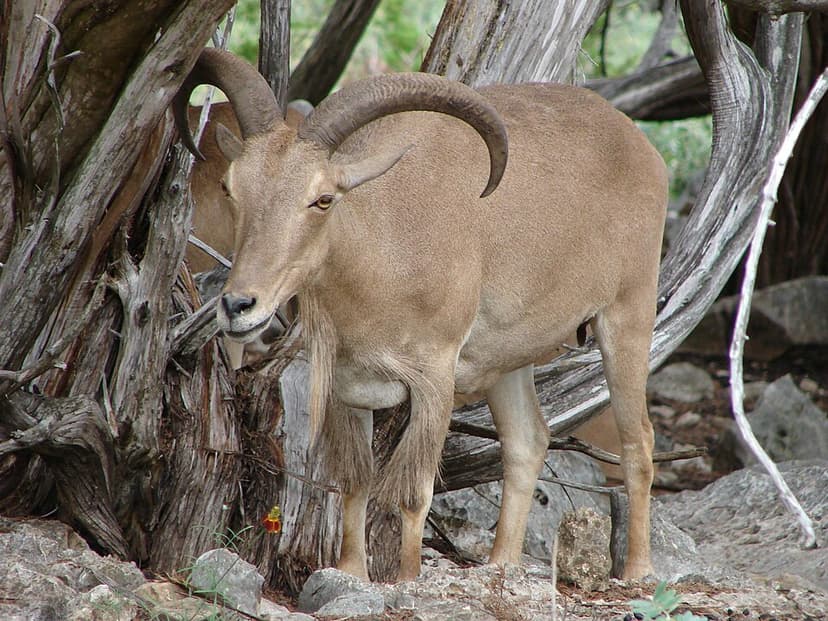
Ammotragus
The Barbary sheep, scientifically named Ammotragus lervia and also known as aoudad, is a species of caprine native to the rocky mountains of North Africa and parts of West Africa. Characterized by its sandy-brown coat, shaggy throat hair, and distinctive curved horns, it is well-adapted to arid, mountainous terrain. Despite being rare in its native range due to hunting and habitat destruction, it has been successfully introduced to other continents as a game species.
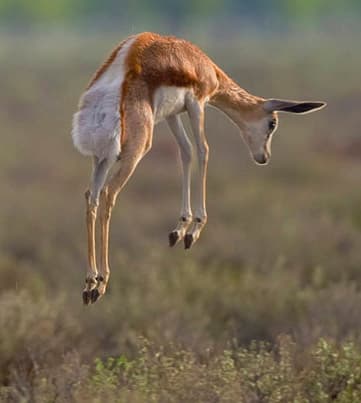
Antidorcas
Antidorcas is a genus of antelope that includes the living springbok and several extinct species. Primarily known for the springbok, this genus is part of the Antilopini tribe and has been studied for its phylogenetic relationships with other antelopes.

Antilope
Antilope is a genus of bovids characterized by twisted horns, currently comprising a single living species, the blackbuck, native to South Asia. Historically, the genus included numerous fossil species, many of which have since been reclassified into their own distinct genera.