
Agriotherium
Agriotherium was an extinct genus of large bears that lived from the Miocene to the Pleistocene epochs. Fossils have been discovered across Eurasia and Africa, making it the only known bear genus to colonize sub-Saharan Africa. Distinctive for their longer legs and shorter faces compared to modern bears, Agriotherium likely possessed a powerful bite force, though its exact dietary habits are debated.
Key Facts
- ›Agriotherium fossils are found in strata dating from the Miocene through the Pleistocene.
- ›This genus is the only known bear to have colonized sub-Saharan Africa.
- ›Agriotherium possessed longer legs and shorter faces than most other bears.
- ›Analysis of its teeth and jaws suggests an omnivorous diet with a significant plant-based component.
- ›Isotope evidence indicates it also consumed substantial amounts of animal material.
- ›They were among the largest terrestrial members of Carnivora.
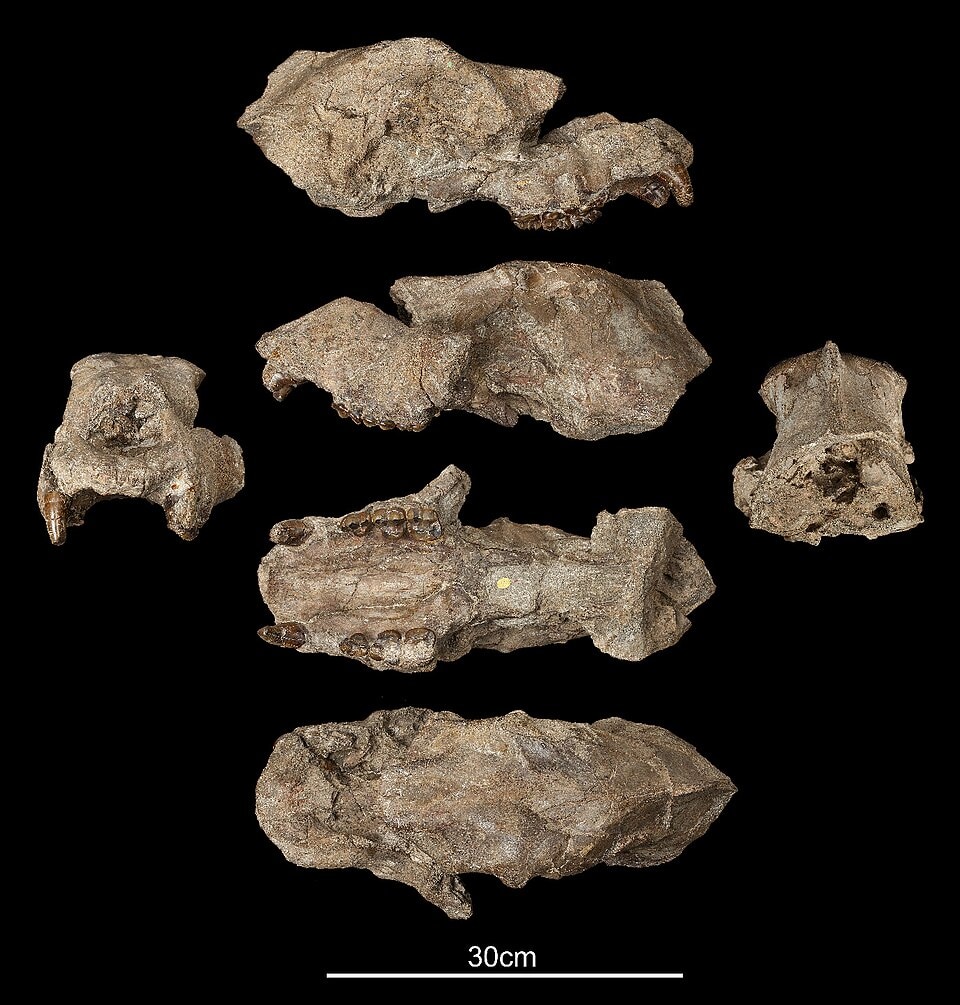
Eurasia, Africa
Scavenging, Grazing
About Agriotherium
Agriotherium is an extinct genus of bears that roamed parts of Eurasia and Africa during the Miocene and Pleistocene epochs. The earliest known species, A. inexpetans, emerged around 7.6 million years ago, with the genus persisting until approximately 1.8 million years ago.
Physical Characteristics and Diet
Agriotherium was characterized by its considerable size, with A. africanum reaching about 2 meters (7 ft) in body length and weighing up to 750 kilograms (1,650 lb). This placed it among the largest terrestrial carnivorans. Distinctive features included longer legs and shorter faces than many other bear species, along with wide, short jaws capable of generating substantial bite force. The exact utilization of this bite force remains a subject of study, with comparisons drawn to both herbivores like the giant panda and bone-crushing scavengers like spotted hyenas.
Analysis of dental wear patterns and isotopes suggests Agriotherium was an omnivore. While it consumed a significant amount of plant material, isotopic evidence also points to a considerable intake of animal matter, akin to some modern brown bear populations. However, skeletal studies indicate that Agriotherium likely lacked the physical adaptations for active hunting, suggesting a diet that may have included grazing, consuming fruits, scavenging carcasses for meat and bone marrow, and possibly foraging for invertebrates.
Geographic Distribution and Palaeoecology
Fossils of Agriotherium have been found across a wide range, including Europe, India, Myanmar, China, and notably, sub-Saharan Africa. It holds the distinction of being the only known ursoid lineage to have successfully colonized this region. The latest fossil record from Africa dates back to around 4 million years ago.
The ecological role of Agriotherium is inferred from its physical traits and fossil evidence. Its morphology suggests it was not built for speed or the endurance required for chasing prey, nor did it possess the specialized limbs for extensive digging. Instead, its large size and powerful bite may have allowed it to intimidate other predators away from carcasses, securing access to meat and marrow. Some fossil specimens, such as Agriotherium myanmarensis, show isotopic signatures suggesting a primarily carnivorous diet, consuming a variety of herbivores.
Source: Wikipedia ↗
Frequently Asked Questions
When did Agriotherium live?
Agriotherium lived from the Late Miocene, with the earliest species evolving around 7.6 million years ago, until the Early Pleistocene, with the latest record around 1.8 million years ago.
Where have Agriotherium fossils been found?
Fossils of Agriotherium have been discovered in Eurasia and Africa. Specific locations include Spain, South Africa, France, Ethiopia, India, Myanmar, and China.
What did Agriotherium eat?
Analysis suggests Agriotherium was an omnivore that consumed a lot of plant material. However, isotope evidence indicates a significant intake of animal material, similar to some modern brown bears. They may have specialized in grazing, eating fruit, and scavenging.
How large was Agriotherium?
Agriotherium africanum measured around 2 meters (7 ft) in body length and could weigh up to 750 kilograms (1,650 lb), making it larger than most living bears. However, mass estimates vary, with some studies suggesting lower weights.
What were the distinctive physical features of Agriotherium?
Agriotherium had longer legs and shorter faces compared to other bears. Their jaws were wide and short, capable of generating enormous bite force.
Was Agriotherium an active hunter?
Skeletal analysis suggests Agriotherium did not possess the limb strength or speed for active hunting, either by ambush or pursuit. It also lacked adaptations for digging for food.
Related Bears
Helarctos
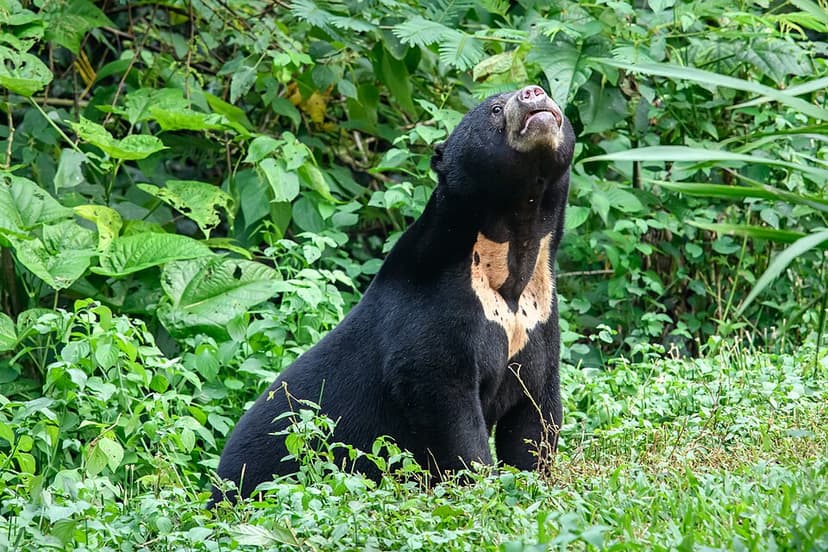
The sun bear (Helarctos malayanus) is the smallest bear species, native to the tropical forests of Southeast Asia. Distinctive for its short, jet-black fur and a characteristic orange to cream-colored chest patch, it is highly adapted for an arboreal lifestyle. Facing significant threats from deforestation and poaching, its population has seen a considerable decline.

Ursus
Ursus is a genus of bears in the family Ursidae, encompassing several well-known species such as the brown bear, polar bear, American black bear, and Asian black bear. The genus name itself is derived from the Latin word for 'bear'. These mammals are characterized by their solitary nature, except during mating seasons and when females are raising cubs, and exhibit complex mating systems driven by sexual selection.

Indarctos
Indarctos is an extinct genus of bear that lived during the Miocene epoch, with fossils found across Africa, North America, and Eurasia. This genus existed for approximately 6.2 million years, with its earliest known specimens dating to around 11.1 million years ago and its youngest to about 5.3 million years ago. Indarctos is notable for its wide geographic distribution and the presence of distinct species, though many are known only from fragmentary remains, making detailed understanding challenging.