
Indarctos
Indarctos is an extinct genus of bear that lived during the Miocene epoch, with fossils found across Africa, North America, and Eurasia. This genus existed for approximately 6.2 million years, with its earliest known specimens dating to around 11.1 million years ago and its youngest to about 5.3 million years ago. Indarctos is notable for its wide geographic distribution and the presence of distinct species, though many are known only from fragmentary remains, making detailed understanding challenging.
Key Facts
- ›Indarctos is an extinct genus of bear from the Miocene epoch.
- ›Fossils of Indarctos have been discovered in Africa, North America, and Eurasia.
- ›The genus existed for approximately 6.2 million years, from about 11.1 to 5.3 million years ago.
- ›Species like I. arctoides were omnivorous, while I. anthracitis was a specialist consumer of invertebrate prey.
- ›I. punjabiensis was the geologically youngest and last species of Indarctos, found across Eurasia.
- ›I. arctoides exhibited sexual dimorphism, with males weighing significantly more than females.

Open Steppes, Mild and Arid Climates, Open Environments With Monsoonal Seasonality
Africa, North America, Eurasia
About Indarctos
Indarctos is an extinct genus of bear that roamed across Africa, North America, and Eurasia during the Miocene epoch. Its existence spanned approximately 6.2 million years, with fossil evidence suggesting its presence from around 11.1 to 5.3 million years ago. The genus is known for its wide geographic distribution, though much of our understanding is based on fragmentary remains, making detailed anatomical and paleoecological studies challenging for many of its species.
Fossil Discoveries and Species
Discoveries of Indarctos fossils have occurred in various locations, including Arizona, Kazakhstan, China, Indo-Pakistan, Turkey, and Spain. A notable find from the Karabulak Formation in Kazakhstan, a molar tentatively assigned to Indarctos sp., was later identified as belonging to I. punjabiensis. This tooth, belonging to a young individual, is the largest known for the species and suggests potential sexual dimorphism, similar to extant bears where males are larger than females.
Several species have been attributed to the Indarctos genus, though the taxonomic validity of some is debated due to the scarcity of remains and the need to account for variations like sexual dimorphism, geographic differences, and individual variation. Among the recognized species are:
- I. arctoides: This species is known to have had an omnivorous diet and is considered ancestral to I. punjabiensis. Fossil evidence from Spain indicates it was an omnivore with a preference for carnivory.
- I. punjabiensis: This is the geologically youngest and final species of Indarctos. It was widespread across Eurasia during the Late Miocene and descended from I. arctoides. Unlike its ancestor, I. punjabiensis was omnivorous and larger in size. Its forelimb anatomy bore resemblances to the modern brown bear, suggesting similar locomotor adaptations that may have facilitated migration into North America.
- I. anthracitis: Dental microwear analysis indicates this species was a specialist consumer of invertebrate prey.
Paleoecology and Distribution
Indarctos inhabited diverse environments during the Miocene. In Kazakhstan, I. punjabiensis lived in a mild, arid climate characterized by wide, open steppes and coexisted with various other mammals, including mustelids, feliforms, perissodactyls, and artiodactyls. In Pakistan, I. cf. atticus is known from the Litra Formation, an open environment with monsoonal seasonality and the presence of C4 grasses.
Fossil sites provide a timeline of its distribution: the Box T Site in Texas dates to approximately 9.3–9.2 million years ago, while the Rattlesnake site in Oregon and the Withlacoochee River Site in Florida date to roughly 10.3–4.9 million years ago. In China, I. atticus is found in Lufeng, dating from 9–5.3 Ma, and in Turkey, I. arctoides is present in Yulafli from 9.7–8.7 Ma. The Batallones-3 site in Spain has yielded I. arctoides fossils dating from 11.6–5.3 Ma.
Description and Sexual Dimorphism
Evidence of sexual dimorphism is present in some Indarctos species. For I. arctoides, males were estimated to weigh around 265 kg (584 lb), whereas females weighed approximately 137 kg (302 lb). This significant size difference between sexes is a notable characteristic of this extinct bear genus.
Source: Wikipedia ↗
Frequently Asked Questions
When did Indarctos live?
Indarctos lived during the Miocene epoch, with its presence recorded from approximately 11.1 to 5.3 million years ago. This means the genus existed for about 6.2 million years.
Where have fossils of Indarctos been found?
Fossils of Indarctos have been discovered across a wide geographic range, including Africa, North America, and Eurasia. Specific locations include Arizona, Kazakhstan, China, Indo-Pakistan, Turkey, and Spain.
What did Indarctos eat?
The diet of Indarctos varied by species. For example, I. arctoides was omnivorous, while I. anthracitis was a specialist that consumed invertebrate prey. Fossil evidence suggests I. arctoides had a preference for carnivory over herbivory.
Are there different species of Indarctos?
Yes, several species of Indarctos are recognized, though many are known only from fragmentary remains. Notable species include I. arctoides, I. punjabiensis, and I. atticus. The taxonomic validity of some species is debated due to limited evidence.
Was there a size difference between male and female Indarctos?
Some species of Indarctos, such as I. arctoides, exhibited sexual dimorphism. Males of I. arctoides weighed an average of 265 kg, while females weighed around 137 kg, indicating males were significantly larger.
What is the youngest known species of Indarctos?
The geologically youngest and last species of Indarctos was I. punjabiensis. It had a wide distribution across Eurasia during the Late Miocene, around 6.3 to 6.5 million years ago, before the genus eventually went extinct.
Related Bears
Helarctos
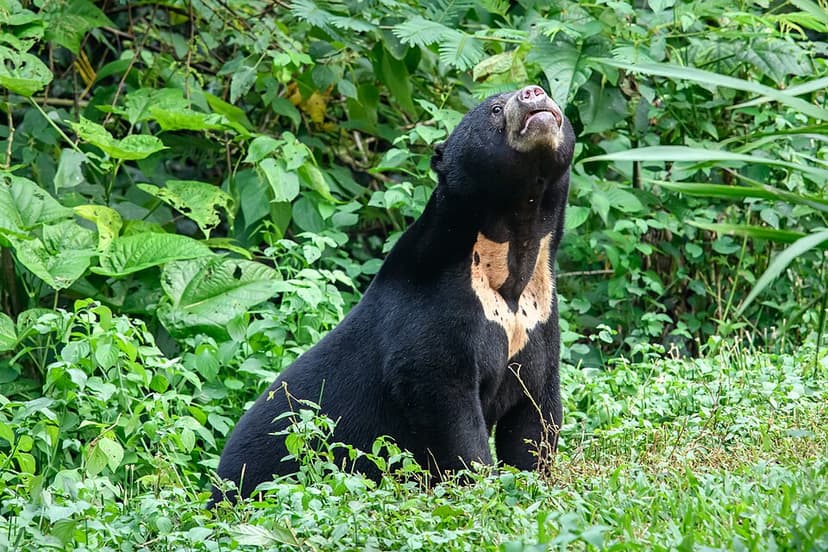
The sun bear (Helarctos malayanus) is the smallest bear species, native to the tropical forests of Southeast Asia. Distinctive for its short, jet-black fur and a characteristic orange to cream-colored chest patch, it is highly adapted for an arboreal lifestyle. Facing significant threats from deforestation and poaching, its population has seen a considerable decline.

Ursus
Ursus is a genus of bears in the family Ursidae, encompassing several well-known species such as the brown bear, polar bear, American black bear, and Asian black bear. The genus name itself is derived from the Latin word for 'bear'. These mammals are characterized by their solitary nature, except during mating seasons and when females are raising cubs, and exhibit complex mating systems driven by sexual selection.
Agriotherium
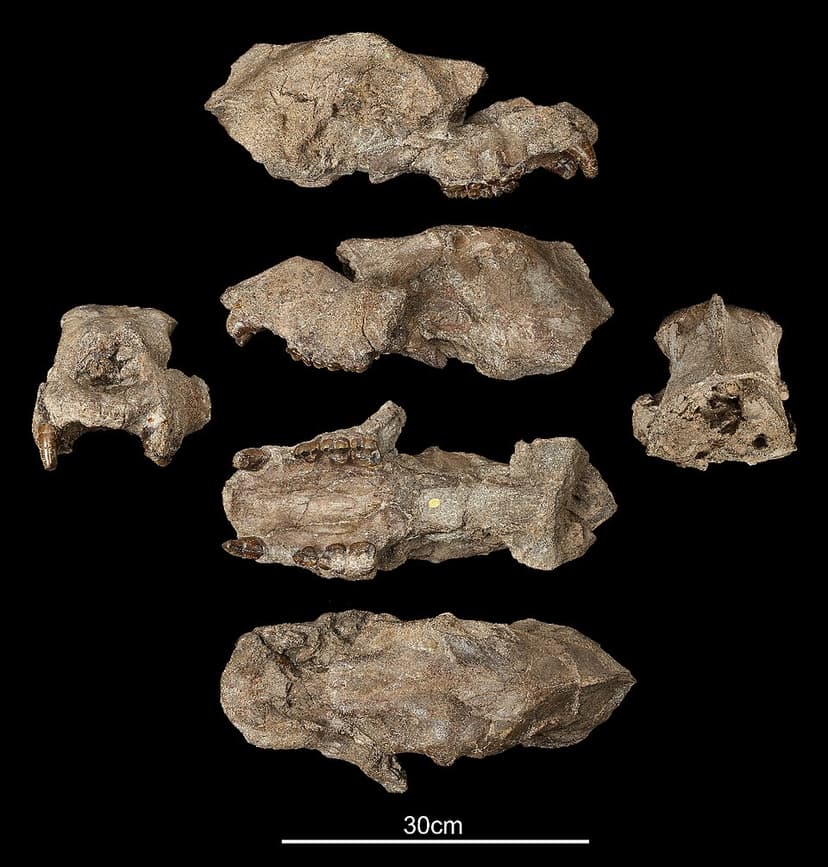
Agriotherium was an extinct genus of large bears that lived from the Miocene to the Pleistocene epochs. Fossils have been discovered across Eurasia and Africa, making it the only known bear genus to colonize sub-Saharan Africa. Distinctive for their longer legs and shorter faces compared to modern bears, Agriotherium likely possessed a powerful bite force, though its exact dietary habits are debated.