
Arctodus
Arctodus was an extinct genus of short-faced bears that lived in North America during the Pleistocene epoch. The two known species, Arctodus pristinus and the larger Arctodus simus, are notable for their immense size and unique facial morphology. Arctodus simus is considered one of the largest terrestrial carnivorans to have ever existed, with a broad diet and adaptable habitat preferences.
Key Facts
- ›Inhabited North America during the Pleistocene epoch, from approximately 2.58 million years ago to 12,800 years ago.
- ›Two recognized species: Arctodus pristinus (lesser short-faced bear) and Arctodus simus (giant short-faced bear).
- ›Arctodus simus was one of the largest terrestrial carnivorans, with males weighing up to 950 kg and standing up to 3.4 meters tall on their hind legs.
- ›Belonged to the Tremarctinae subfamily of bears, which are endemic to the Americas.
- ›Diet was omnivorous, including vegetation and herbivores like deer and camelids.
- ›Extinction is attributed to climate change, competition, and ecological collapse.

Temperate Open Woodlands, Adaptable To Various Habitats
North America, United States, Mexico, Canada
Solitary, Adaptable
Climate Change, Competition With Other Ursids, Ecological Collapse
About Arctodus
Arctodus: The Extinct Short-Faced Bears
Arctodus is an extinct genus of bears that roamed North America during the Pleistocene epoch, roughly from 2.58 million years ago until 12,800 years ago. This genus is particularly renowned for its immense size, especially the species Arctodus simus, often referred to as the giant short-faced bear. This formidable creature is considered one of the largest terrestrial carnivorans ever to have lived, making it a significant member of North America's Ice Age megafauna.
Species and Distribution
The genus Arctodus encompasses two recognized species: Arctodus pristinus, the lesser short-faced bear, and Arctodus simus. A. pristinus was more geographically restricted, primarily found in the Early Pleistocene of the eastern United States. In contrast, A. simus possessed a much broader distribution, with fossil evidence predominantly from the Late Pleistocene of the United States, Mexico, and Canada. While A. simus evolved from A. pristinus, both species likely coexisted for a period during the Middle Pleistocene.
Physical Characteristics and Diet
Arctodus, like many bears, exhibited significant sexual dimorphism, with males being considerably larger than females. Arctodus simus was particularly massive; adult males are estimated to have weighed around 800 kg (1,800 lb) and could stand up to 3.4 meters (11 ft) tall on their hind legs, with shoulder heights reaching up to 1.67 meters (5 ft 5.7 in). The largest individuals might have approached 950 kg (2,090 lb). Their diet was omnivorous, with studies suggesting they browsed on C3 vegetation and consumed herbivores such as deer, camelids, and tapirs. They favored temperate open woodlands but were adaptable to various habitats and feeding opportunities.
Anatomy and Evolutionary Context
Arctodus belongs to the Tremarctinae subfamily, a group of bears endemic to the Americas. A distinctive feature of short-faced bears is their disproportionately short snout, although this is partly an illusion created by deep snouts and short nasal bones compared to other bears. Their skull morphology, including deep snouts and robust teeth, suggests adaptations for both processing vegetation and handling large prey. Their limb morphology has been debated, with some researchers suggesting longer limbs for locomotor efficiency or enhanced vision in open habitats.
Extinction
Both species of Arctodus eventually went extinct. A. pristinus disappeared around 300,000 years ago, possibly due to climate change and competition from other ursids like the black bear. A. simus met its end about 12,800 years ago during the Late Pleistocene extinctions, likely as a consequence of ecological collapse that disrupted the vegetation and prey species upon which it depended.
Source: Wikipedia ↗
Frequently Asked Questions
What is Arctodus?
Arctodus is an extinct genus of short-faced bears that lived in North America during the Pleistocene epoch. It is known for its massive size, particularly the species Arctodus simus, which was one of the largest carnivorous land mammals to have ever lived.
What were the different species of Arctodus?
The two recognized species are Arctodus pristinus, the lesser short-faced bear, and Arctodus simus, the giant short-faced bear. Arctodus simus was significantly larger and is more widely known from fossil remains.
How large was Arctodus simus?
Arctodus simus was enormous. Adult males could weigh around 800 kg (1,800 lb) and stand up to 3.4 meters (11 ft) tall on their hind legs. The largest recorded weight was 957 kg (2,110 lb).
What did Arctodus eat?
Arctodus was considered an omnivore. Its diet included browsing on vegetation as well as consuming herbivores such as deer, camelids, and tapirs.
Where did Arctodus live?
Arctodus inhabited North America. Arctodus pristinus was primarily found in the eastern United States, while Arctodus simus had a broader range across the United States, Mexico, and Canada.
When did Arctodus go extinct?
Arctodus pristinus went extinct around 300,000 years ago. Arctodus simus disappeared about 12,800 years ago during the Late Pleistocene extinctions.
Why did Arctodus go extinct?
The exact causes of their extinction are unclear. For Arctodus pristinus, likely factors include climate change and competition with other bears. Arctodus simus likely succumbed to ecological collapse that disrupted its food sources.
Related Bears
Helarctos
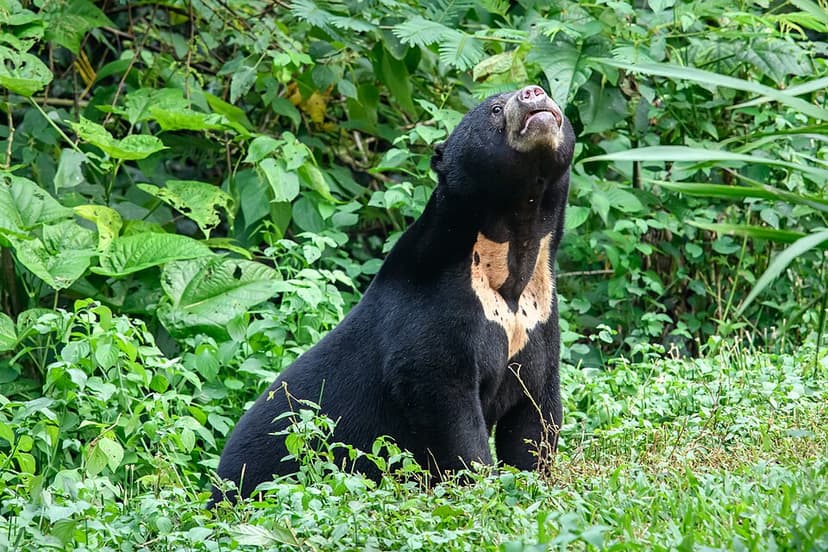
The sun bear (Helarctos malayanus) is the smallest bear species, native to the tropical forests of Southeast Asia. Distinctive for its short, jet-black fur and a characteristic orange to cream-colored chest patch, it is highly adapted for an arboreal lifestyle. Facing significant threats from deforestation and poaching, its population has seen a considerable decline.

Ursus
Ursus is a genus of bears in the family Ursidae, encompassing several well-known species such as the brown bear, polar bear, American black bear, and Asian black bear. The genus name itself is derived from the Latin word for 'bear'. These mammals are characterized by their solitary nature, except during mating seasons and when females are raising cubs, and exhibit complex mating systems driven by sexual selection.
Agriotherium
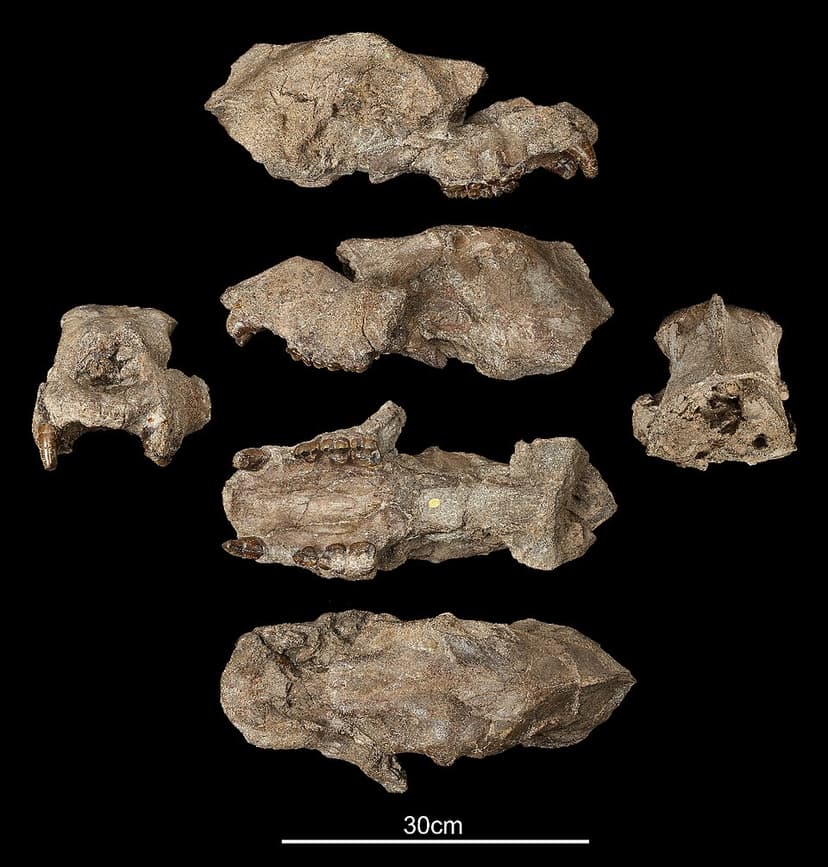
Agriotherium was an extinct genus of large bears that lived from the Miocene to the Pleistocene epochs. Fossils have been discovered across Eurasia and Africa, making it the only known bear genus to colonize sub-Saharan Africa. Distinctive for their longer legs and shorter faces compared to modern bears, Agriotherium likely possessed a powerful bite force, though its exact dietary habits are debated.